Guitar #30/3

Assembling the box

After days spent reorganizing the shop, which had become next to impossible to move in, I am back at it. Yesterday I bent the sides ( also called ribs) and assembled them to the end blocks. The end blocks had been made some time ago. These determine the rib depths and the correct angles at the four intersections where the ribs join the top and back (neck and tail). The first step was to trim the blanks to just a bit wider than the maximum finished width (depth of the body). I trimmed these to 104mm – the maximum depth being 100mm. That left me room to trim after assembling the ribs and blocks before attaching the plates. The next step was to mark each rib with yellow pencil at 25mm intervals. This is a great aid in checking progress against the pattern, which is also marked at 25mm along the outline. While I did this I had the bending iron heating up.

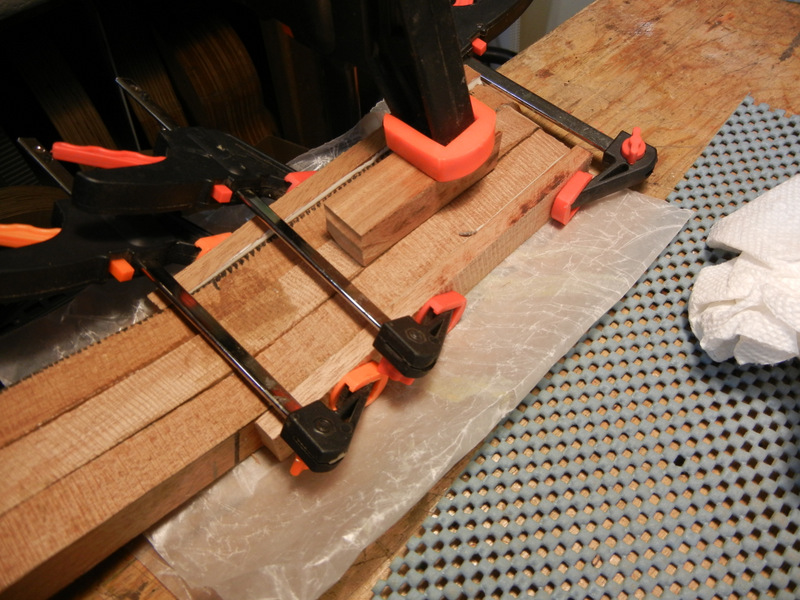
one rib trimmed and marked, and soaked down for bending

one rib trimmed and marked, and soaked down for bending

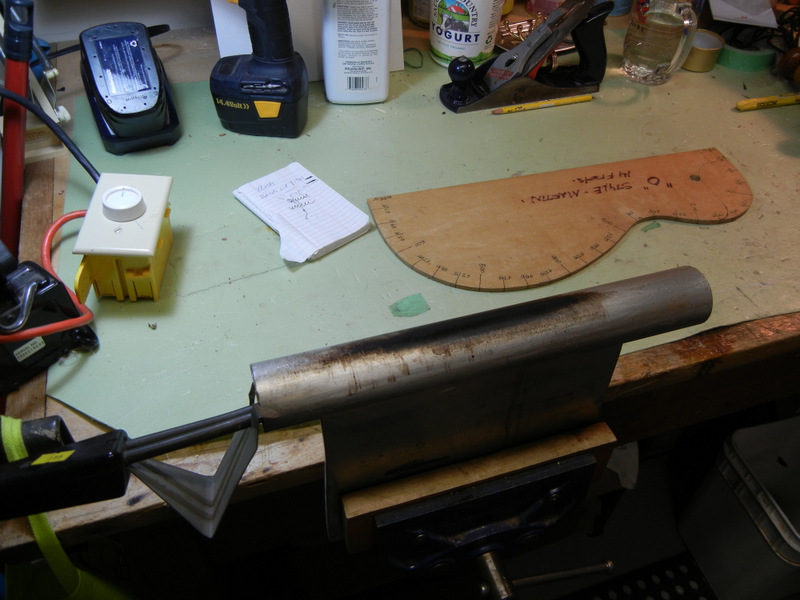
body half pattern with 25mm markings

body half pattern with 25mm markings

bending iron hot and ready to go

bending iron hot and ready to go

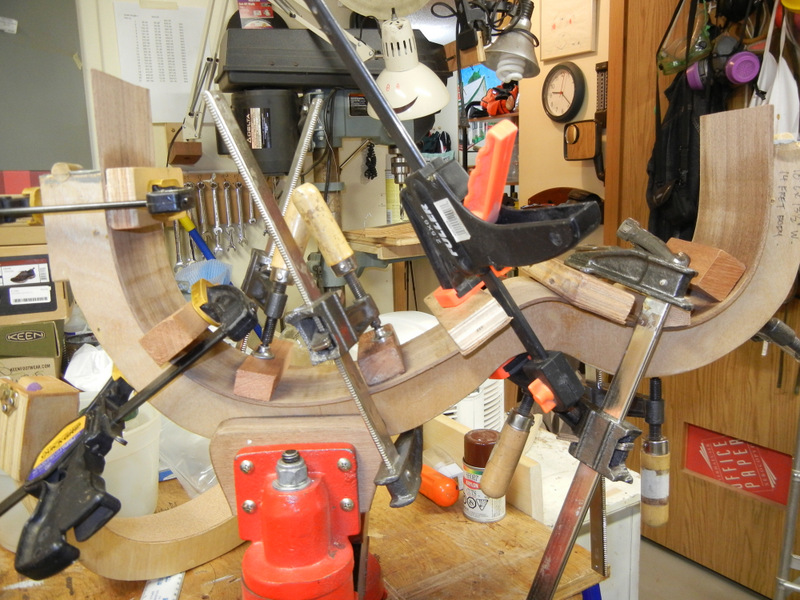
Bending walnut is not very difficult. You keep it wet and hold in one place for a few seconds, pressing gently, then move a centimeter and press some more. The hot metal pipe dries the wood in seconds and it sizzles when it contacts wet wood. No sizzle means the wood is dry and has to be wet again. I start at the waist, then do the upper bout, then the lower. It takes constant small adjustments but with patience it can be made to follow the pattern shape quite closely. Once it is close enough it gets clamped into the mold, where it then dries and takes the shape in which it is clamped.

rib clamped to mold

rib clamped to mold

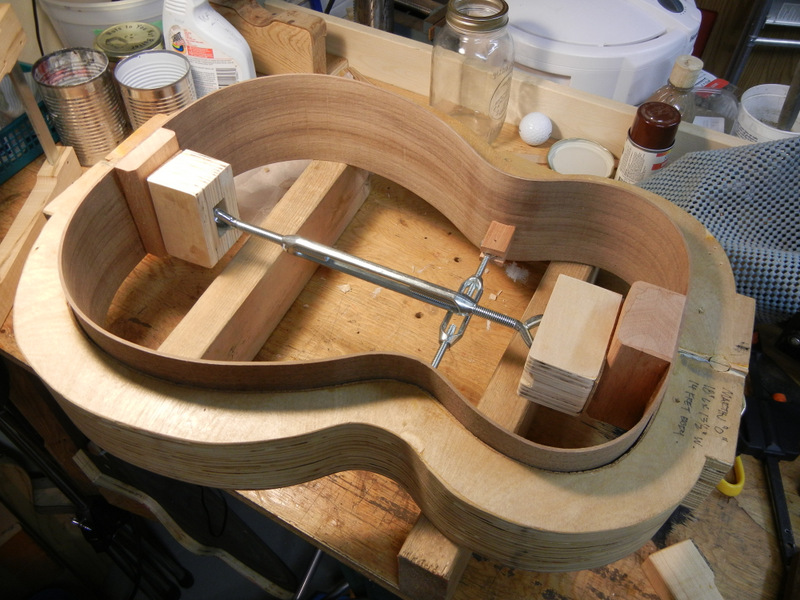
Once both ribs were bent and dried in their final shape I trimmed the ends and assembled the pair of ribs into the mold, checking that the joints met tightly and along the centre line of the guitar. Then I glued in the end blocks. The easiest way to do this is without the mold, just one end at a time, clamping the ribs onto the block. Once both blocks are done then the assembly goes back into the mold and is clamped with spreaders.

ribs in mold with spreaders

ribs in mold with spreaders

The spreaders ensure that the ribs are in the right position for attaching the plates. Just a bit of pressure is enough to keep the ribs pressed to the sides and ends. I assembled the back plate first this time. I wanted to try a different method of gluing in the linings. First I glued the back to the blocks, neck and tail. Then I put the whole thing on its back and clamped the back plate here and there to the ribs, so it was tight. I then glued in the kerfed lining strips, rubbing them to increase the initial tack, and holding them pressed into place for a short time. In a few places I resorted to putting pressure with a re-purposed chopstick and a clamp. This saved me doing two steps, where the linings are first glued to the rib, after which the plate is then glued down onto the linings. This way I was also able to avoid having to cut pockets in the linings for the ends of the braces. Instead I simply glued several teeth from the kerfed strip at each brace. This will be sufficient to hold the brace end tight. Note here that I first trimmed and fitted the back plate to the ribs before this procedure.

gluing the linings to attach the back plate

gluing the linings to attach the back plate

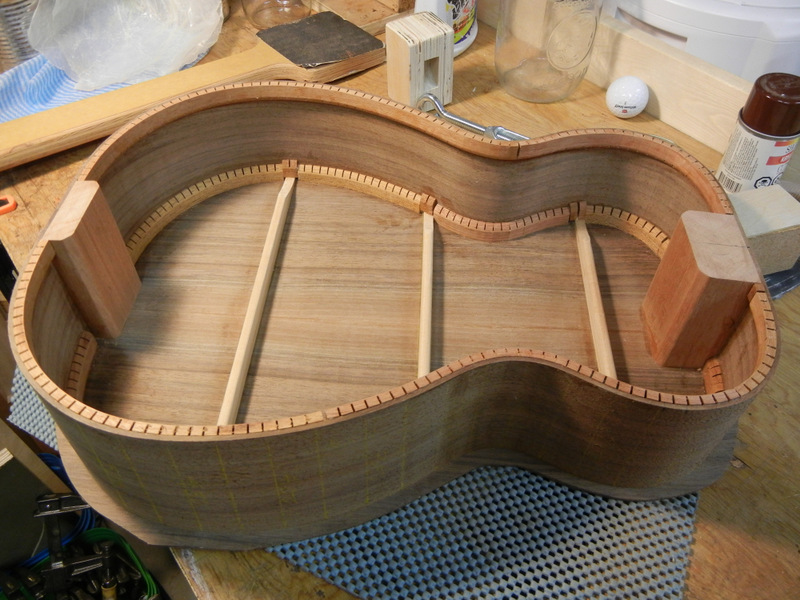
After the back plate was done and the glue set, I then fit the top plate to the ribs. Then I glued the linings for the top in place. Since my main top x-braces are tapered to zero they require no pockets in the linings, except for two which hold the upper face brace. These will be cut before the top is glued on.

box ready for the top plate final fitting

box ready for the top plate final fitting


Leave a comment

Filed under Guitars, Uncategorized

Guitar #30/2

installing truss rod & carbon fiber rods

installing truss rod & carbon fiber rods

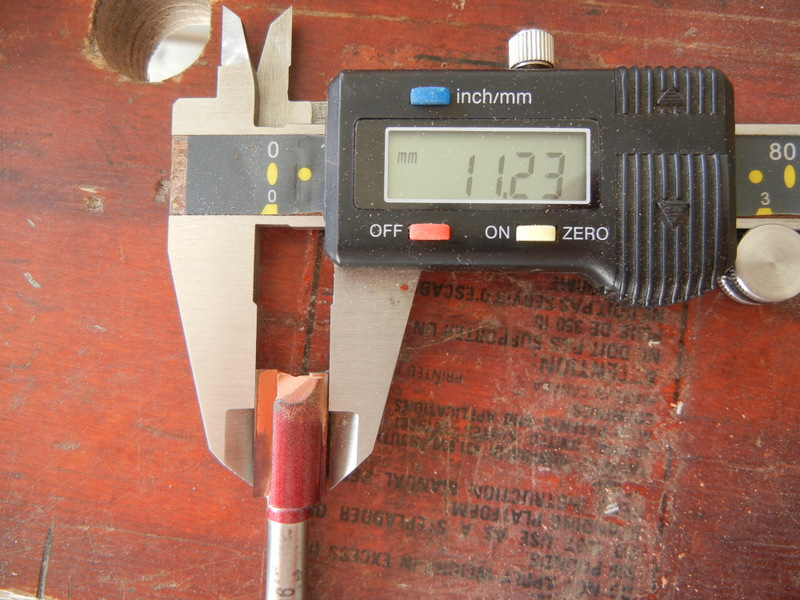
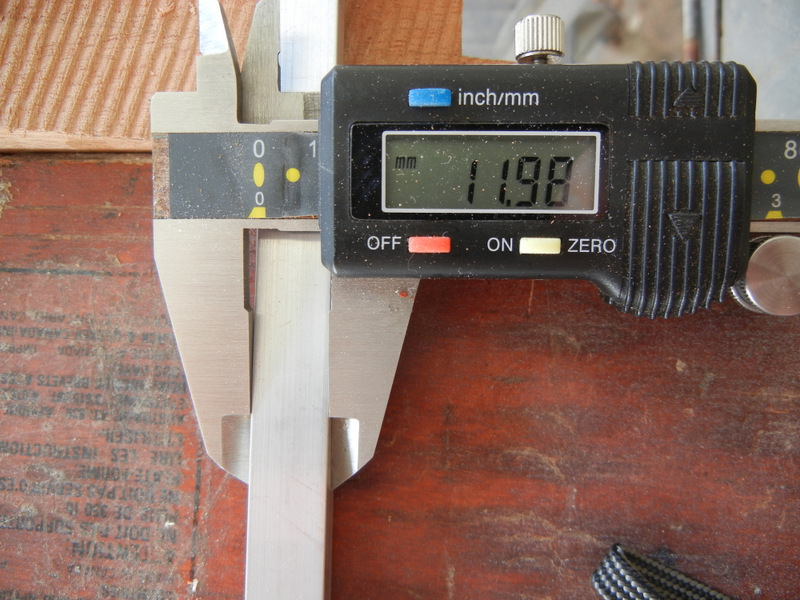
I decided to do some work on the neck blank today. The sun was shining into the carport this morning when I set up my workmate and clamped the neck blank in place. Fetching the router I found that it had the truss rod bit already in place and set to go. I attached the fence, made some adjustments to ensure I had the center lined up, and then routed the slot in a jiffy. I went to put the truss rod into the slot next. It didn’t fit! I looked a little closer and discovered that my supplier had changed their truss rod in a very small way, but now it was wider by about one millimeter. Problem: no 12mm router bit. I looked through my bits and found one that was 1/2″. Close enough, so I swapped it into the machine and set the depth, then ran it down the groove, shaving off the millimeter required. Only now the rod was a bit loose. No major deal here, I put electrical tape on the rod, which made it snug in the groove. But if they keep sending me 12mm wide truss rods I guess I’ll have to buy a 12mm bit. I have learned that it is sufficient for a truss rod to be installed without glue, and in fact I think it’s better. That way if it ever breaks it can be withdrawn and replaced. If it were glued, forget it – make a new neck.

neck with truss rod and carbon fiber rods

neck with truss rod and carbon fiber rods glued in

After the truss rod groove I switched to a new 1/8″ bit and routed slots for twin carbon fiber rods I recently bought. I cut one long piece in two, sufficient to do both sides of the neck. These were glued in place with epoxy. The slots had to be widened for these just a bit, which was done by adding tape to the sides of the neck blank and to the router fence for a second pass at the slots. After that the carbon rods dropped right into place perfectly.

neck with carbon fiber rods & truss rod

carbon fiber rods before gluing

the bit for the old truss rod

the bit for the old truss rod

the new wider truss rod

the new wider truss rod

Leave a comment

Filed under Guitars

Guitar# 30/1

Before I head off with this post about my next guitar, here are the real answers to the last blog.

1. Common Bulrush

2. Western Painted Turtle – Vancouver Island’s last remaining native turtle species, and unfortunately, already endangered.

3. Double-crested cormorant

4. Ring necked duck

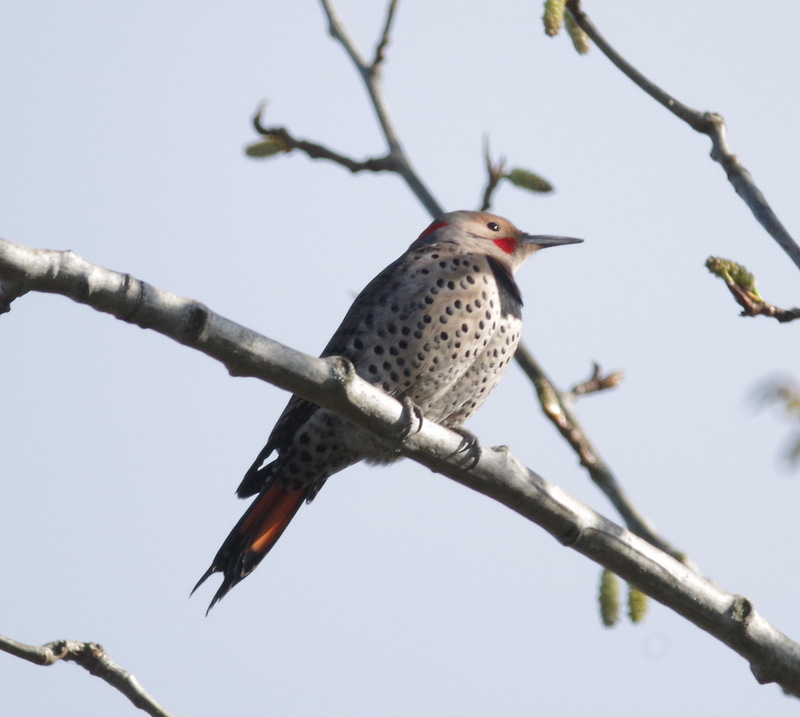
5. Northern Flicker

Now for something completely guitar:

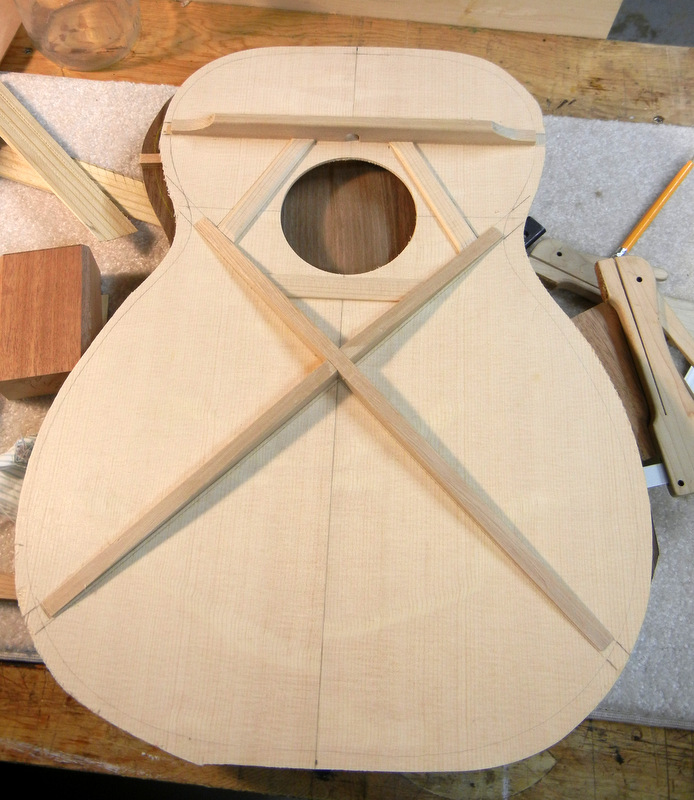
Here is the top of #30, ready for assembly. It’s the same as #29, that is an x-braced domed soundboard. This one is Sitka Spruce.

Guitar#30 top - bracing

Guitar#30 top – bracing

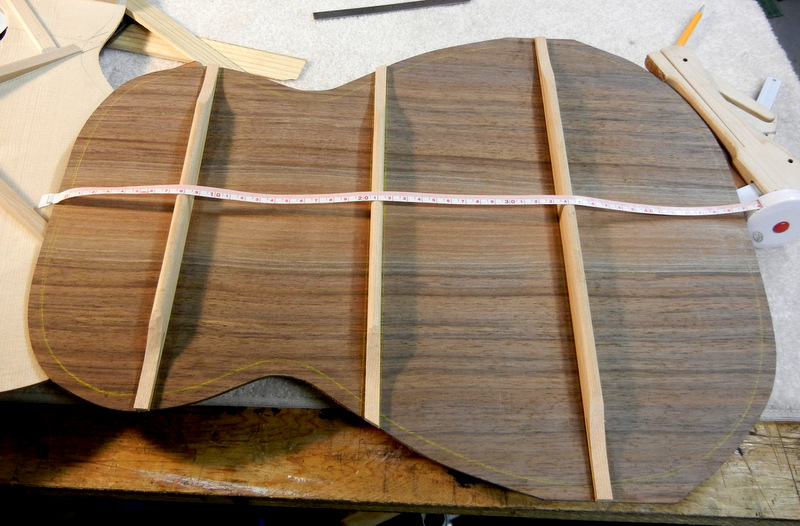
Here is the back plate. Unlike #29 I just went with regular ladder braces. Less work. Spacing was done by eye, more or less, but I placed the braces on more or less even centimeter marks, as can be seen if you zoom in on the tape. The arching was done with a template I had, giving a set rise over a given length. In this case 5mm in 400mm. I drafted the “fair” curve with a bent rod and pins.

back plate, braced

back plate, braced

back arch template

back arch template

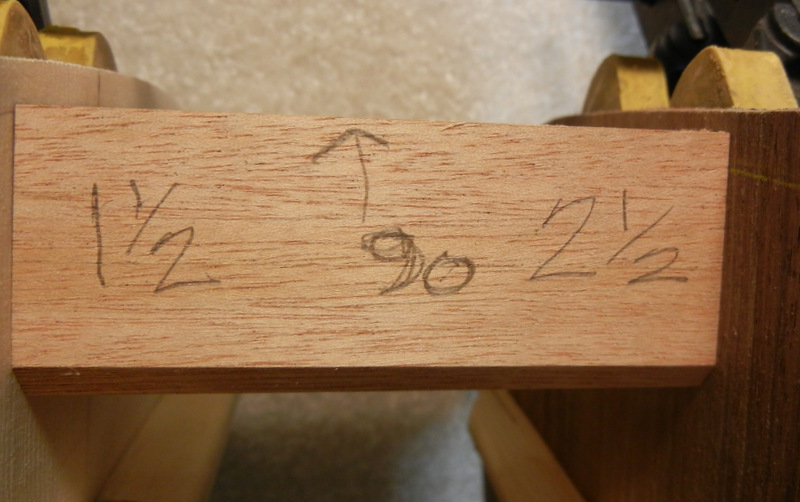
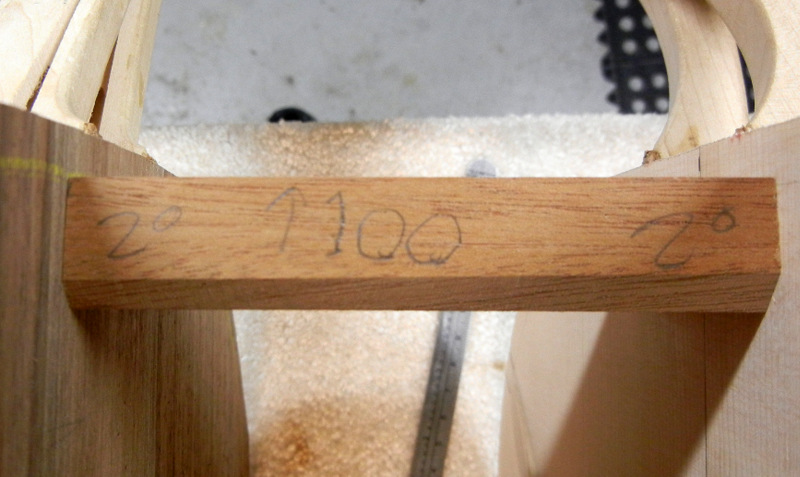
The interior body blocks are a little different this time around. The tail is still 100mm deep inside, but the neck is deeper – 90mm. The Martin I used to get the sizes of an “O” guitar had a shorter neck block, (81) which I decided was too short. About 10mm difference is more to my liking, and that also makes for a slightly greater interior volume. It also aids in the fitting of the back to the ribs, as you will see from the next photo.

mock up of plates with blocks

mock up of plates with blocks

Here I have clamped the plates to the blocks so I can see how the angles on the blocks work out.

neck block with dimensions and angles in pencil

neck block with dimensions and angles in pencil

tail block as per neck block

tail block as per neck block

The angles are often best guesses as after assembly they seem to change mysteriously. The key angle is the one that sets the neck. For that I am using 1 1/2 degrees. The upper face brace arch dictates this, more or less. I’m aiming for a bridge height of 15mm, which this should give me.

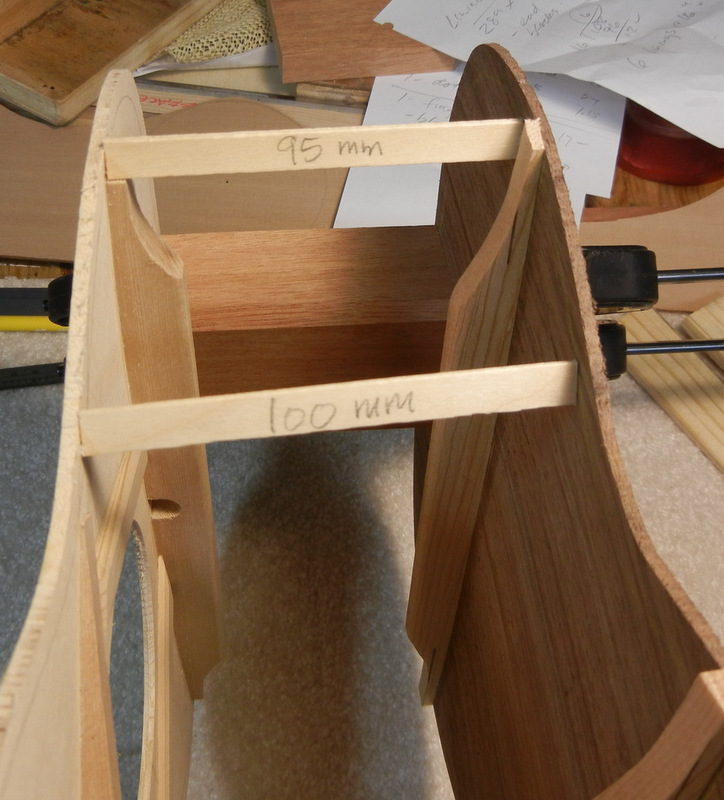
dry run assembly with popsicle sticks showing the body depths

dry run assembly with popsicle sticks showing the body depths

The body depth is 100mm from the tail to around the waist. Then it tapers at the back side down to 90 at the neck block. The first 5mm of taper occurs between the waist and the upper bout at its widest. The plates are shown here in their natural curved state, clamped to the blocks. The soundboard face of the ribs will be flat, and the back face will be flat until the waist, then tapered.

fingerboard already fretted, ready for assembly to neck

fingerboard already fretted, ready for assembly to neck

This is a Bubinga fingerboard. It’s hard and tough, and a lovely pinkish colour. Also cheaper than Rosewood or Ebony. I did this all at once, starting with cutting the fret slots, putting in dots, tapering the sides, sanding to 16″ radius, then fretting. I double stick taped the wood to a bench to do the radius sanding and then put the frets in right there. After I nipped off the ends I pried it up and sanded the edges straight on the bench belt sander. There’s still an extra millimeter on each side. I always leave room for insurance.

Leave a comment

Filed under Guitars

The Junior Naturalist

No. 1

No. 1

We live beside a small pond called Swan Lake. We never see swans here, however. It’s a bird sanctuary, in a park that by some miracle was never destroyed by development. Thank you for that, whoever you were that was responsible. Daily, we walk around the lake, a distance of about a mile, which takes 45 minutes almost invariably. Sometimes I carry a camera, but we have a joke that whenever I do so, we see no wildlife worthy of a photo. Of course when I leave the camera home we run into owls and hawks face to face! But I still like to lug the camera sometimes. Yesterday I put on my 500mm mirror lens. It’s a Tamron, and in its day was very expensive. I got it at a thrift shop for $65, which is  not much. I regularly see photographers on out walks, carrying gigantic telephoto lenses mounted on tripods worth more than my camera. All for taking pictures of ducks? I don’t know what they do in truth, but as amazing as those lenses must be, I will probably never buy one. I’m more of an opportunist – I hope for good shots to present themselves randomly. As long as I have the camera at hand, turned on, and set to the right settings of course, then sometimes I get a lucky shot. This long lens is hard to hold steady, however – it probably requires a tripod but I’m too lazy to bother. My Pentax K50 has built in shake reduction, and with my shutter set to 1/1000 I shoot and hope for the best. Of course I also have to focus manually, which is the trickiest part. But here are a few shots. I have numbered them. It’s a quiz! Guess what they are. My answers are below.

No. 2

No. 2

Write down your answers – no cheating!

No. 3

No. 3

Put down that book!

No. 4

No. 4

One more to go, then all will be revealed…

No. 5

No. 5

OK, here are the answers:

1. Fuzz on a stick

2. Donatello and Raphael

3. Black footed log roller

4. Orca-like duck

5. Giant hummingbird


OK, who guessed right?

2 Comments

Filed under Animal psychology, Cameras, Photography, Thrift shop finds

Aviation Primer

avian social life

the Hummingbird is a solitary creature - by and large

the Hummingbird is a solitary creature – by and large

the Starling cannot bear to be alone

the Starling cannot bear to be alone

the Crow has many guises - alone or in his murder

the Crow has many guises – alone or in his murder

Leave a comment

Filed under Uncategorized

Happy Mardi Gras

behold the wren

behold the wren

feb 17001

the eagle - it was far away and much enlarged here

the eagle – it was far away and much enlarged here

magnolias

magnolias

little yellow birdie

little yellow birdie

another tiny wren

another tiny wren

Leave a comment

Filed under Photography

Beltane in Djanuary

Django - born January 23 1910

Django – born January 23 1910

1-JAN 23001

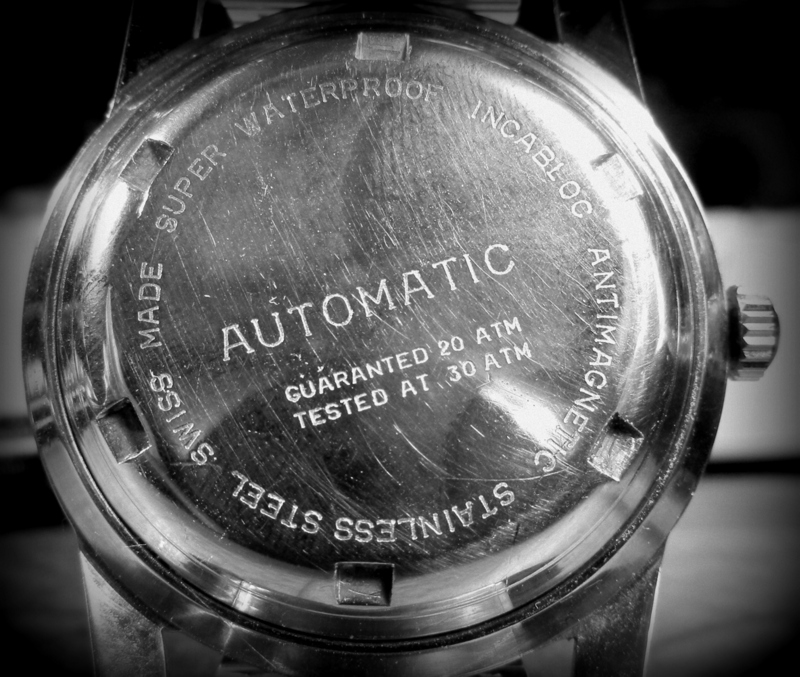
Beltane -the watch for Wiccans

Beltane -the watch for Wiccans

30 atm = 1000 metres! NOT

30 atm = 1000 metres! NOT

2-JAN 23002

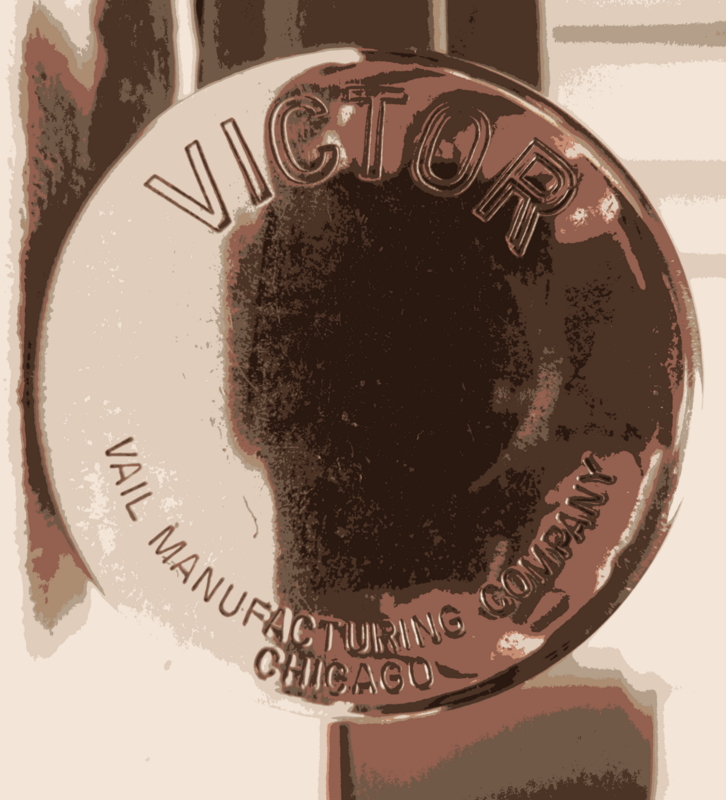
Victor - the stapler!

Victor – the stapler!

slam here to staple

slam here to staple

1 Comment

Filed under Photography, Thrift shop finds, Typewriters, Uncategorized, Watches

My Full Basement

the next BIG THING

the next BIG THING

jan 19001

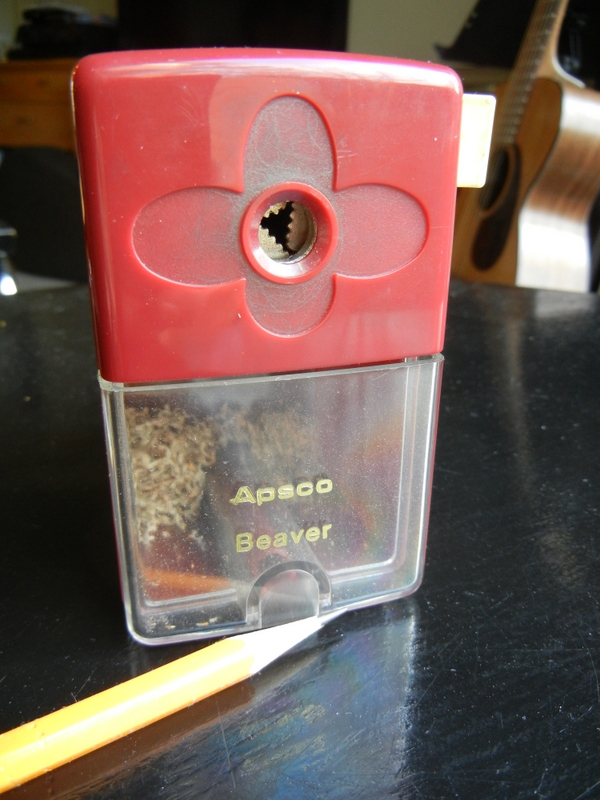
the Apsco Beaver - how Canadian eh?

the Apsco Beaver – how Canadian eh?

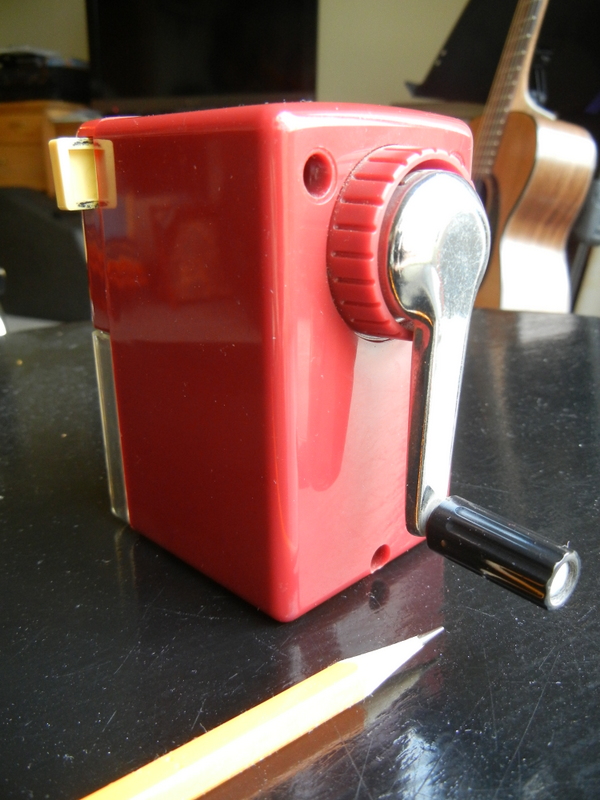
rear view

rear view

Note: this thing put a very fine point on a no. 2 pencil in short order. Price: 50 cents. Original price $13.50 ( sticker on bottom).

No pencil lover should be without this essential tool.


2 Comments

Filed under Poetry, Thrift shop finds, Uncategorized

Guitar#29/15

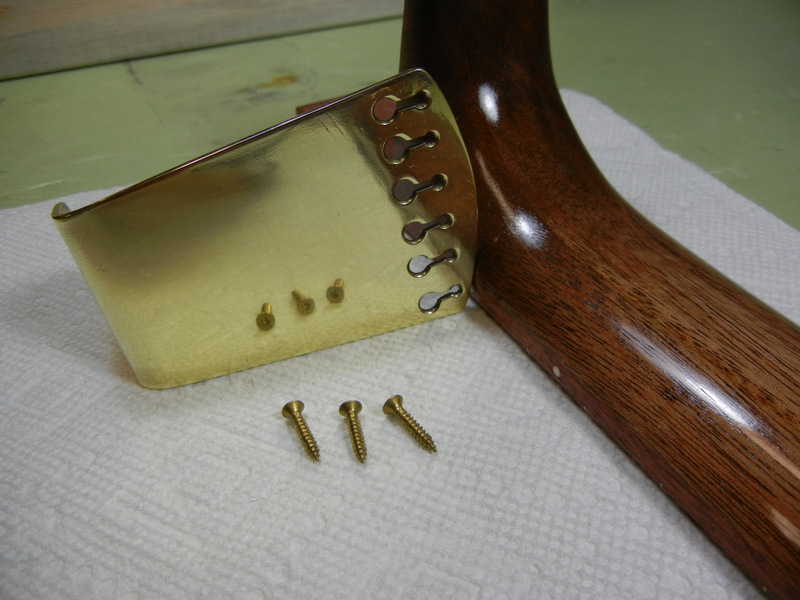
Selmer style tailpiece with replacement walnut insert & original plastic one

Selmer style tailpiece with replacement walnut insert & original plastic one

Time to put it all together and see what turns out. Once the neck is glued on the next major hurdle is to install strings. For this we require a bridge and a tailpiece. The tuners and nut are already done per previous posts. So I unwrapped the tailpiece, which is a copy of the original Selmer one. This design dates to the 1930’s and is a classic. It is seen on virtually every “gypsy jazz” guitar, or a facsimile thereof.

Interruption for rant here:

I don’t like the term “gypsy jazz” guitar. It connotes something false, which is that these guitars are designed for a certain musical style. They aren’t – period. They were adopted for it, hence the strong association. But they were designed to be guitars with good projection, something that could be heard above a band full of brass. They have a wonderful all round sound, and are great for all types of musical styles. The French know this, and there this style of guitar is ubiquitous and used by all genres of musicians. Here, unfortunately, the guitar playing public is sadly unaware of the amazing qualities of this guitar style.

To get on with the guitar making, I removed the cheapo plastic insert from the tailpiece so I could put in a nice matching piece of walnut. A few saw cuts around the edges and in it went. Then I spent half the day wiping on the french polish finish. About twenty coats later it began to shine. Then I put the red leather patch on. This is traditional, and protects the guitar wood from the sharp metal edges. The tailpiece comes flat too, and has to be bent. Clamp in vice and bend 90 degrees – done. To install it has to be dead centre with the neck. I checked this again with my long metal straight edge, and verified the centre line. Right at the butt seam where it was designed to be. Good work!

red suede leather piece glued to underside of tailpiece

red suede leather piece glued to underside of tailpiece

checking centre line

checking centre line

tailpiece attached with one screw for now

tailpiece attached with one screw for now

Now we need a bridge! I used a walnut blank which I had around. First step is to get it the right size. I sawed away the excess and sanded it on the machine. It should be 15mm wide and at least 25mm tall, 150mm long. Then we make the feet. The bridge sits on top of the X brace, one foot on each leg. The feet are 25mm long, and between them and at the ends there is a gap of about 2mm height. I make small saw cuts and file and chisel out the gaps.

making the bridge feet

making the bridge feet

Once the feet are done the bridge has to be fitted to the top. A little sanding in place does the trick, so the feet are seated correctly, and the pressure is evenly distributed. I’m protecting the top with cardboard. This finish is easily scratched, and since it is so highly polished any tiny scratch shows up glaringly.

sanding the bridge feet to match the contour of the top

sanding the bridge feet to match the contour of the top

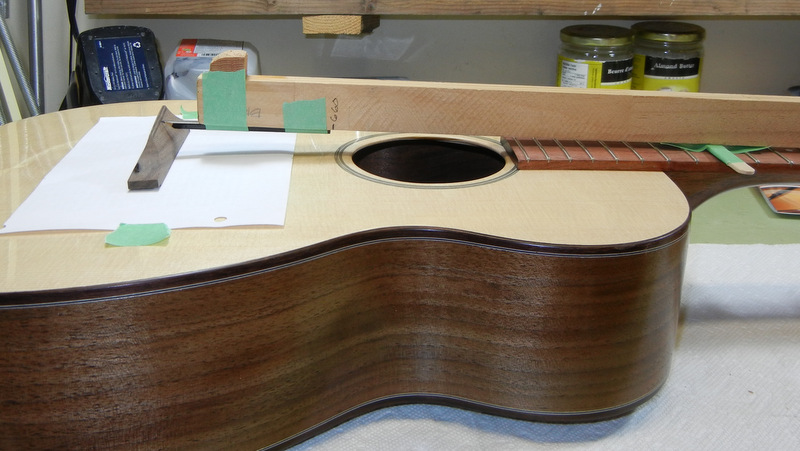
Once the bridge fits the top the carving begins. I use a long stick with a half pencil on the end to mark the bridge height. I shim the 12th fret to get the required string height that I want. Then I remove the excess wood from the bridge blank.

bridge marking tool

bridge marking tool

After the bridge is the correct height the top edge has to be formed. First a line is marked on top that indicates the top edge. This is angled slightly as required for string length compensation. Then I grind away the sides using the end roller on the bench sander. I also remove the excess length from the ends and grind out a concave curve in each end.

bridge in near final shape getting checked for height

bridge in near final shape getting checked for height

Now we can string it up and make the final adjustments. The tailpiece is on, and we have a bridge that is close to the right height, so the strings will go on now. But first I put on the outer two strings and set the string width at the bridge. This involves getting the outer strings with the right edge clearance to the fingerboard. I need at least 3mm. Once set, I mark the position of these two strings. In this case it was 56.5mm wide. Then I use a graduated string width scale and mark in the middle four strings. With files that are the widths of the strings (or close to them) I file a groove for each string to sit in. Then I final sand the bridge and give it wipe with oil. I like the look of an oil finish on the bridge, as opposed to a shiny shellac finish. Much fiddling will go on to get the string heights to the right action, but the basic setup is done.

Before I get to the end here, I had to make a pick guard. Since the guitar is very small the off the shelf pick guard was too large, so I had to modify it to fit. For this I got out the old circle cutter used for the rosette. I set the radius and taped the plastic piece to a piece of signboard plastic, then cut out the right curve to fit this sound hole.

sound hole jig used to trim pick guard

sound hole jig used to trim pick guard

Well, that’s it. I won’t go into all the details of setting up a guitar here. It takes a while to finesse it all so it plays well; action adjustments, and minor fret work to remove high spots here and there. Also more french polishing with the pad, micro polishing with super fine paper and oil, re-polishing, etc. But we have a guitar. Here it is. I like the sound of it. For a small guitar it’s surprisingly loud, and well balanced. The high frequencies are very strong, and it really delivers in the bass as well. It’s very  light, too. Weight: 1474g, or 3 lb 4 oz.
Guitar #29

Guitar #29

1 Comment

Filed under Guitars

Guitar#29/14

Neck assembly coming up below!

easing the tuner bushing holes in the headstock

easing the tuner bushing holes in the headstock

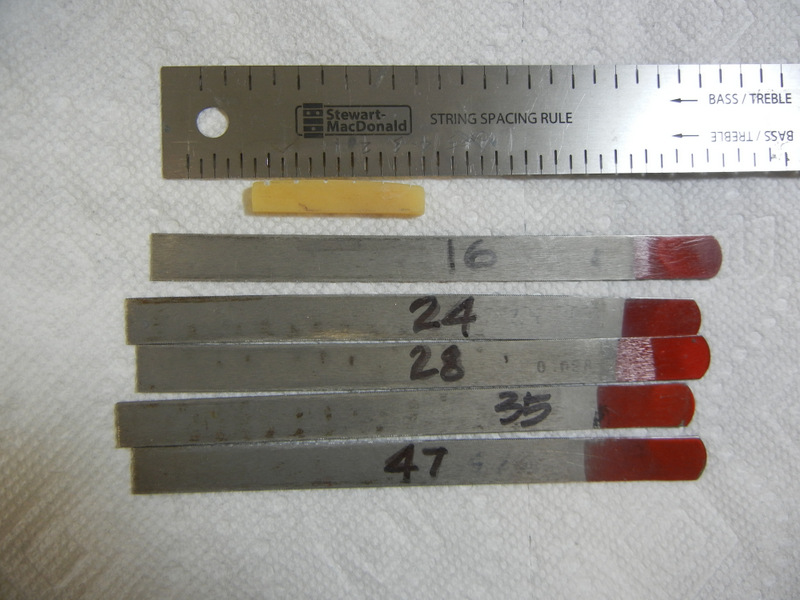
Before assembling the neck to the body I completed the installation of the tuners and made a nut. The holes in the headstock were too tight so I eased them out another 64th by hand with a drill. Then I installed the tuners. I cut the nut from a piece of bleached bone. I have a scale for this which has graduated slots on it, slots which account for the increased width of the strings as well as providing any number of spacing options. The nut slots are filed with special files, too. There is a file for each string thickness.
nut before trimming

nut before trimming

nut after trimming

nut after trimming

tuners installed - note press in bushings

tuners installed – note press in bushings

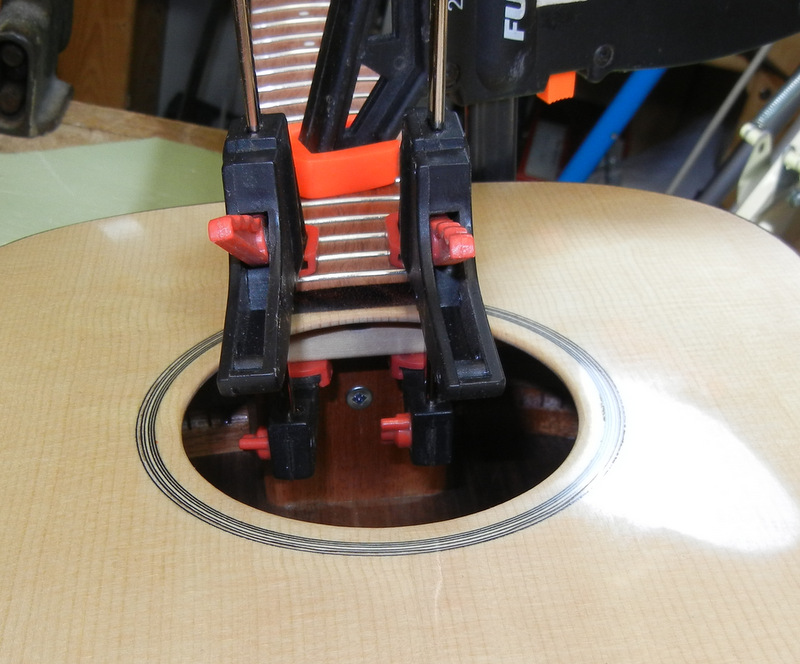
Finally! Time to assemble. Many dry runs were done first, to ensure the fit was tight and had no slop. This took me a long time, even though the clearances are tiny they have a large effect. I adjusted my shims this way and that and finally ended up using a strip of blue shop towels soaked in glue. I needed 0.050 mm and the towels are 0.025 thick, which with both sides gives me just what I need. I tried with thin veneer but that didn’t work as well. The compressibility of the soft towel seems to be more forgiving in any case, which is why I seem to end up using this method a lot. I can testify that it works well.

neck ready to insert, with shop towel gasket/shim

neck ready to insert, with shop towel gasket/shim

The fingerboard gets glued to the top as well, but doesn’t need much glue. That joint isn’t structural, so minimal glue is required. I sanded off the finish under the fingerboard to get good adhesion. Glue does not stick to shellac very well.

finish removed beneath fingerboard

finish removed beneath fingerboard

The neck should fit into the slot almost 100% before there is resistance. Then with a little clamp pressure it seats to the bottom and is rigid. That is the theory anyways. Hence all the fiddling around with shims and gaskets. This time it fit perfectly. I clamped it to seat the dovetail and also clamped the heel down to ensure that there will be no gap at the back. For this I have a long Klempsia clamp. I have a bunch of these clamps, which slide on a rail and are made with wooden jaws and cam levers. No woodworker should be without some.

One last note for today: I almost forgot the truss rod, because it’s not glued in. But it’s in there now, loose but snug. If it ever breaks the neck can be removed and the rod replaced. It does work, I tested it.

neck joined to body and clamped

neck joined to body and clamped


Leave a comment

Filed under Guitars