Guitar#29/13

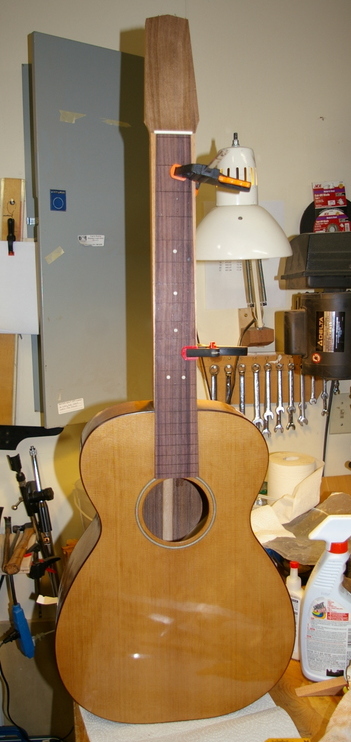
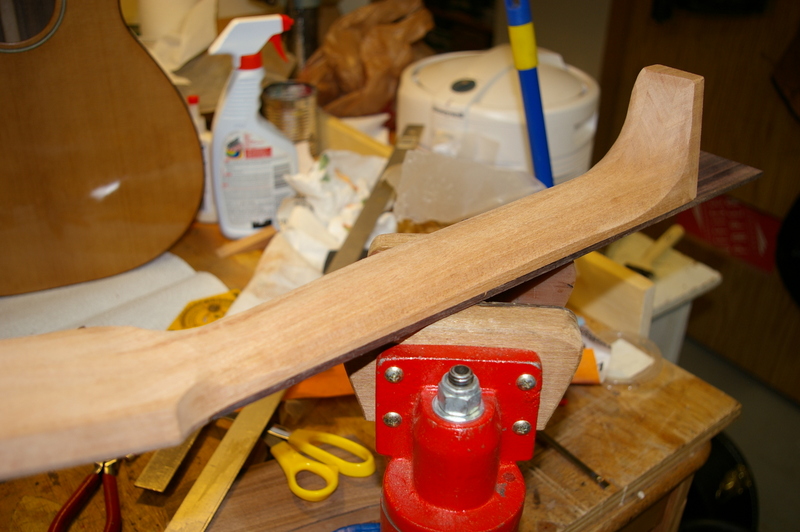
The neck is just about ready to assemble. Lots of shaping and sanding have been done, using progressively finer sandpaper until 360 grit. That is about as smooth as required for finishing. I have hit my target dimensions for depth and the two critical widths: the nut and at the body junction.

neck depth at first fret

neck depth at first fret

nut width good

nut width good

width at body a tiny bit wide, but OK

width at body a tiny bit wide, but OK

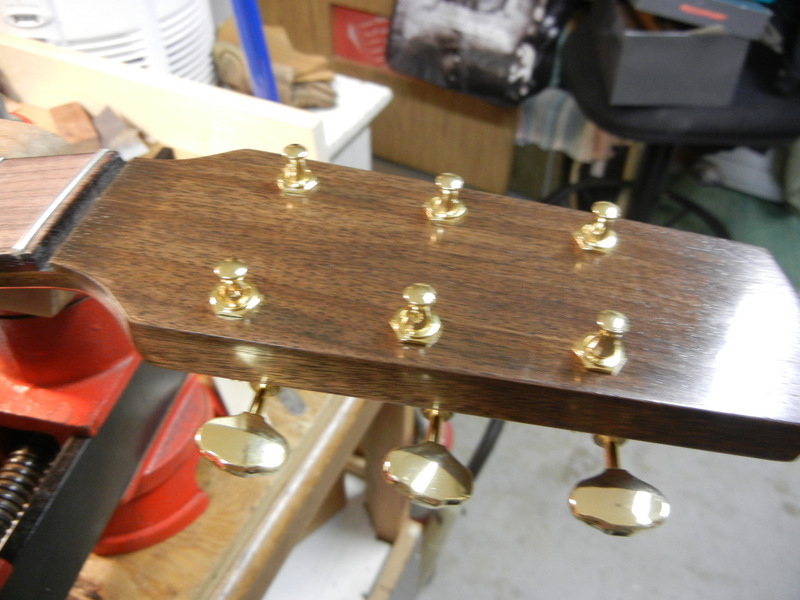
Once the neck was as smooth as I could get it I drilled the holes in the headstock for the tuners. These require drilling first a 1/4″ hole for the shaft, then a larger one on the face for the press fit ferrule ring.

drilling tuner holes

drilling tuner holes

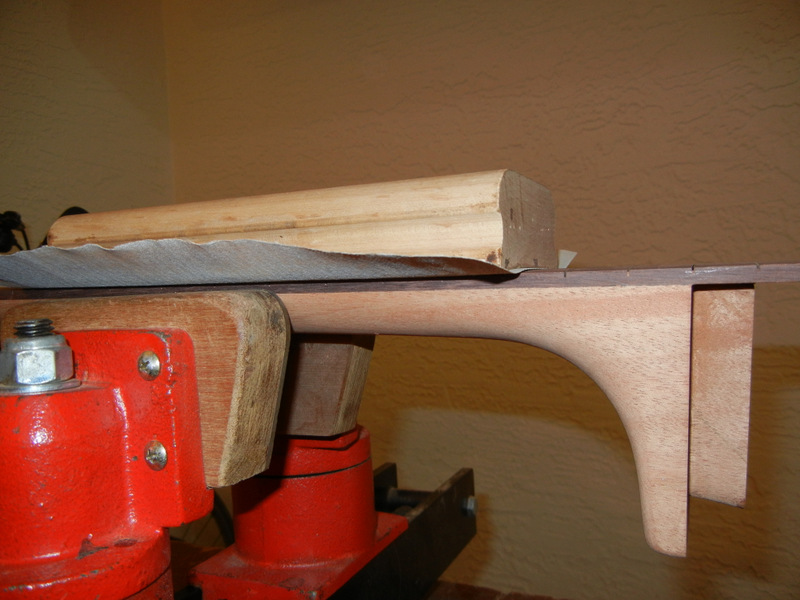
I use tape to stop the wood from splintering when being drilled. Then I moved to the fret installation. The fingerboard was sanded once again and checked for flatness.

final sanding of fingerboard before frets

final sanding of fingerboard before frets

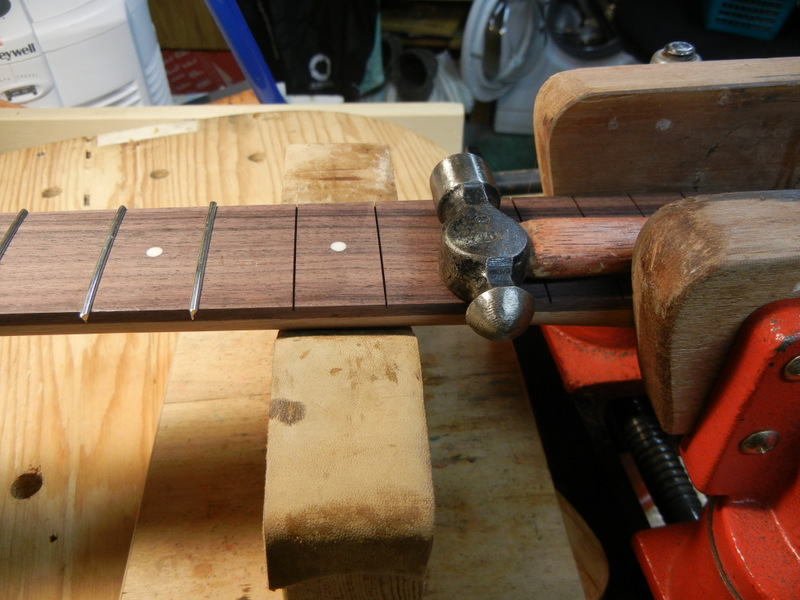
I clamp the neck in the vice and cut the frets as I go. They have to be curved beforehand, a task that I do by hand, because I don’t have the proper tool to bend the long fret pieces. I just grab the fret tang with a small set of nippers and gently bend the wire. I use a medium wide fret, mostly because the tang is a good depth, and it bites into the fret slot well. Some fret wire comes with short tangs, but these don’t sit as tightly. Even so, I often have to clamp a few loose fret ends after they are installed and glue them down with super glue.

fretting kit

fretting kit

neck clamped in vice and working frets sit on a neck support block

neck clamped in vice and working frets sit on a neck support block

Hammering in frets has to be done carefully. You tap in one end, then the other end. Then you work both ends towards the centre, hoping that the ends don’t pop up. Sometimes they do and then you tap them down or glue them if they won’t stay seated.

bent fret ready for installation

bent fret ready for installation

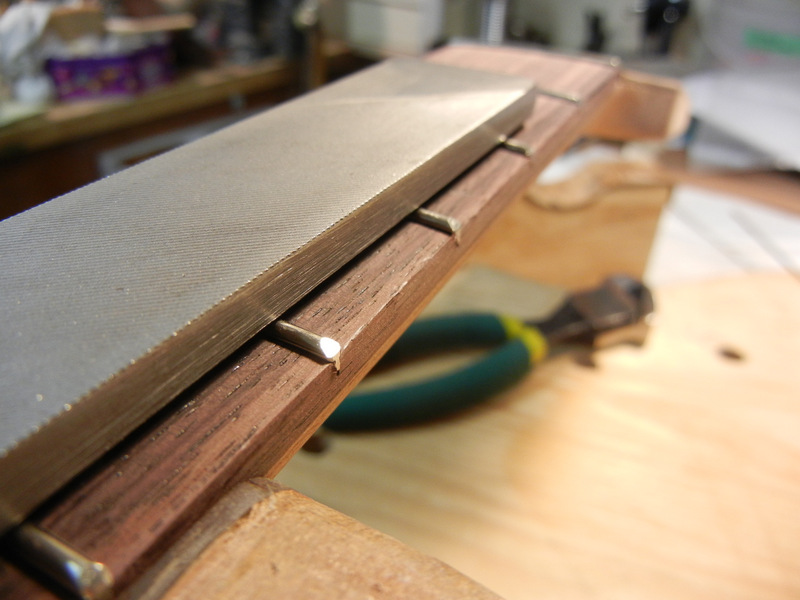
Once all the frets are in they get trimmed with a fret nipper. Then they get filed flush, filed at an angle and also filed to remove the four sharp edges. This takes more time than installing the frets, and it is crucial to how they feel and work. They also get leveled and polished. It is a process that goes around a few times before everything looks good. When all done the frets should be level, with no sharp ends, and very shiny and smooth. The final polish is done with extra fine steel wool. This also polishes up the wood of the fingerboard nicely. It’s made of rosewood and can be very highly polished. Some builders oil the fingerboard but I generally leave them natural. In time they get dark from skin oils as they get played. I like the patina from this process.

nipping the sharp ends of the frets

nipping the sharp ends of the frets

the file is used to angle the fret ends here

the file is used to angle the fret ends here

The file shown above is not for fret leveling, it would be too radical a cut. The first leveling is just with 360 grit sandpaper in the sanding block. That takes off any small discrepancies. At least it should if the frets have been put in right! Small variances in fret height can create annoying buzzes, and the guitar will then be back in the shop for fretwork.

After the frets were in and all the leveling and polishing was complete I put in the tiny dots on the edge of the fingerboard. I drilled the holes by hand and used superglue to glue in the thin plastic rod. This was quick and easy and I filed the excess off in a jiffy. Then I gave the neck another round of sanding before staining it dark walnut brown. For this I used a pad just like the french polishing pad. I stained the neck with a gel stain to make it dark brown. This tone goes well with the walnut body. First I masked off the edge of the fingerboard however, to avoid staining this or the plastic dots.

staining the neck with a pad and dark walnut gel stain

staining the neck with a pad and dark walnut gel stain

I gave the neck two rounds of stain, rubbing it in well and removing any wet or thick bits so it was as even as possible. This stain dries fast and I usually just go right ahead and begin the final french polish as soon as it looks good to go.

The french polish is easy on the neck, because there isn’t much area to cover. I use a small pad, and it doesn’t take much shellac to get a good build of finish.

neck with several layers of french polished shellac

neck with several layers of french polished shellac


1 Comment

Filed under Guitars

Elvis would be 80

What if you are Elvis?

What if you are Elvis?

Happy birthday to Elvis. And to me.

sk031

4-IMGP9424 3-IMGP9417 2-IMGP9413 1-IMGP9412

2 Comments

Filed under Photography, Poetry

Guitar#29/12

Final shaping of the neck began today. Carving a neck is like sculpting – you remove what is unnecessary to reveal what is there within. But only just so much. Plus it has to be not only pleasant to look at but comfortable to feel.

essential neck carving tools

essential neck carving tools

I have a jig to hold the neck. It fits in my swivel jaw vice, which is mounted on my old workmate stand. This workmate has been in use for about 35 years or more and it is one of the must have tools for doing just about anything, never mind guitar building. The swivel jaw vice is also a must have tool for guitar makers.

neck in carving jig, in swivel vice, on workmate

neck in carving jig, in swivel vice, on workmate

The microplane flat file is an incredible thing for carving. It can hog off wood, or remove only fine shavings, depending on how you angle it, and what pressure you use. I do most of the carving with only this tool. I also use a round version of it for the curves at the heel and neck. My other tool for this is a short file, called a four in hand. It has four surfaces, two flat, two convex, and each pair comes in rough and smooth cut. This file is about the only other essential cutting tool for neck carving. Sandpaper can do the rest if necessary, but I have some round files that are very handy as well.

looking down the neck for shape

looking down the neck for shape

I use the calipers to keep checking the neck depth. I set them a bit too large and when I hit the mark I switch to very fine filing and sanding so as not to overshoot. You can’t add more wood after it’s been removed.

neck to head detail

neck to head detail

The straight section is not too difficult, but the neck and heel transitions are very tricky. They take most of the work. I use the pin comparator to check my cross sectional shape for symmetry as I go along.

heel detail

heel detail


1 Comment

Filed under Guitars

Guitar#29/11

The neck is almost ready for final carving. I have repeated all steps prior to busting the truss rod. That includes gluing on the head plate and fiddling with the dovetail joint. I previously thought it was correct but further inspection revealed that it needed more work. It was as if the whole thing changed while it was sitting in the shop. This is why we check not twice, but three or four times before assembling anything! As it stands I am ready to say that this time it is good to go. I hope these are not going to be famous last words.

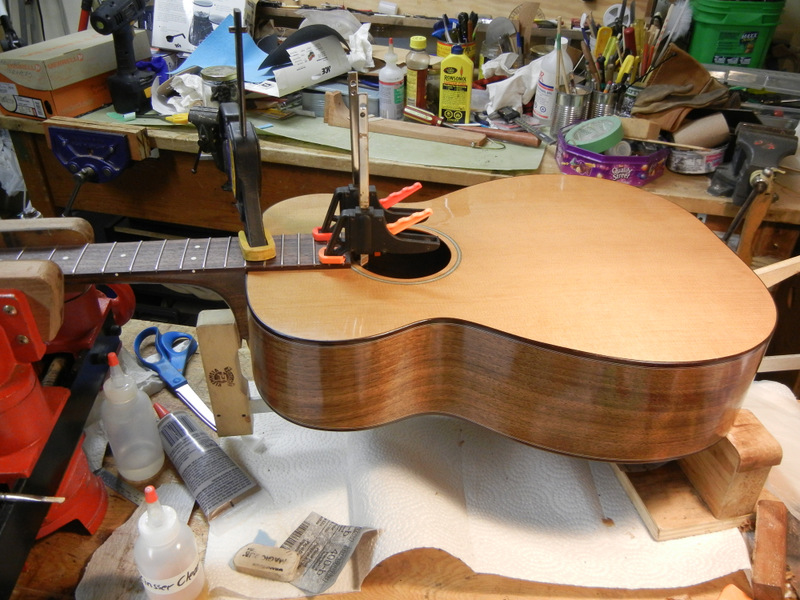
dry fitting neck to body

dry fitting neck to body

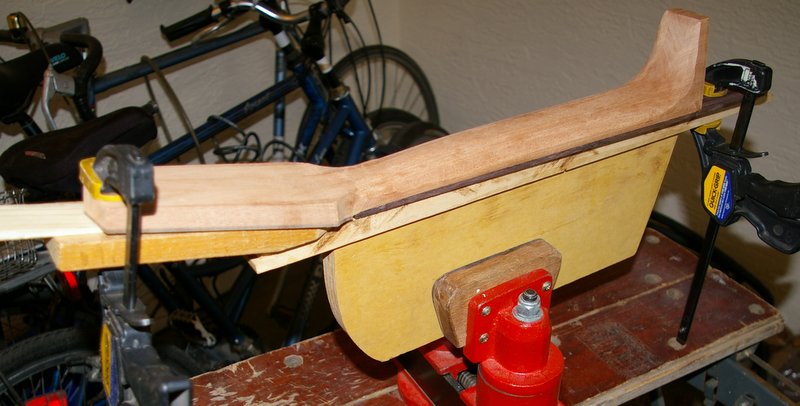
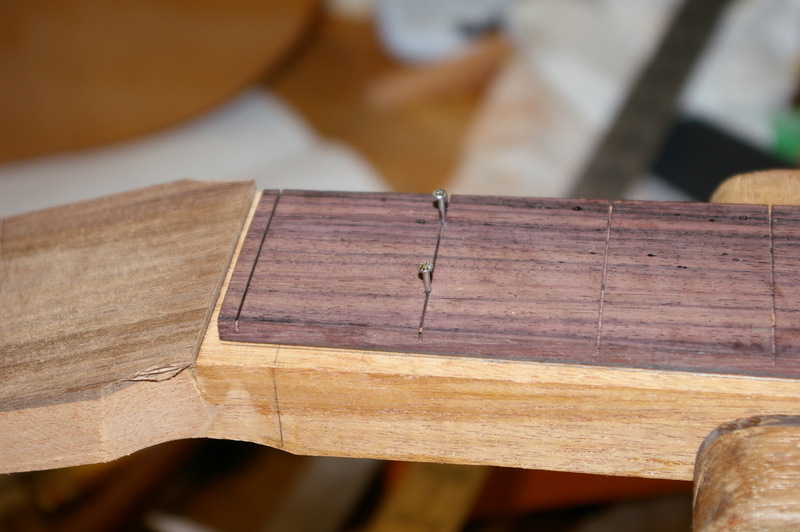
Once I had the neck joint down I lined up the fingerboard and clamped it to the neck. Then I nailed it in place with small brads, and cut the heads off. Next step was to do a lot of heavy grinding on the belt sander. I sanded the headstock down close to final thickness, as well as tapering the neck and removing a lot of wood to form the rough shape. After this I will carve by hand from here on in.

Once I was certain that everything was finally aligned I prepared to glue the fingerboard. The objective was to make sure I could slide the truss rod assembly into the slot afterwards.

rough carved neck

rough carved neck

fingerboard tacked to neck prior to gluing

fingerboard tacked to neck prior to gluing

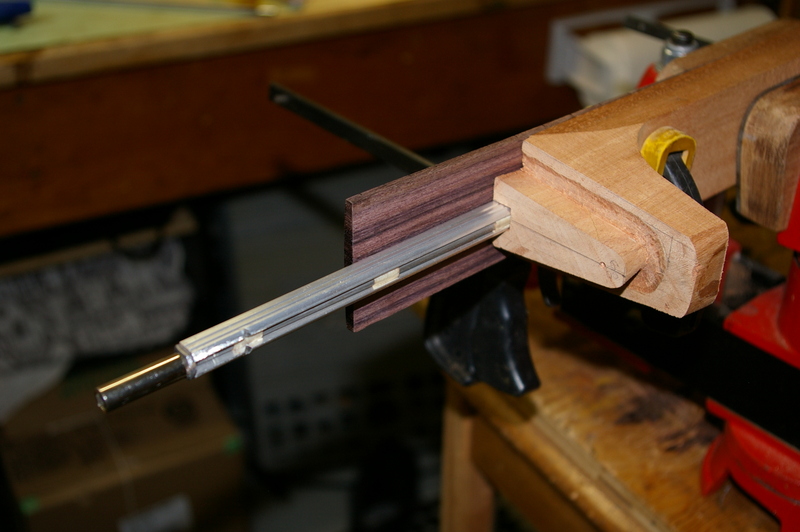
testing placement of truss rod prior to gluing

testing placement of truss rod prior to gluing

The truss rod slid in and out perfectly, with no slop or extra play in the slot. Time to glue the fingerboard.

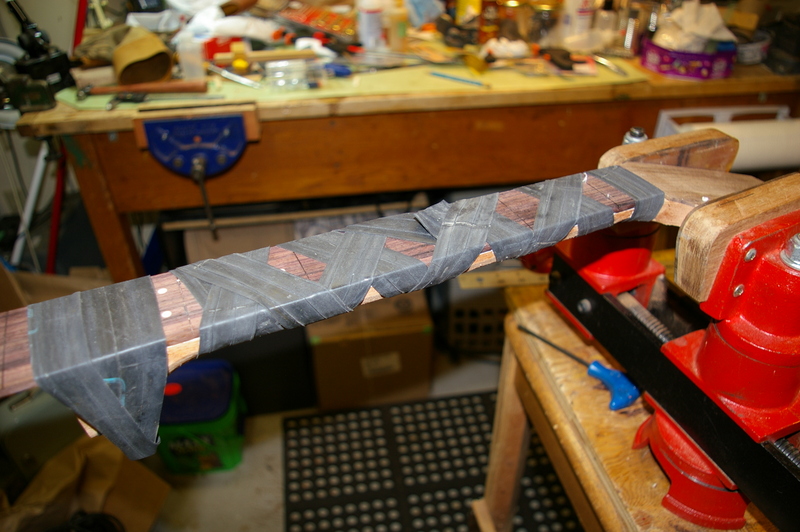
here we go again

here we go again

A few hours later I removed the rubber band and slid the truss rod into the slot. It went in and came out without any problem. No testing to see if it bends yet, I’m going to let the glue dry for 24 hours at least before putting any stress on it. Carving is next.

Leave a comment

Filed under Guitars

Guitar#29/10

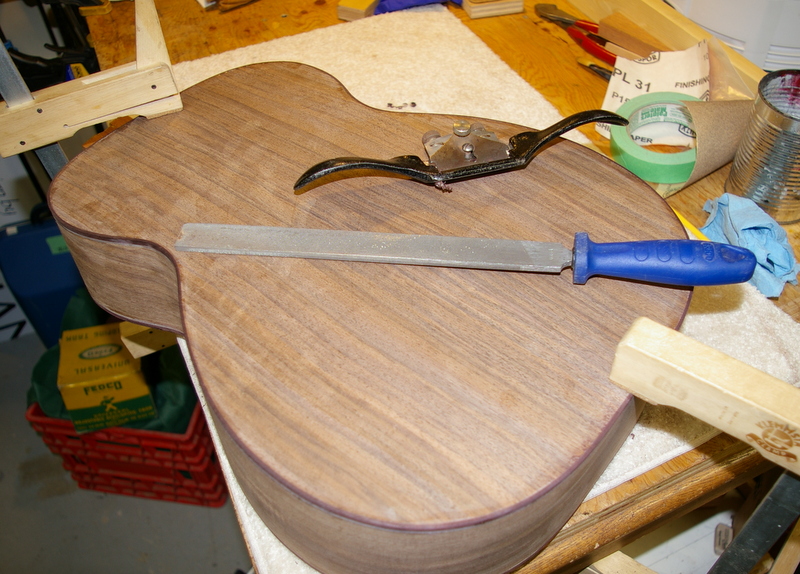
After the truss rod mishap I ordered  two more rods, which arrived yesterday. More about this later. Previously I scraped and filed down the bindings, using a spokeshave and a file. After that I began sanding. It is darn near impossible to ever get out every last tiny scratch on a guitar, simply because no matter how much you inspect it, inevitably you will miss something. That is why I take the guitar outside to examine it. But even so, I’m sure I missed something.

scraping the bindings

scraping the bindings

I also made a new neck blank and routed the dovetail, then fitted it. The fitting went well, since I knew the precise angle to cut, and had a good idea of how much filing would be required to straighten it up afterwards. They always need fine tuning.

new neck blank cut and fit to body

new neck blank cut and fit to body

However, sooner or later the moment arrives when you have to begin applying the finish. My preferred finish is shellac. Old school, plain shellac is naturally derived, non toxic, easy to remove or add to, and gives good protection to wood on an instrument. Most other coatings are toxic, smelly, and not as beautiful in colour as shellac. You can also spray shellac now, which I have done with good results. This time I’m rubbing it on though, the old way with a little bag (called a mouse) made of cotton batting wrapped in cotton cloth. It’s an old technique but it works well once you get the hang of it. If you goof it up you can always wet sand it with super fine emery paper and oil. I often do that between sessions to level the finish and remove various swirls and fingerprints. Shellac is very soft at first but hardens up eventually. Patience is required. I try to remember this each time I begin french polishing.

guitar body after one french polishing session

Guitar body after one french polishing session – guitar is held in vise with the old neck re purposed as a handle for finishing. There is a screw on the heel locking it together.

french polish materials

french polish materials: alcohol, clear unwaxed shellac from a can, light furniture oil,                              the rubbing “mouse”, pounce bag full of fine pumice

There are now many videos on YouTube about french polishing. Some are useful, some are horrible. Basically there are no short cuts to a good job. Never try to apply shellac to a guitar or fine furniture with a brush! Practice on a piece of scrap wood first is the best advice.

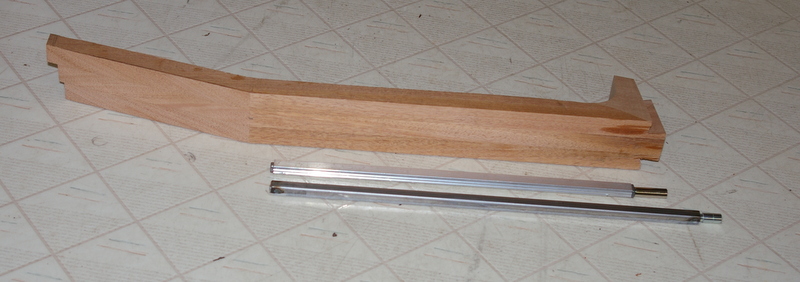
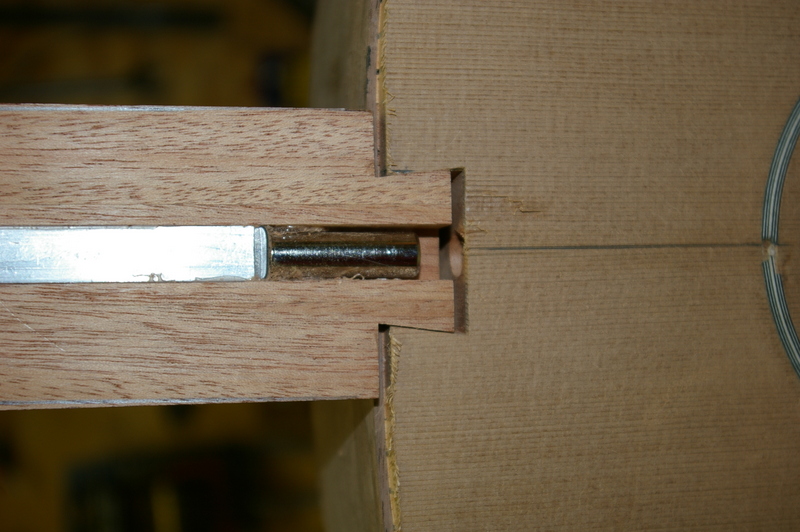
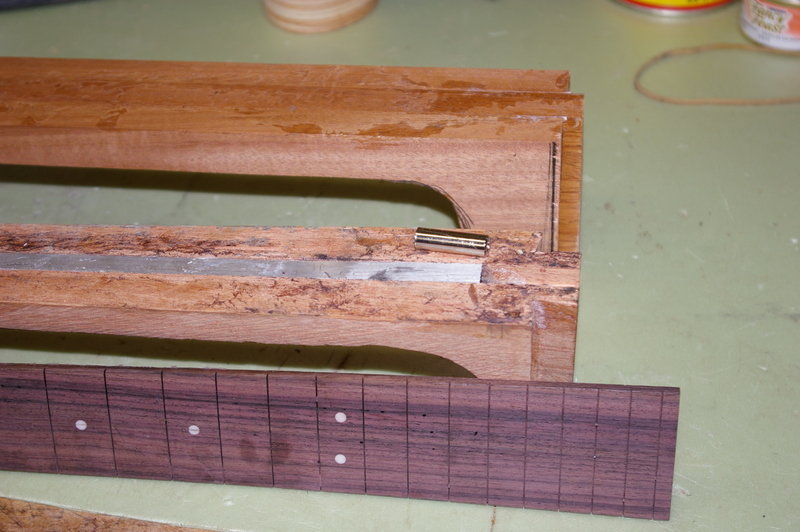
Back to the truss rods. The replacement rod and another similar one arrived together by courier. The new type rod has a steel casing, as opposed to the aluminum case of the first one. It feels much heavy as a consequence. But it it also one inch longer. Which means it will not fit, after all. This guitar has a 25″ scale, which is not that unusual, so I have no idea why the manufacturer of this long rod made it so long. I will thus once again go ahead with the original type rod, but there is no way that I will be gluing it into the neck this time.

neck blank with 2 types of truss rods

neck blank with 2 types of truss rods


Leave a comment

Filed under Guitars

Happy New Year 2015

get it by typing

get it by typing

1-Photograph (1)

3 Comments

Filed under Painting, Typewriters, Zen

Guitar#29/9

Every guitar project eventually hits a snag. Yesterday I hit one, big time. While I was attempting to put back bow on the neck I exerted too much torque and snapped off the threaded end of the truss rod. I was following instructions but somehow the neck was either too stiff to bend, or there was something else wrong. In any case I won’t be doing that again. This truss rod comes with instructions to glue it into the channel with epoxy. In my view all this did was prevent the thing from bowing. Other suppliers indicate that some builders do not glue this rod in. I may go that direction next. My supplier is sending a new rod, but the neck and all the work that has gone into it is now wasted.

This is most annoying because I had the neck joint fitted perfectly. This involved lots of chiseling, filing and sanding, and a multitude of checking for proper angles both vertically and horizontally.

detail of neck joint rough cuts

neck showing truss rod barrel nut

In the meantime I have begun a new neck by cutting up another mahogany 1×4 board, band sawing and gluing up three more pieces.

Neck with broken barrel nut, and new neck blank in background

Neck with broken barrel nut, and new neck blank in background

My first reaction was to glue on the fingerboard and try it with the truss rod as is, whereby it would be at least a passive reinforcement. But then this morning I reconsidered. So I removed the fingerboard with the aid of a heat lamp and some steel scrapers.

removing the fingerboard

removing the fingerboard

I still don’t have the answer as to why this thing didn’t bend in the first place. Plus I am not confident that this particular truss rod is the best quality. I may go to a different source for a better one, i.e. one made in Japan. My supplier does not say who makes their truss rods. Form your own conclusions.

But other work is progressing. Today I bent the bindings on the hot pipe. There are four pieces, made of rosewood with white/black/white pinstripe laminations on the bottom edge. I then taped them to the binding channel that was previously cut, and let them dry in place.

hot pipe ready to bend binding

hot pipe ready to bend binding

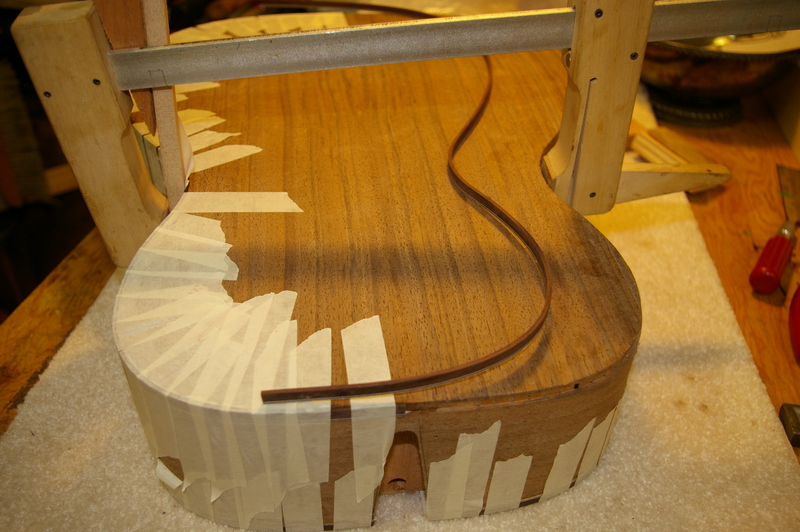
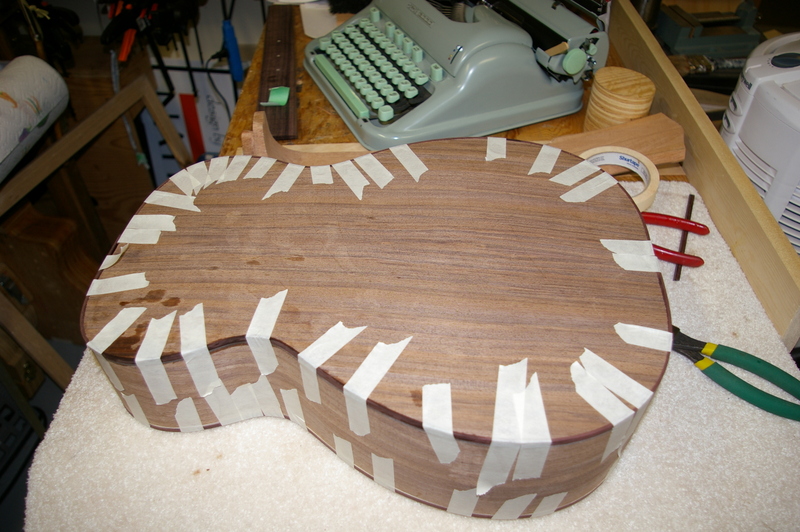
Later I applied glue and taped them on. I use lots of tape to ensure that the binding is pressed tight into the channel. One particular place that is often problematic is at the waist of the back, because here the binding channel takes a bend downwards. The twist induced causes the binding to want to pull away from the guitar. So I added a heavy duty clamp to force it into place. Once one side of the back is dry I will do the other side.

installing bindings

installing bindings

bindings drying in place before gluing - (note Hermes 3000 typewriter in background - received as Christmas present)

bindings drying in place before gluing – (note Hermes 3000 typewriter in background – received as Christmas present)

A final note, but not about guitars. Above you see a Hermes 3000 typewriter. This was given to me by my brother & sister in law for Christmas. It belonged to the late father of my brother in law. I have to extol this machine as probably the finest typewriter ever made. I’m not saying that it’s everyone’s favorite, but I guarantee that if you have a look inside at the works you will see a true wonder of the finest precision Swiss engineering and manufacturing. I’m keeping it close at hand as inspiration while I build this guitar. It is a reminder of the meaning of quality.

Leave a comment

Filed under Guitars, Typewriters

Guitar#29/8

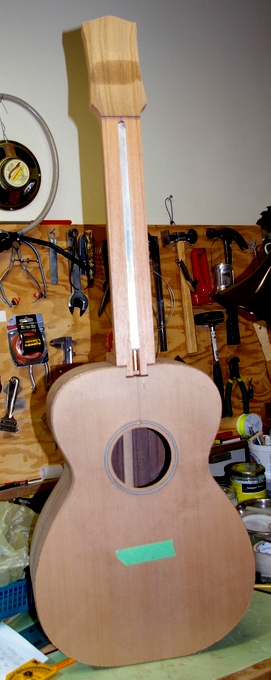
neck dry fit to body

neck dry fit to body

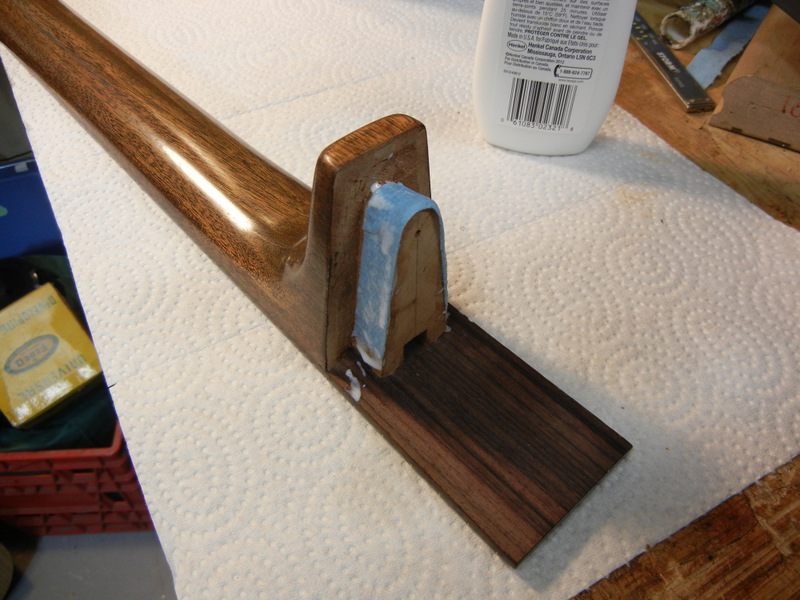
Since last time a lot of work has been done. First thing was I dimensioned the neck. Most of this was done on the belt sander. With a heavy grit belt I let the machine grind away a lot of excess wood. Slowly but surely I got close to the final thickness of the neck and the headstock. I then glued on the head plate veneer, and rough cut the head profile. But before all this I had to plane the fingerboard to the proper width. Two dimensions here are critical: the width at the nut (fret 0) and at the body joint (fret 14). I use fairly common widths of 44 and 55mm respectively. It’s critical to get the neck taper perfect so I do it very slowly and carefully. It also must be symmetrical about the centre line.

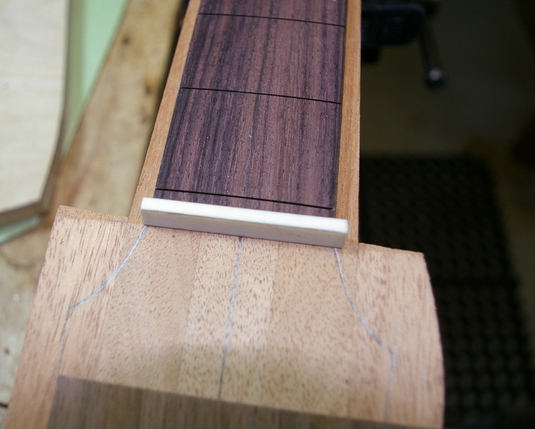
Once the fingerboard was the right width I positioned it on the neck and clamped it in place. Then I put the bone nut where it goes, loosely, and finally glued on the head plate veneer. The head plate veneer is a thin walnut piece left over from the back plate.

dry fitting the fingerboard, nut and head veneer

dry fitting the fingerboard, nut and head veneer

head veneer glued and clamped

head veneer glued and clamped

I let the veneer glue set for a while and proceeded to the body. I had previously glued on the back, which is very much the same process as the top, seen on earlier posts. I trimmed off the excess overhanging wood with a hand saw first and then a router. Cutting the binding channels was next. For this I have a jig made up of a laminate trimmer (small router) in a “drill press”. The drill press is one of those things made for a hand drill. I converted/modified it to hold the router. The carrier slides on a vertical pipe. I use a few elastic bands to reduce the weight of the whole moving section, so that it doesn’t rest too heavily on the guitar and make grooves in the top plate. The router has a built in bearing for the width of cut, and has a moveable plate to set the depth. Once set and tested on a scrap piece it’s time to route. I have a “sled” for the body, which is a piece of plywood that holds the body steady and more or less level. This is fed into the router.

binding cutting jig

binding cutting jig

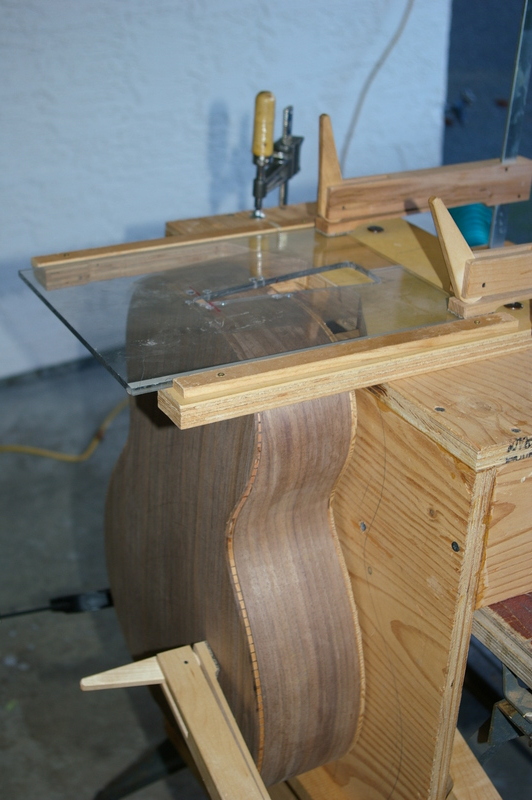
I cut channels in the back and the top and moved on to the next major routing event – cutting the female neck joint cavity in the body. Out comes the dovetail jig unit, this time with the body template. This is a piece of acrylic with the cavity shape in it. It gets nailed with tiny brads to the body. The holes will not be seen once the neck is installed. This is a very precise procedure. All measurements and angles are checked two or three times. The routing takes only a few seconds however. This time it worked perfectly. The neck fit quite tightly into the cavity. Later it will be final fitted, but for now I’m pleased with the initial cut.

neck cavity template detail

neck cavity template detail

neck cavity router setup

neck cavity router setup

cutting the headstock outline

cutting the headstock outline


1 Comment

Filed under Guitars

Merry Christmas

Best wishes from the management and staff here at Nathanguitars. I have given them the day off since I won’t be here to supervise. Cratchit was most grateful.

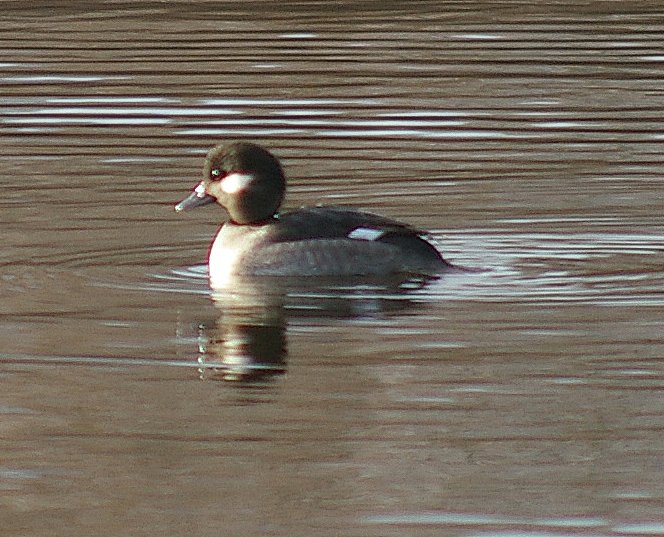
Merry Christmas to all and to all a good duck

Merry Christmas to all and to all a good duck

CONSIDER THE DUCK
WHO KNOWS NOT WHENCE
NOR WHYFOR
THE LAKE DOTH HARDEN
BENEATH HIS WEBBED FEET
BUT TRODS ABOUT
THE ICY MIRROR
NIBBLING AT HIS OWN REFLECTION

2 Comments

Filed under Animal psychology, Photography, Poetry, Uncategorized

Guitar#29/7

ribs in mold with neck block, tail block & lining for top in place

ribs in mold with neck block, tail block & lining for top in place

After bending the ribs I had to trim them to length and fit them into the mold. The mating ends have to match perfectly so the seams are tight and the ribs remain in the same plane. Once all is measured and dry fit the interior blocks are glued in. I did this one at a  time. Notice that the ribs are spread. They require a bit of force to push them to the inner faces of the mold, not much but enough to keep everything square. It always takes a few tries and some checking to ensure that this step keeps the ribs from tilting  off plane.

Next I glued the linings onto the edge that will be the top. They are glued a trifle proud of the edge and afterwards planed to level. Once this was done I dry fit the top. The main objective here is to have the top fit tight to the ribs without obvious gaps. Once that was ready it was time for the next big step – attaching the top to the ribs.

ribs in mold and sitting on a cantilevered workboard

ribs in mold and sitting on a cantilevered workboard

I use a cantilevered workboard, which is a piece of plywood in the shape of the mold. The mold sits on this, and the top will be attached and roped into place.

top dry fit to ribs before gluing

top dry fit to ribs before gluing

Once it looks like everything is fitting together perfectly it’s time to glue. With the ribs and mold sitting on the cantilevered workboard I apply glue to the linings and clamp the neck end down. The main thing now is to be sure the top is centered on the ribs. Of course I have made some pencil lines for this, but once the glue begins to grab you don’t have very long to make adjustments. There is a lot of surface area here and the glue starts to hold quite rapidly. Having dry fit the whole thing several times it makes the process a lot smoother. After first clamping the two ends it’s time to rope.

ribs and linings with glue applied, ready for the top plate

ribs and linings with glue applied, ready for the top plate

Roping is an old term from the days when they actually tied the tops on with rope. I use a giant rubber strip, which is simply a long piece of inner tube made from a truck tire. It’s one inch wide and very long. I start at the waist, because this area also has to be bent down to contact the ribs, due to the arch in the top plate. It goes down easily, as the top is fairly flexible at this location, having no bracing there. Once it’s all roped up the job is done. I’ll leave it a good few hours just to be sure it holds well. Note that I removed the clamps at the ends once the roping was underway and the top was stabilized in place.

top plate roped to rib assembly with long rubber strip

top plate roped to rib assembly with long rubber strip

1 Comment

Filed under Guitars