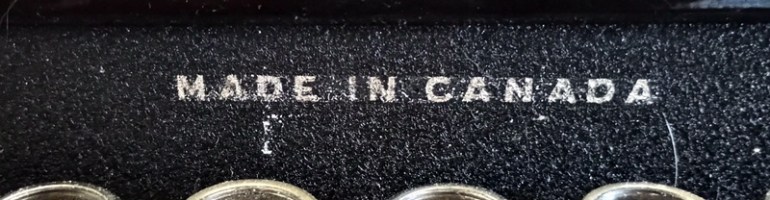
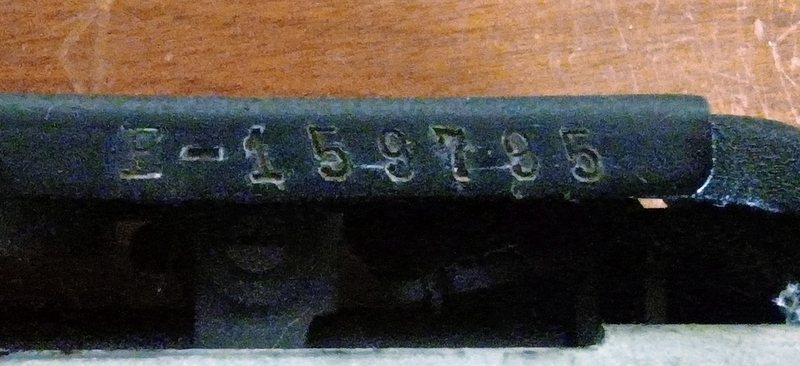
My father enlisted in the Royal Montreal Regiment in 1939 and was promptly shipped off to England to defend the British Isles from the demon Nazis. He didn’t get back until 1944, but he survived and made me. But this has nothing much to do with that. This has to do with a very unusual typewriter that I found this afternoon at a thrift store; a Montreal made Royal P, from 1929. The serial number E-159xxx indicates a Canadian made Royal, which could be exported to the British Empire duty free from Canada. This one ended up here on the west coast in Victoria, where it was plunked on a shelf today, not long before I arrived to grab it. It was not working, so I got it cheap. Non-working typewriters can be the best ones, if you get them at a good discount, and know how to go about fixing them. I have been at this for many years, so I had a hunch this one could be got into working condition. If not, no big loss.
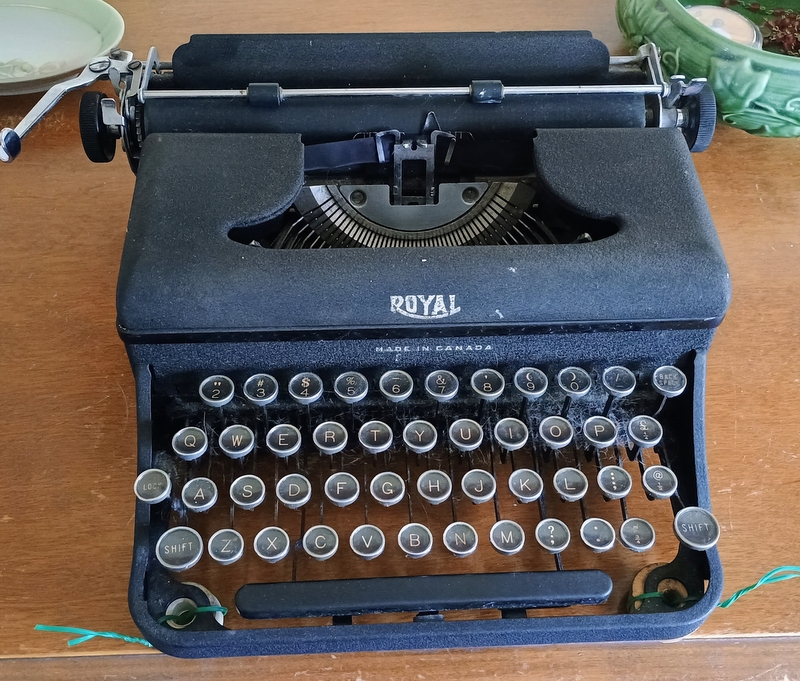
Once I fixed the problem, a stuck loose dog (familiar eh?), I stuck in a brand new Chinese ribbon and put it to the test. Well, it passed with flying colours! One oddity struck me; how could a 1929 Royal portable look like a WWII era machine? The answer came from Google’s AI service, which told me this is a refurbished unit onto which a later shell was attached, likely around WWII. The model P shell and the later shells were interchangeable. Another clue was the fact that the keys are 1929 style, round glass in steel rings that is. By the time this was rebuilt/refurbished or whatever they did to it, the keys were plastic.
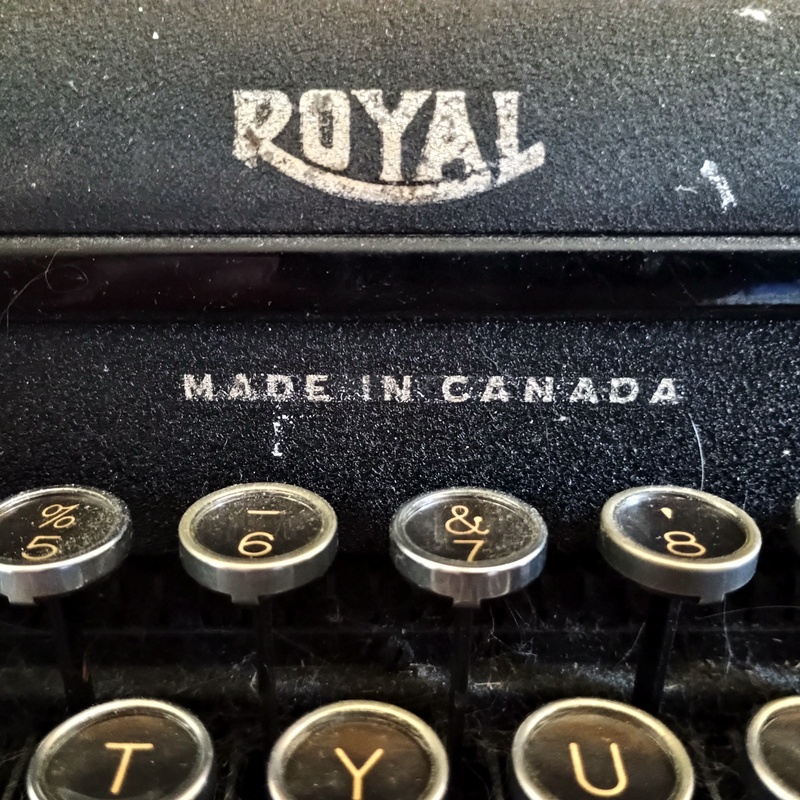
The front feet were missing so I quickly kluged some from a pair of old rubber wine bungs, attached with wire. The action on this is flawless, and the type is remarkably clear and even. The ribbon I got this time round was well inked, unlike some I’ve bought from China before. The vendor claimed that their ribbons had lots of ink, which was the reason I selected that particular one among the numerous others. A ribbon with poor inking is worthless!
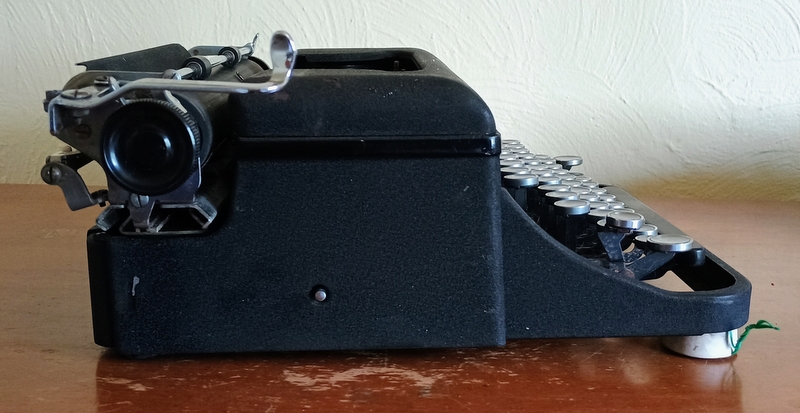
So there it is, a Royal Montreal Typewriter. The damn thing is 97 years old and it is still working well; better than many that are not half that old. I previously blogged about the Royal Factory in Montreal before, and the connection to my Dad, who was a machinery dealer for many years and who no doubt had been in the place and almost certainly sold or bought some machines there.
Manufacturers were always buying and selling and refurbishing stuff in those days. Nowadays, well, into the trash, right? You know the routine. So much junk it is a crying shame. Bring back carburettors, bring back shiny shoes, bring down the Iron Curtain, I got the Modern Day Blues!
Yes, that’s me singing and playing my own song.




This song rocks!
You’ve done it again Don!
Your fan, (and s i l) Mary Lou
One issue – it’s not a “P”. It’s a CD-frame depression-era Royal, entirely different and greatly simplified design – different serial series too, so the year might not be right either, as this design only lasted from 1939-1942. The “P” model was built on the larger (slightly) and more complex “A” frame design.
Thanks for that! I didn’t see E series on the TWDB so I defaulted to UNO what. The TWBD serials indicated 1929 however, as far as I could determine.
Ya, you need to scroll just past the normal portables serial list. Below it is the CD-Frame series, starting with the Signet. Your serial number will match to the proper year there.
In fact now that I look at the list, the “E” prefix *is* the Signet. (:
1940 Signet, in fact.
Heh, I actually had the same problem dating my Companion when I found it, but then the Royal page didn’t have that list back in 2012. I recall that machine was the catalyst for finding that info and building the sub-list for those depression-era models.
https://typecast.munk.org/2012/10/03/the-t-bone-speaks-and-i-listen-1941-royal-companion/
I should have kept scrolling! Anyhow, 1929 or 1940, it’s all good news. This confirms that you can’t always trust AI!!