After 350 years as a corporation, the Hudson Bay Company is dead. They raced to the bottom with their goods becoming worse by the year, until they were as cheaply made as goods from Walmart; but Wally World endures, basically a Chinese Factory Outlet. Far be it for me to explain how the economy works, when the “leader of the free world” has no clue! All I can do is write a song about it.
Polar bear hunting on the ice of Hudson Bay (photo B. Inaglory)
The Hudson Bay Company began in 1670 after Sieur des Grosselliers convinced Prince Rupert of England that he could get rich by trading into Hudson Bay and the great hinterland of the Canadian Shield, which was rich beyond dreams with fur bearing creatures just waiting to be skinned and made into hats.
Better yet, watch this amazing film about building a replica of the Nonsuch, in England, in 1968 for the 300th anniversary of the founding of the company.
In March 1925, one hundred years ago this month, the Victoria Cougars hockey team won the Stanley Cup, beating the Montreal Canadiens in 4 games. I wrote a song about that, and made a video to go with it. Link is at the bottom, but please read on before viewing!
Hockey is, of course, the national sport of Canada and we love it so much that what happened a century ago is still important to us. I expect that has a lot to do with the fact that hockey is not only the fastest game, but also the roughest and hardest to master – requiring one to know how to skate and handle a puck at the end of a long stick, while moving on ice at high speed, and avoiding being clobbered by others moving equally fast.
Typical Canadian winter day
So we have a natural advantage here, winter, that provides us with ample opportunity to learn how to skate as children playing outside on ice will do. Victoria doesn’t have winter anymore, at least with outdoor ice, but we still have lots of arenas and skaters. One hundred years ago the climate was colder here, and even the west coast had frozen lakes and ponds. The first indoor artificial ice arena in the world was built right here in Victoria BC! The song tells the story of the battle for the Stanley Cup, which was epic even then.
The Stanley Cup is the oldest sports trophy in the world, and was donated by Lord Stanley, Governor General of Canada. Now it belongs to the NHL, not by law but by dint of the fact that possession is ownership, or as they say, 9 tenths of the law. But the Cup will be returning here to Victoria soon, to celebrate the historic victory of the Cougars a century ago, before the Cup became the sole property of the NHL.
1993 Montreal Canadiens – last team from Canada to win the Stanley Cup
Of course the fact that the Cup has not been won by a Canadian based team since the Montreal Canadiens last won it a generation ago remains a sore point for Canadians, since we all consider the Cup to be our national property. Thus we remember when two great Canadian teams battled for it long ago.
Howie Morenz – the first hockey star
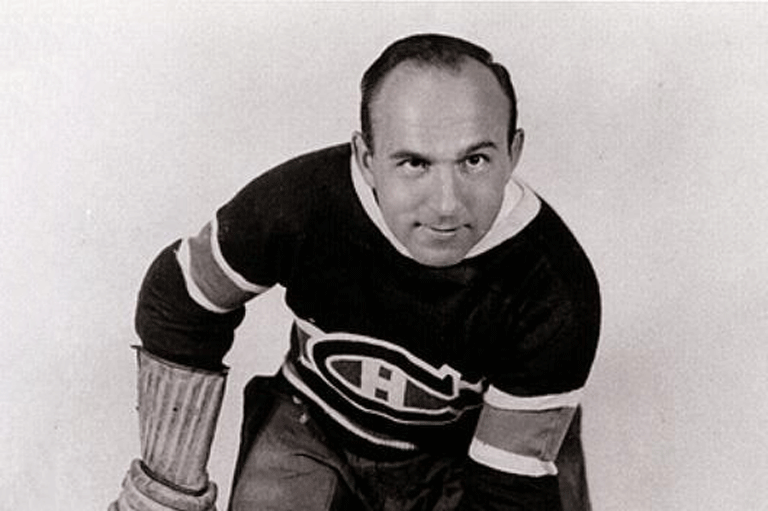
A word about one of the players, Howie Morenz, the first “star” of pro hockey, in the day before stardom was as degenerated as it is now. He was known as the Stratford Streak, the fastest, highest scorer of his day. He inspired two pro teams in fact, the Boston Bruins and the New York Rangers, after their respective founders saw him in action and decided that they would bring pro hockey to their own cities. Morenz is today considered the 15th greatest player of all time. Quite the accolade!
In truth, the main interest I have in Morenz is the fact that my father, born in Montreal March 18, 1918, exactly 107 years ago today, caddied for Howie Morenz at a golf course one day as a teenager. So my Dad met the great Morenz, making me only 2 degrees removed from greatness…
And now, hockey fans, here is the soon-to-be-greatest hockey song of all time, “One Hundred Years Tonight”.
Last year I wrote this song for my son who was going off to New York on business. His business took him to the Trump Tower on Wall Street, although he said the office there was small and mostly used for the prestige. He didn’t mention the heavily armed guards at the doors. Is that for show, I wonder? Recent events led me to record the song properly, and somehow it seemed to say a lot about how Canadians are feeling, although I never intended it that way. Was I prescient? Well, I never thought they would elect you know who twice! To all my American friends – Canada will endure this, as you will. Don’t despair, it could get worse, and you’ll always have Putin on your side if we invade!
Another HV Morton arrived in the mail today, from the UK. This one is entitled In Search of Ireland, and it was published in 1930. Eagerly inspecting the photos, I came across one depicting the town (village?) of Glendalough, a place associated with St. Kevin, one of the patron saints of Ireland. How the world has changed since 1930. I wish I could return to that time, if only to see the places Morton saw before they were ruined by cars, roads, wars, developers and overgrowth. What would this view show us today?
Glendalough, the place – with 2 lakes
I’ve never had the pleasure of visiting the Emerald Isle, so for now I will content myself with the book. Morton brings to life the places he visits, which explains the fact that this volume is from the 16th printing in 1943. It is not an autograph edition, at least not by the author, but autographed nevertheless, by Lt. L.W.H. Pollard, R.N.R. He must have been proud of his rank, that chap.
In keeping with the design themes that Morton’s books followed, this book is bound in green cloth and has a shamrock cluster embossed on the front cover. How Irish!
I wonder what the girls of Connemara look like today? Ripped jeans, leaning on a Tesla?
Two Connemara girls
Last Christmas I bought my wife a bottle of Glendalough Irish Whiskey, and that is how I learned about St Kevin. History from whiskey bottles. I used to read cereal boxes, but they didn’t have much to teach, and never anything about saints.
Glendalough, the whiskey
Every Morton book of travel includes maps showing where he went. In this case he went all around Ireland, hitting most of the well known spots. Ireland isn’t that large, so I suppose Morton could scarcely have done less travelling and gotten enough material for a book.
Map inside the covers
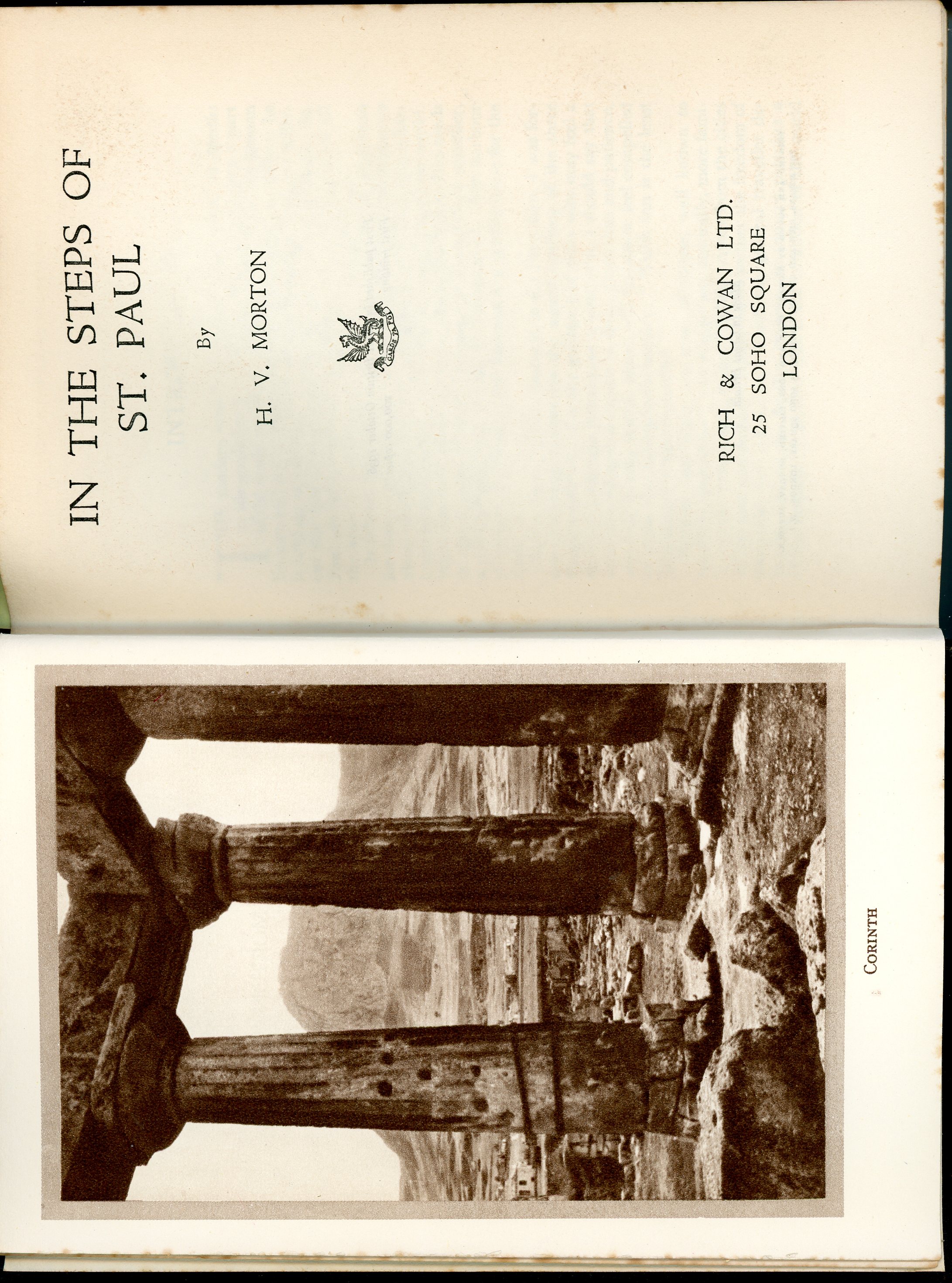
Now to finish up reading Morton’s “In The Steps of St Paul”, so I can delve into Ireland of 1930!
I found this invitation in an old book of Kipling’s Songs. 97 years old and looks brand new. My Dad used to say “are you waiting for an engraved invitation or what?”. Well, now I know what he meant. This is from a world that is long gone, and I miss it. Especially the carriages at 11.45 pm. The good news is that the Masonic Hall and the old Grammar School are still there in Uddingston, a small Scottish town near Glasgow, by the River Clyde. There is a new Grammar School however, so no idea what the old one is now used for. The Masons are still meeting in their hall, from what I discovered.
The Old Grammar School
Meanwhile, here in Victoria BC, we are busy tearing down everything in sight in order to build more apartments, like the Soviet Union. Nobody can stop the government mandate for housing quotas. This is how governments react in knee jerk fashion to the fact that housing prices have gone through the roof and no one can afford to buy or rent, unless they are rich or have a very high paid job. Not like the days when I bought a house for 2 years salary, with a few thousand down. Today, we are facing reno-viction by a public housing corporation, no less. Townhouses, the “missing middle” are suddenly not good enough, so they too will fall to the wrecker’s ball and be replaced with a large apartment block. Welcome to the Orwellian future.
The Masonic Lodge
Well, all this peeves me greatly, but all I can do is gripe and write songs about it. Here’s the latest one, called Modern Day Blues. Every word is true.
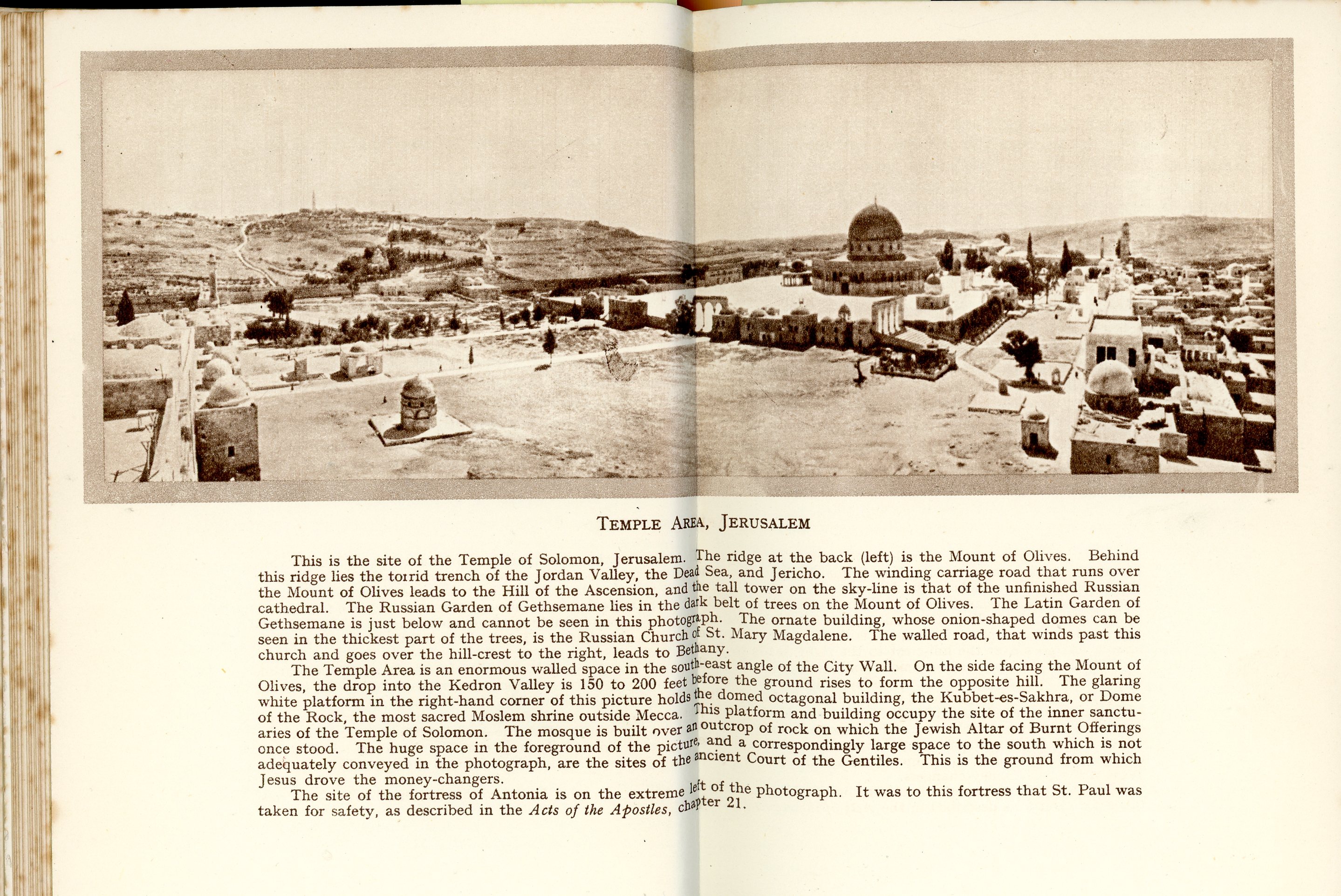
In this time of trouble (is there ever none?), I bury my nose in books and try to forget that the world is overrun with madness. One writer whose books I find most fascinating is H.V. Morton, the once famed English writer. Morton seems to be almost forgotten now, but in the 20th century, he was as famous as it gets for a writer. He was a trusted friend of Churchill, who invited Morton along to report when he met FDR in secret to discuss how to proceed together to save the world. Morton was a reporter, and a good one. He is best known, however, for books in which he brings the reader along on his travels, which ranged from London, his home, to Palestine, Arabia, and Egypt, and lots of places in between. He was intrepid, to say the least, and he had a gift with words that have few equals in the genre. Not only that, he was an expert photographer, carried a modern Leica camera, and filled his books with remarkable photographs. He wrote about photography too and extolled his Leica. The lenses he had then are still renowned. See my post below for several photos taken with a similar model.
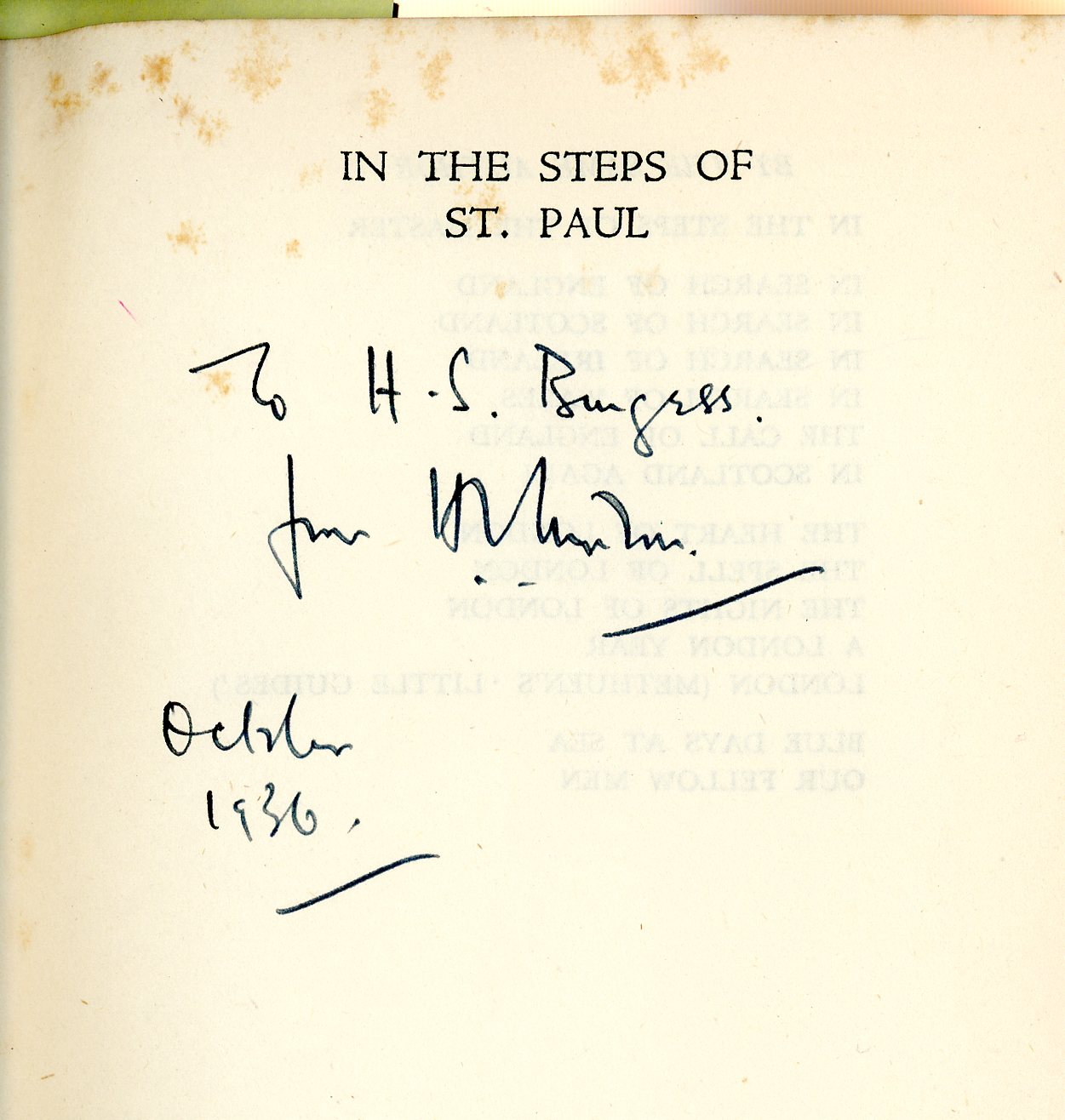
So, what is this getting to? I received a new old volume of Morton today by post from England, that’s what! I had to buy it twice, due to the postal strike here. My first purchase was cancelled, but I bought the book again six weeks ago and today it landed on the doorstep, literally. Having read his previous volumes about the Holy Land, I am sure this one is going to be great. But why is this worthy of a blog post? Because now I have an autographed Morton. Morton held this very book in his hands and inscribed it to one HS Burgess (?), whoever they were, dated October 1936. So far I’ve read two of his travel yarns about the Near East; In the Steps of the Master, and Through the Lands of the Bible. Both were ripping great reads and totally relevant even now, just for the history that he brings to life. Much of what I learned from Morton was entirely new, even with four years of Sunday School! My wife, with a degree in theology, learned a great deal of background on the life of Jesus by reading Morton. One would expect this depth of knowledge from a Professor, but Morton was no such thing.
Morton was a devout man, and he wrote about the people of the Bible with remarkable insight on the times. Whether one is a believer or not, the writing is marvellous, informative, and not at all preachy. His sincerity comes though as deeply honest and often moving. He had the good fortune to travel in the Near East (his words) in times when it was possible to go there and not risk one’s life at every turn. How tragic that it is now impossible to do as Morton once did, or to go where he went in peace.
It ended not so good for Paul, but his name lived on, and nothing further has to be said. But I ask, where are the Saints now? We need them badly!
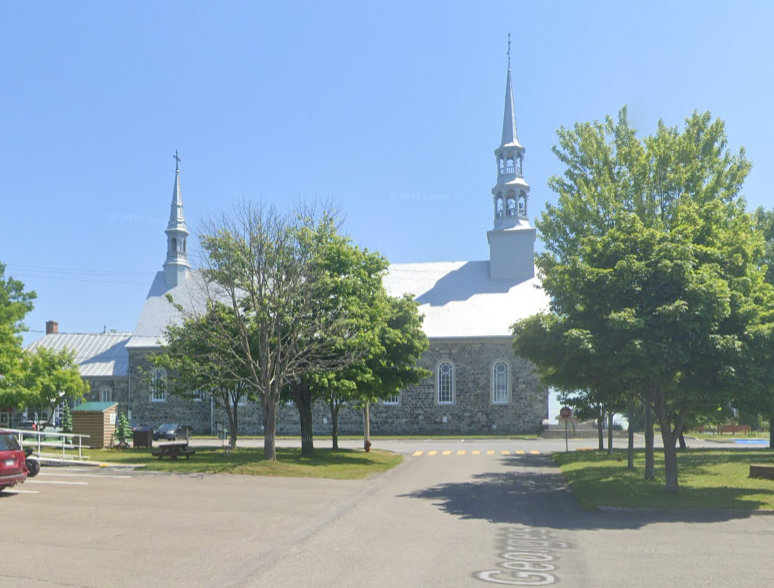
Eglise St George, Cacouna, Quebec(courtesy Google)
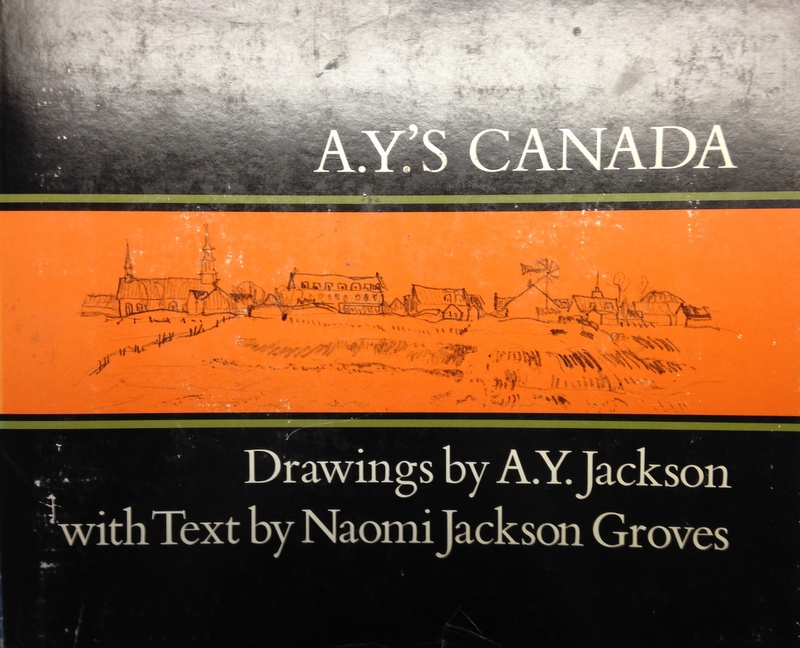
I picked up an interesting art book yesterday, called AY’S CANADA. Note the similarity between the photo above and the pencil sketched church on the left side of the book cover below?
AY Jackson, one of the renowned Group of Seven artists who invented Canadian modern art about a century ago, liked to roam around rural Quebec with his paints and sketchbooks. In 1921 he drew a pencil sketch that included the same church shown above, in the village of Cacouna, Quebec – on the lower south shore of the St. Lawrence River. When I grabbed the book off the shelf at my local thrift shop I had no idea that AY had ever been to Cacouna. Nor did I have any clue as to where the cover illustration was sketched.
Not until I reached pages 42 and 43 did I discover the Cacouna sketch, and realized that it was the sketch on the book cover. The reason this is so fascinating to me is that my father’s father was born there, and his middle name was Cacouna! If my great grandfather and grandmother had some reason to name their son after the village where he was born, no one in the family knows. It certainly has lasted however, and gives him some distinction in the family history, even though he died around 1925, leaving his wife and six kids in poverty. Such was life a century ago.
Cacouna Village with melting snow (1921), A Y Jackson
I’ve never even been to Cacouna, but one of my boys went there once, just to check out where his great grandfather was born. I have been to Buttle Lake here on Vancouver Island however, numerous times in fact. Last week we were camping there again and I managed to do one measly watercolour despite having nothing else to do but eat, sleep, swim, and go for walks. I am not quite so dedicated to my art as AY was, but here is my sketch.
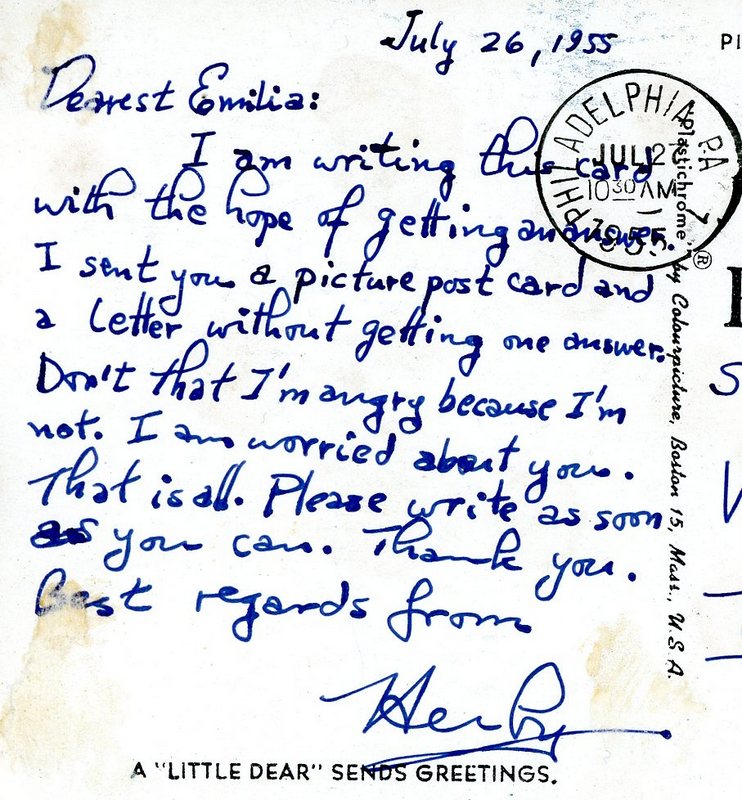
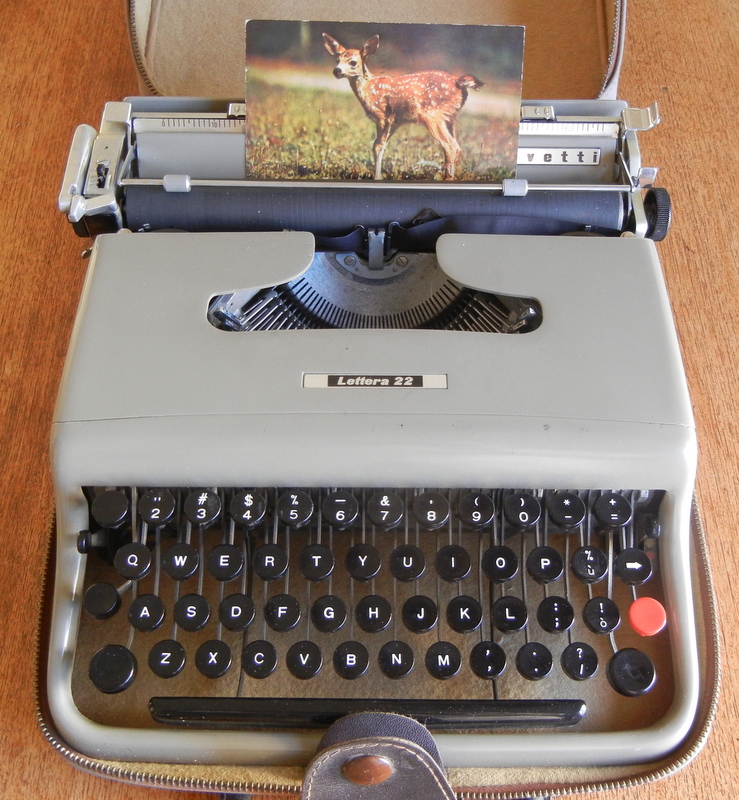
Several weeks ago I found this old postcard at a thrift store. The message was so fascinating that I wrote a song about it, called “Post Cards”, changing the name of Herby to Paul for the sake of the rhyme. A week or two later I returned to the store to find an Olivetti Lettera 22. Later when I got it home I noticed that on the outside of the case, written in faded ballpoint, was the name of the owner; Emilia of the post card! The typewriter is interesting, with Italian accented vowels that do not show on the key tops. Keys 2, 3 & 4 shifted are a, i & e with back-sloped accent marks. The other two vowels u & o are clearly marked on their respective keys.
Emilia’s typewriter, with the picture postcard from Herby
A recent addition to my collection of assorted junk-store treasure was this old wristwatch, which I got for a few bucks in a big haul of stuff, including a nice Lettera 31 typewriter (more about that later). Thus I don’t know what the watch cost me, but the tag was $10, so it was considerably less than that. The tag was on the back, so I had no idea what it covered up until later when I got home and peeled it off. Suddenly I realized the significance of the label. WOLFSBURG. The place where Volkswagens were made. I have owned a few VW’s, starting with a 1970 type 2 that I bought in Amsterdam for $1000 and took a long trip around Europe in. I drove various Beetles from time to time, but never did own one of my own. Today they cost a ridiculous amount. My 1984 VW Westfalia camper is 40 years old and still going strong. We will be camping in it in a couple of weeks. Despite the dead simplicity of the VW van, the utter lack of luxury, the noise, the poor fuel economy and the low power, I enjoy travelling in this vehicle more than any other. Visibility is superb, and it does everything I need, without a fuss. I think it is possibly the greatest vehicle ever made. It is also the only car model I know of in which the owners always wave at each other.
My extensive research (you know what) revealed that Wolfsburg watches were presented to Canadian VW owners whose vehicles hit 100,000 kms. I’m sure my Westy qualifies for this watch, although the real mileage on the van is unknown. After 40 years however, I think it’s safe to assume it has travelled well beyond 100k, probably 2 or 3 times. Needless to say, no car companies give prizes to customers anymore. You’re lucky if they even know how to fix your car!
The movement is a Jeambrun 26D, made in France, from the 60’s, older than my Westy! I cleaned up the case and the crystal with some old Brasso, the kind they no longer sell, but which works like a hot damn on metal and plastic. So far the watch is keeping good time. I think I will wear it when we go for our camping trip. Of course I will! It’s the people’s watch. The Volkswatch!
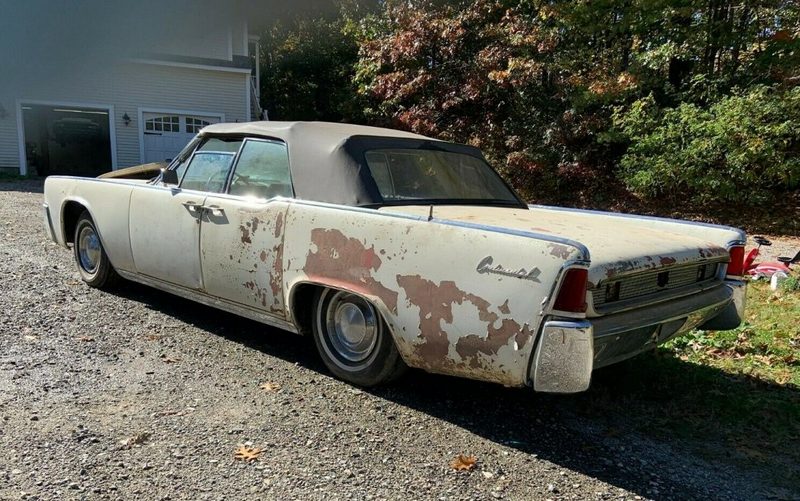
I recently wrote a song entitled “What Were You Thinkin?” about a stolen Lincoln. The best picture I could find on line was this:
Internet search result
I wanted something closer to what I imagined the stolen Lincoln would look like, so I consulted Microsoft Co-Pilot, and it generated this montage, complete with the lawn and a trailer home; much closer to what I was thinkin! So far I haven’t asked for Co-Pilot to put a baseball team inside the car, but that might be interesting…
Microsoft AI generated image
Here is a clip of the first verse and chorus from my demo, recorded on a cell phone. I was using the camera to record video when I did this one, but I have switched to using Dolby On, a free app that produces surprisingly good quality audio recordings.
(G) It gets 3 miles a (E7) gallon and the (A7) steering (D7) sucks (G) But the trunk is as (E7) big as a (A7) pickup (D7) truck It (C) corners worse than a (G) Greyhound (E7) bus Takes (A7) premium gas and it’s (D7) riddled with rust The (C) seats are torn and they’re (G) growing (E7) mould It’s a (A7) colour combination of (D7) brown and gold You can (C) fit a baseball (G) team (E7) inside It’s the (Am) same old (D7) heap in which (G) Kennedy died
(G) What were you (C) thinkin’ (C) When you stole my (G) Lincoln (G) Last night it was (A7) parked on the lawn (A7) But this (D7) morning it was gone (D7) What were you (C) thinkin’ (D7) When you stole my (G) Lincoln






















 nathanguitars