
I have often failed to convert anyone to my opinion, but I can convert a guitar from steel strings to nylon! And it’s all perfectly legal, too. Some years past I picked up a busted Suzuki 9 guitar that had a failed bridge.
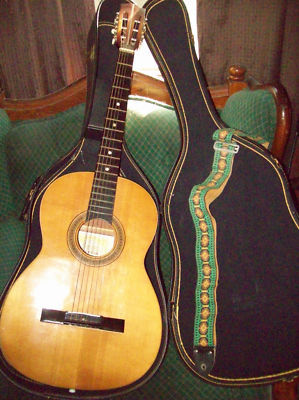
I only bought it because it was cheap and I enjoy fixing things. I removed the bridge and reglued it, and then put it away for years. Recently I took it out from storage and the bridge had failed once and for all.
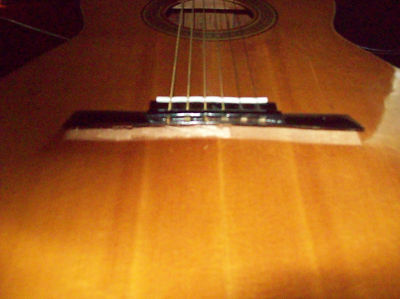
Because the top was made of thin laminated veneer, there was no way to repair it again, so I decided to see what I could do with it. I heard that Suzuki guitars were made with dovetail jointed necks, and hide glue. On that assumption I got out my neck removal jig, and attempted to drill a hole at the 15th fret. I hit a steel rod that reinforced the neck, so I had to drill in from the back to inject steam. I steamed and steamed for a long time with no results, and despite putting enormous pressure on the heel nothing moved. I was losing hope, when all of a sudden the neck just popped right out of the pocket.
Next up was to remove the broken soundboard. This I did with a sharp blade, and the whole thing came off quick easily. Hide glue is brittle and will often fracture with a little help from a sharp blade. That is what allows violins to be taken apart without breaking them. Then came some thinking about the repairs.
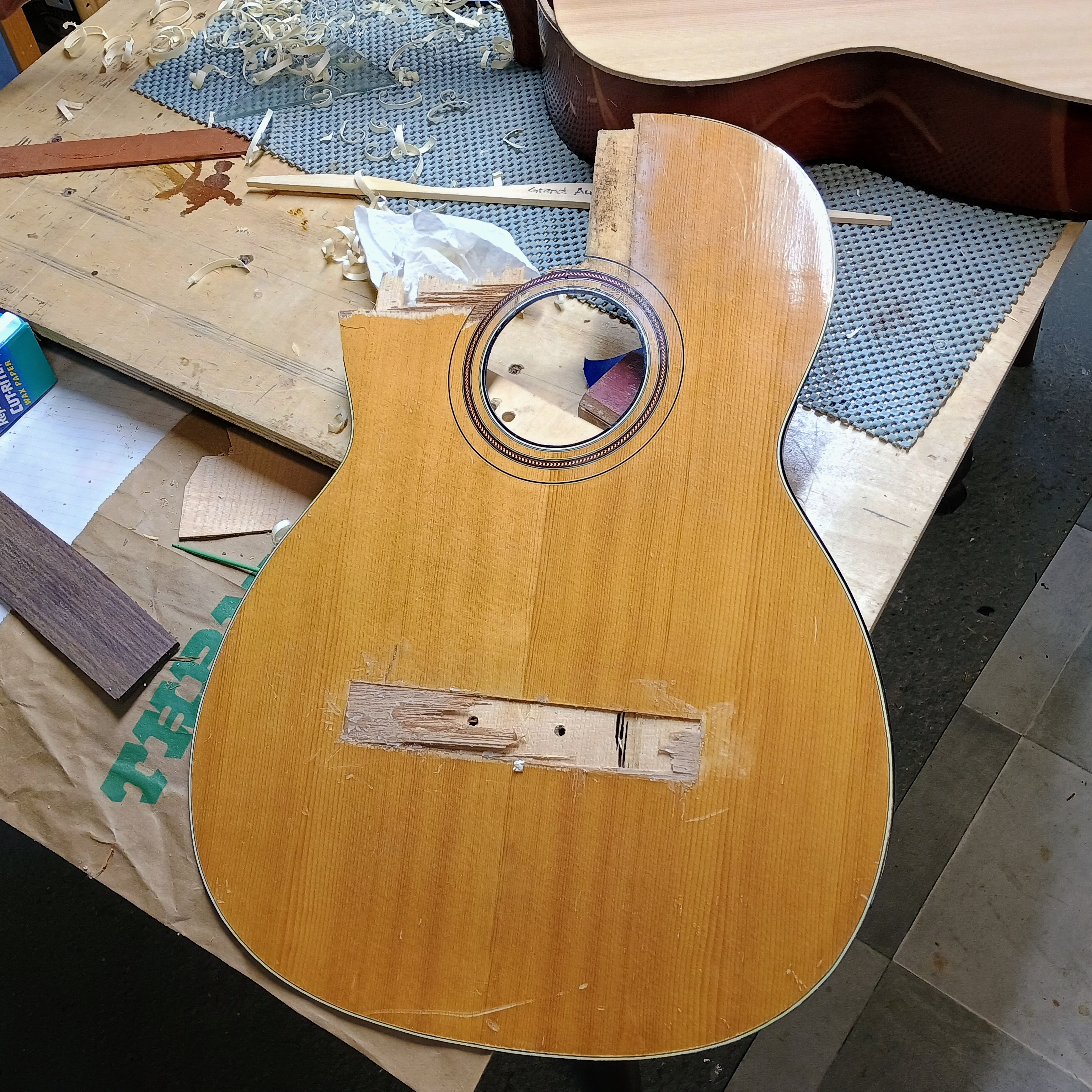
What to do? I had long been considering building a classical guitar along the lines of a modern hybrid model with a narrower neck of similar shape and size as a steel string guitar, so I decided to convert this Suzuki into one of those. The body is the size of a classical guitar already. The neck is narrow, the fingerboard is flat, and the head-stock has slot head tuners, albeit for steel strings. But no problem, because it is possible to wind nylon strings on 1/4″ steel string shafts. My Mexican classical guitar is like that and it works fine.
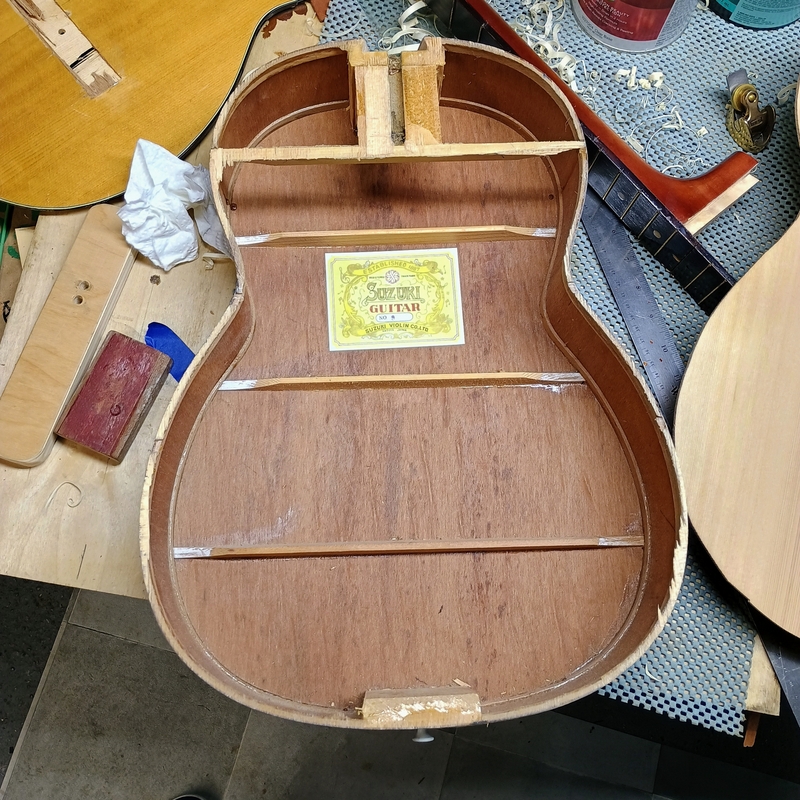
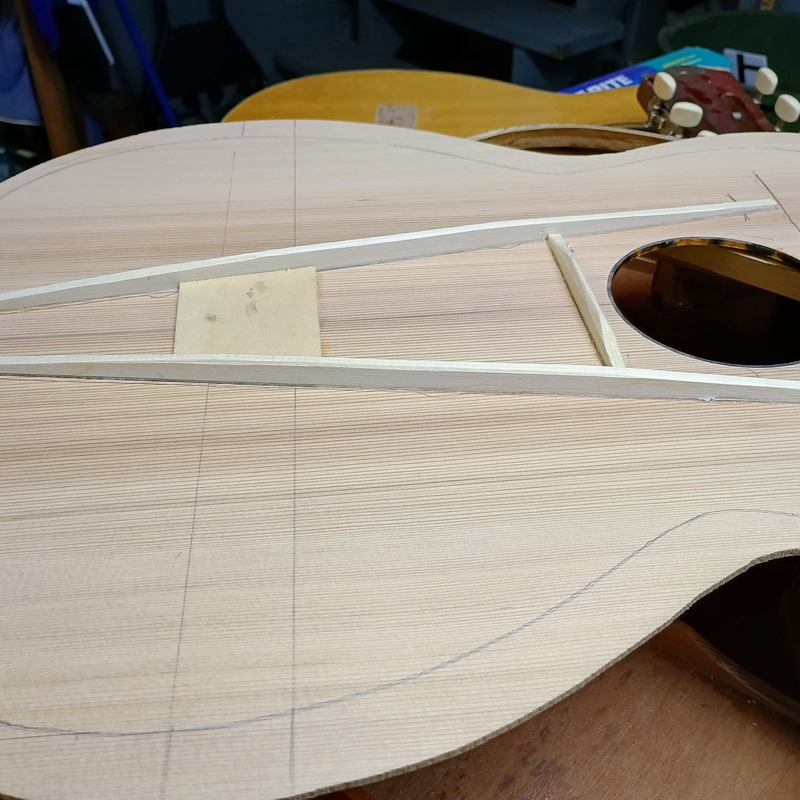
I had already joined some cedar plates for the future classical guitar, so I added the sound hole in the right location and size, then cut and installed my preferred bracing, keeping it light as befits nylon strings.
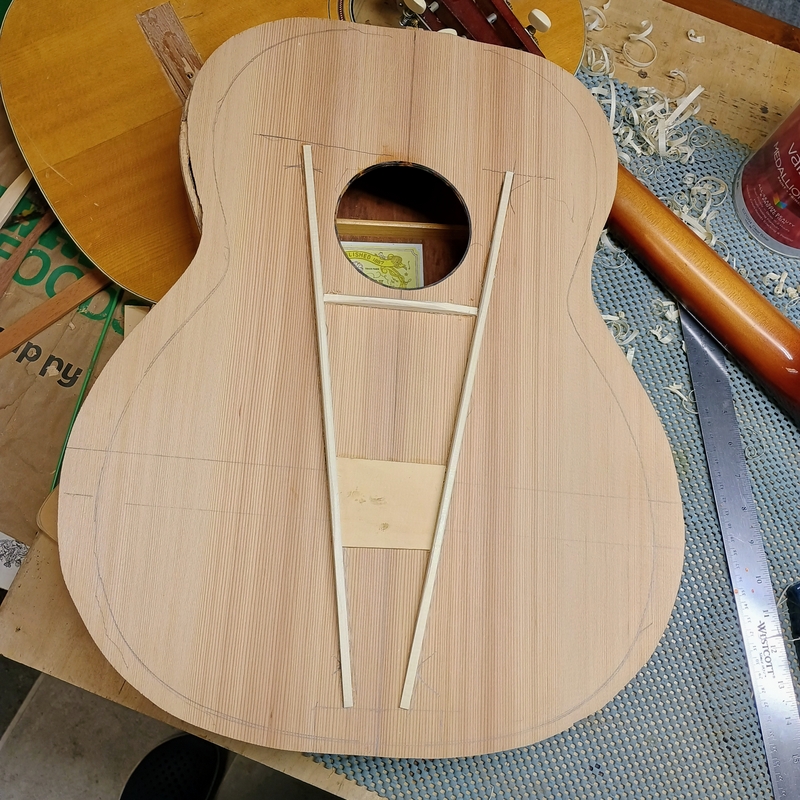
I cut the main braces from larger stock, 5mm wide x 10mm tall. The bridge plate is 2mm thick yellow cedar. The cedar top is about 3.2 mm thick. The braced top has a good tap tone and I don’t get overly concerned with making it as thin as possible once it sounds good.
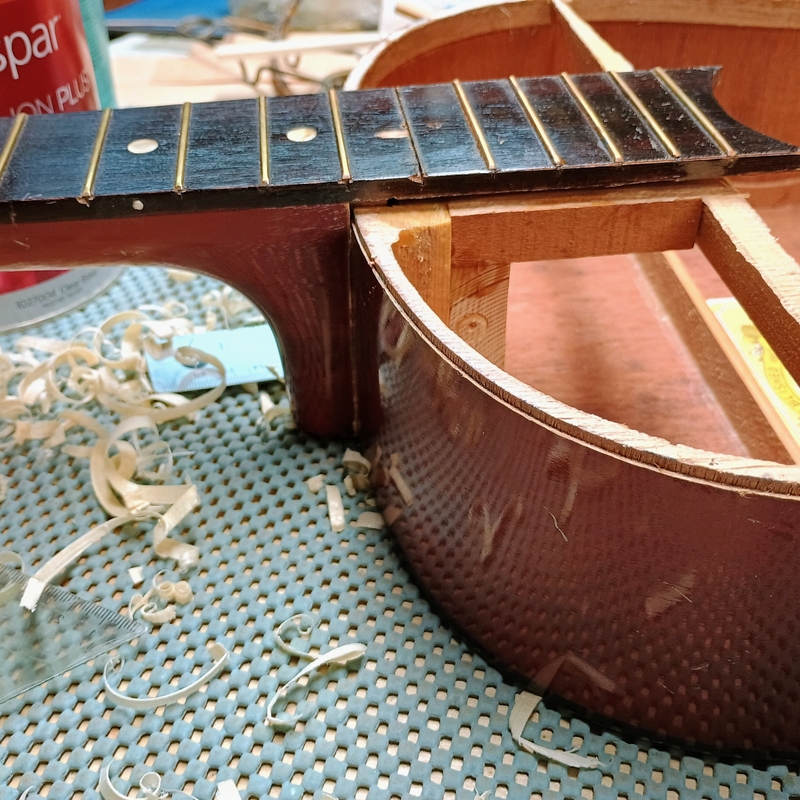
The neck has a hollow steel bar in it and is dead straight.
I replaced the fingerboard extension block and the upper face brace that both came out when the top was removed.
The next step will be to glue the new top back onto the rim. Then the bridge will be attached and the top will be trimmed and finished. I will post again after more work.