If you’re wondering what has happened to this blog, fear not, I have been hard at work writing and recording songs of late, among other things. The typewriter collection is down to a mere 57 machines as I slowly sell them off to new enthusiasts just beginning their their typing odysseys. Selling typewriters is a great way to meet interesting people! However, I am no longer buying typewriters for the moment, although that may change when there are only a few left! I need only one with which to write the current novel on, but that is also stalled due to the switch to songwriting. My typewriter is right here beside me though, and whenever I get going again I will complete this book. Here is a musical excerpt from the book, where the hero goes to see the gypsy Madame Zora for the 2nd time.
All Saint’s Day/The Gypsy
As if that ain’t enough, here is my Christmas song for 2024. Merry Christmas and Happy New Year everyone!
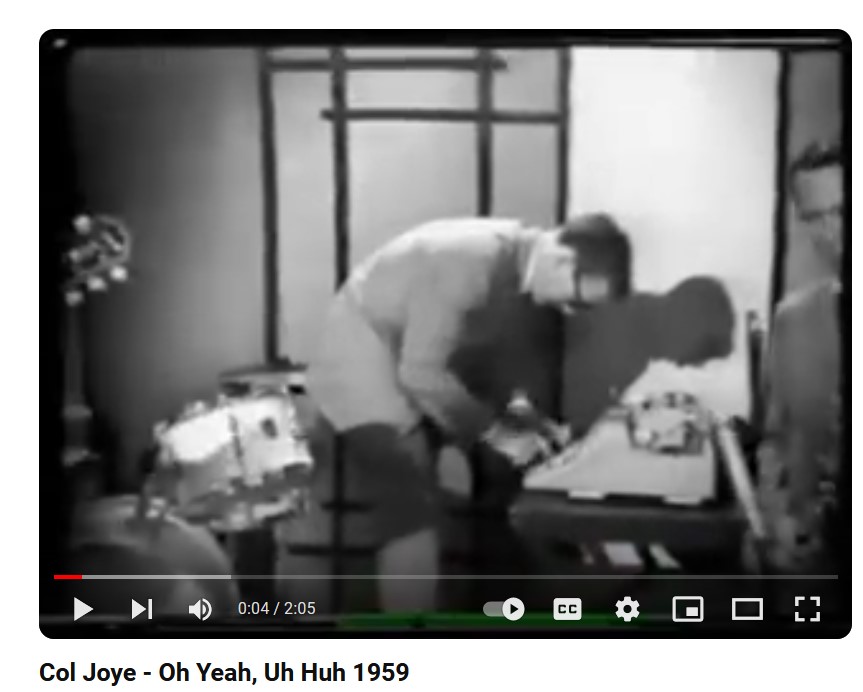
A recent thrift shop find was a very unusual 60 year old Japanese guitar. I bought it because I liked the funky look of it. A search by photo turned up some amazing facts that led me to this clip above of an Australian band from 1959 that featured rhythm by typewriter. That band was led by it’s star singer, Col Joye. He had a line of guitars made in Japan with his name on the label. This is one of them.
My Col Joye guitar after repairs.
It resembles a French gypsy style guitar in construction, having an arched top with ladder bracing as well as a fret marker at the 10th fret. It sounds like a gypsy jazz guitar, very bright and loud. The rosette is a work of art, with delicate inlaid mother of pearl, seriously fancy for a presumably low cost item. The neck has no truss rod, but it does have an inlaid wood bar that acts as reinforcing. The neck did not warp or bow, but slowly bent from the heel over 60 years, as even the best of guitars often do.
I removed and reset the neck, made a new bridge and did a lot of fret levelling to make it playable. One site stated that Tommy Emmanuel owned a Col Joye as his first guitar. How this came to Canada beats me, as they were not sold here.
Neck removal by steam injection. Lucky for me they used hide glue. I used hide glue to reassemble too!Rosette and pick guard detail
I found numerous videos of Col Joye and his band, but the one that amazed me was the performance of Oh Yeah, Uh Huh, which had a guy typing rhythm. The song is forgettable, to be kind, but the video should be priceless to typewriter aficionados. As for the guitar, it is the rarest guitar I have ever owned, and likely one of the few left in the world (just guessing).
Page from an archived Australian website that once had the same guitar for sale.
Tommy Emmanuel, if you are out there, I will gladly trade you this guitar for one you own!
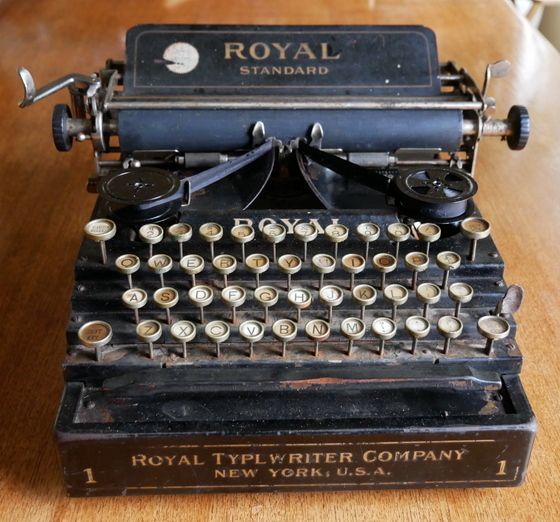
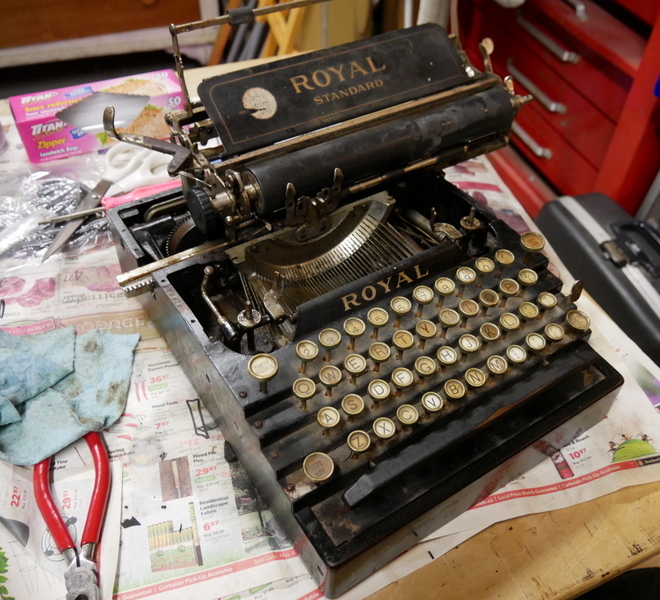
I found this ancient Royal 1 that was in terrible shape cosmetically, but upon inspection I wagered that it was fixable, so I bought it. Liberal applications of Deep Creep penetrating oil helped free up many sticking parts, along with some elbow grease and a wire wheel on my Dremel to remove the surface rust. There were two broken parts; the advance lever linkage and the “ear” of the yoke that limits the travel of same. I made a new link from a piece of aluminum, which fixed that issue. The ear proved to be unnecessary. I took off the platen and all the cover plates and did what I could to adjust the inner gears and so on. The spring motor needed a string and winding, which had to be done by winding the thing up and fastening the cord to it. The engineers designed a spring winding mechanism, but I was unable to free up the rusted set screw that locked the winding shaft. Other than that, the thing still works!
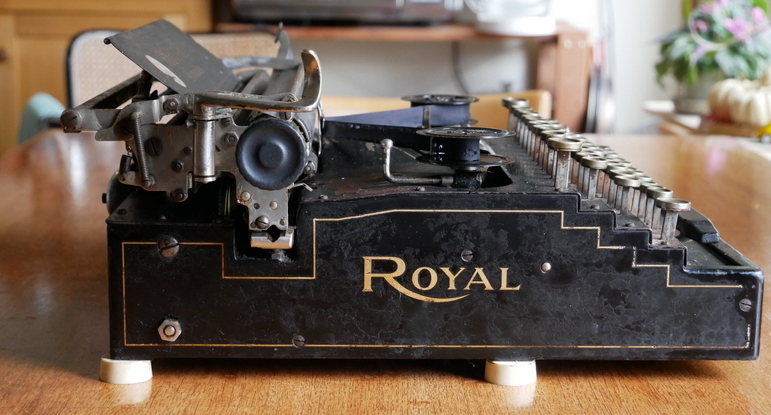
I glued the rubber sleeve back onto the wooden platen shaft, and saw that the shaft had been stamped with the date Aug 19, 2012. By the serial number this was the 77,879th of these made. They started production in 1906 and it increased yearly by large leaps. The machine weighs exactly 10kg, and the frame is made of heavy plate steel that is almost indestructible. I put a new spring on the bell, which rings brightly now. All in all this is a very impressive unit, and a testament to the skill of the designers and builders.
I kept notes about the process in a notebook I had, in which I had previously made notes about an interesting book called Fermat’s Enigma, about the history of mathematics. Hence some ruminations on that, typed on the “refurbished” typewriter.
side view
new feet made from wine bungs size 5.5under renovationribbon reversing gearshift leverthe motor housing teeth drive the ribbon winding transmission – like a huge wristwatchmainspring
Olivetti mechanics in an Underwood body: Italian engineering, American design, made in Spain
Bought this Underwood 450 the other day. It was all stained and dirty but Brasso and Meguires plastic cleaner polished it up nicely. I naturally assumed that since it was an Olivetti inside, it had to be Italian design, but it was not. It is an American design! However, Underwood was owned by Olivetti and so the design had to be Olivetti approved, hence I call it Italian Style! Concurrently, I also found a Borsolino cap at last, as well as an Italian merino wool cardigan. I wanted a Borsolino hat for years but never found one until today. Perhaps if I sit down at the “Italian” typewriter in my Italian Borsolino and Italian Merino (sweater), I will write about how I once saw a dead dog in Venice, and how my life was forever changed.
Me and my Italian clothesBorsalino- accept no substitute!
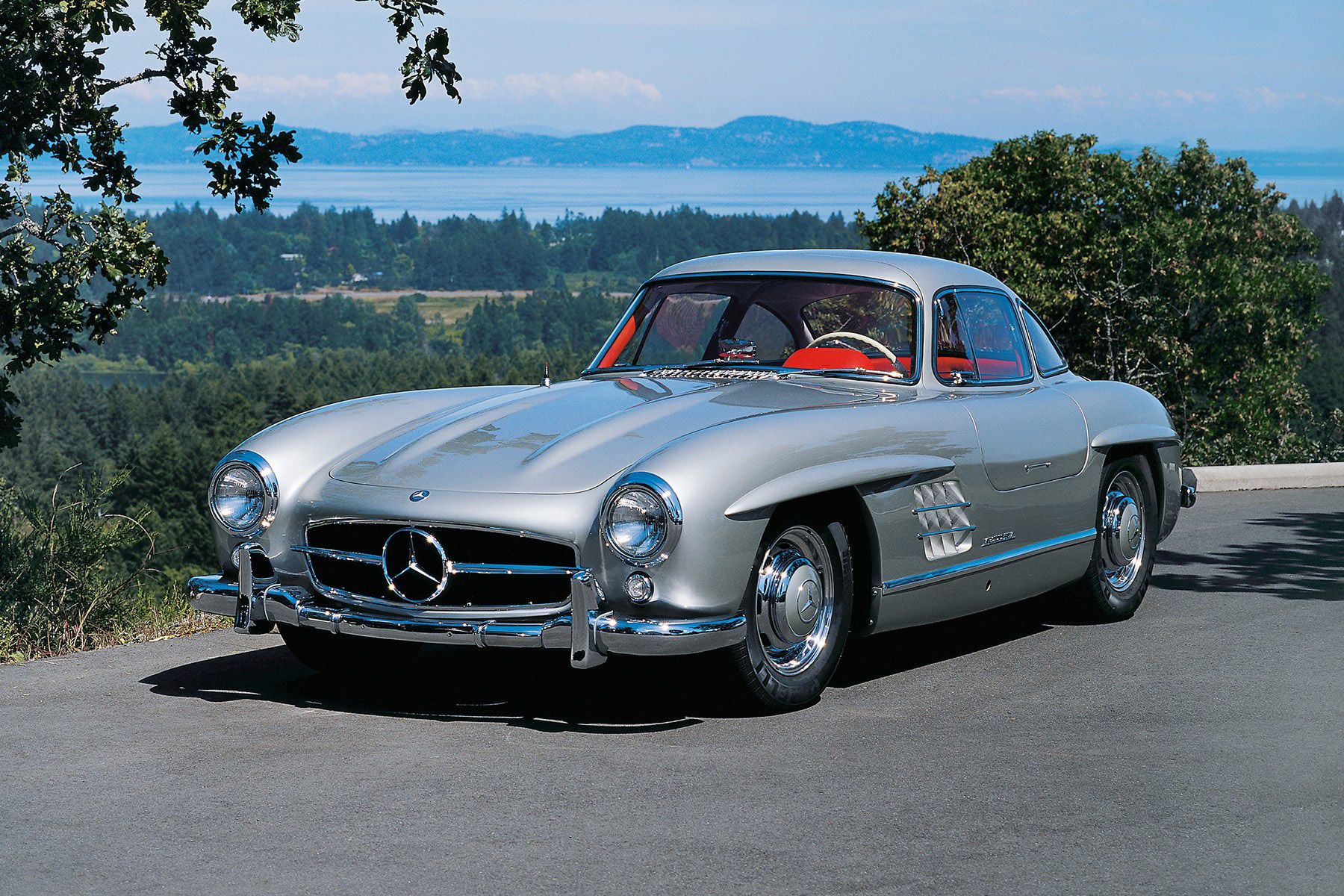
On my way out one evening last week I looked in the rear view mirror and what did I see, but one of these! A rare and famed Mercedes 300SL. I wished I could have followed the car but it turned off and was gone. I’ve only ever seen one of these in the wild before, and that was decades ago in Montreal, where the German owner of a local gas station owned one. I can still recall the growl the engine made as the owner roared off in it. Other than that I’ve seen a few here and there, but always in a showroom, never on the road. So the mystery remains as to whose car that was.
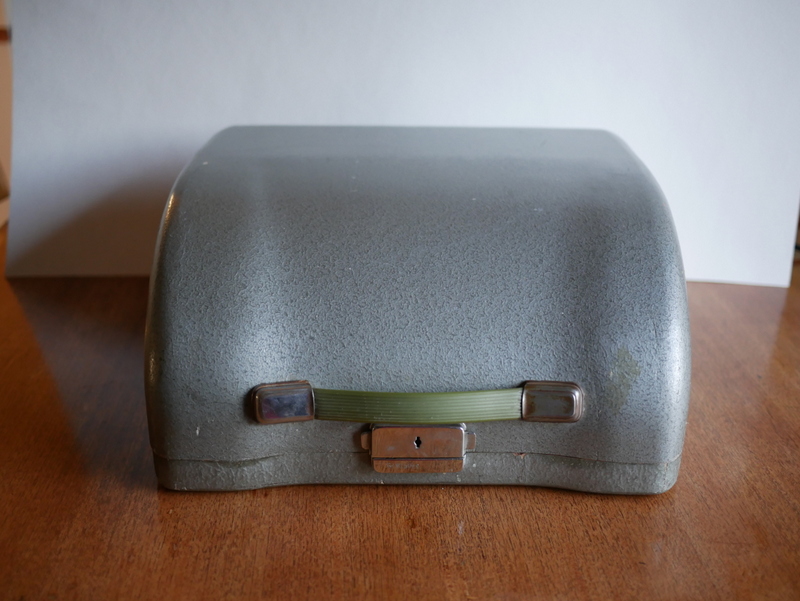
Coincidentally, I picked up a fairly rare and famed typewriter last week, and the case reminded me of the car.
Now what does this have to do with that? Maybe nothing! But it struck me that the styling of the case of this typewriter, the 1956 Olympia SM3, was very similar to the style of the Mercedes 300SL of the same era. In any “case”, this particular case didn’t last long because the next version of the SM, #4, had a new box shaped case and that was the end of the “300SL” case, as far as I know. So, make your own mind up about whether or not the typewriter case was inspired by the car or not, but it sure seems suspicious to me. Here’s a front view of the car:
Now do you believe it? Can there be any other explanation? Well, here are some pics of the typewriter that was in the case. It’s a 1956, as I said, and a prime example of good typewriter design, but for the fact that the rubber they used on the platen is invariably rock hard. Why Olympia didn’t use better rubber is puzzling, because Remingtons of 1956 have soft platens even today. I know because I own one and the platen rubber is as soft as a new one. By putting two sheets of heavy paper in the roller, the noise of the slugs hitting the paper is significantly reduced, but the slugs still emboss the paper right through two sheets! As far as ease of use goes, I say this is the best machine ever made by Olympia, surpassing the much praised SM9. If I owned a 300SL I would keep a matching SM3 handy in the trunk as I drove around from cafe to cafe, writing my next novel.
This one came from New York City all the way over to the West Coast of Canada, where it had several owners, one presumes, since I got it from a young woman who bought it used when she was in high school. She didn’t say who owned it previously, but it was an American import according to the plate fixed to the back of it, and of course the vendor label shows the store where it was sold in New York.
I currently own a 1997 Mercedes that I bought from an old lady ten years ago. The car has 110,000 kms on it, which is nothing for a car of this quality, or so one might assume. I figured we’d drive the car into the ground, which could take another 50 years at the rate we use it. But wait, it has now become next to impossible to find a mechanic willing and able to work on that “old” model of Mercedes. One mechanic advised me to scrap the car. Mechanics say this is an old car, but I suspect that the problem is that they have been trained to repair modern cars, which requires the reading of codes to diagnose problems, as opposed to the days when a mechanic had to actually think. The job of a mechanic used to require problem solving, which modern training seems to have rendered obsolete. Truly a metaphor for the modern age!
1000 miles away and long ago we visited Yellowstone National Park, but the memory of the place is indelible. If it wasn’t so damned far away I’d go more often.