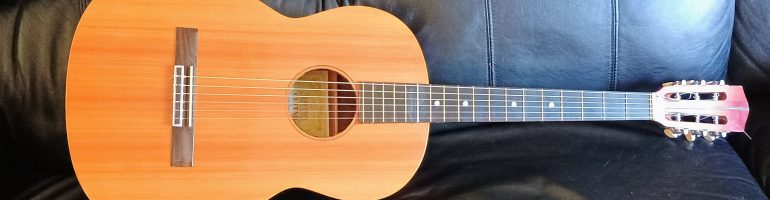
Taking up where I left off: I glued the top on and installed a simple cream coloured plastic binding. The ribs had suffered a fair amount of cosmetic damage, which I patched up with glue and filler – then stained and varnished the sides and back.
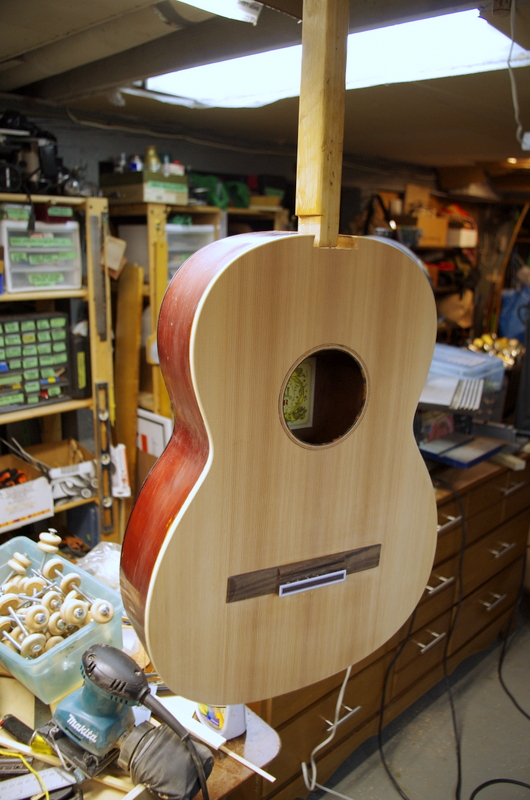
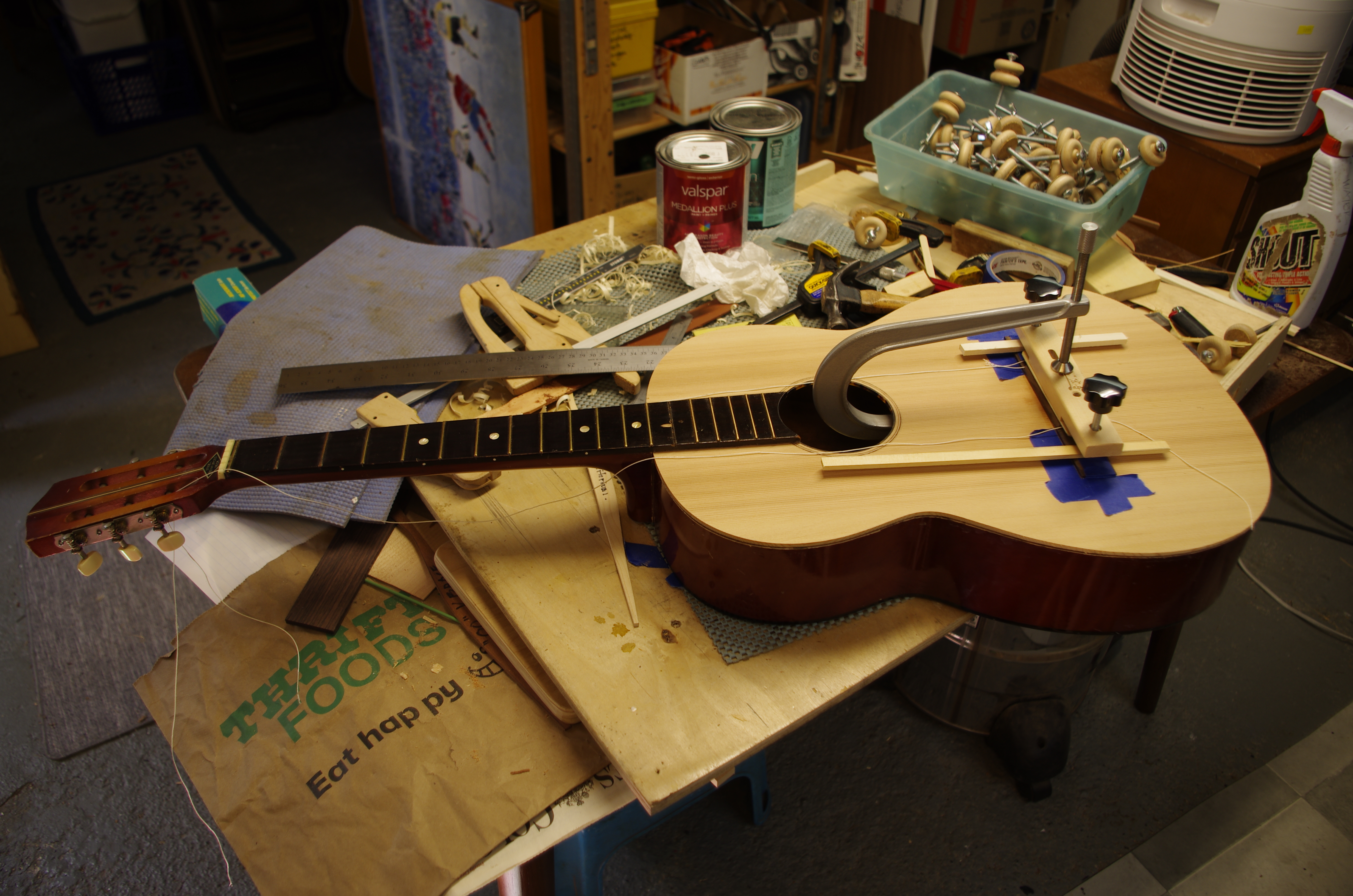
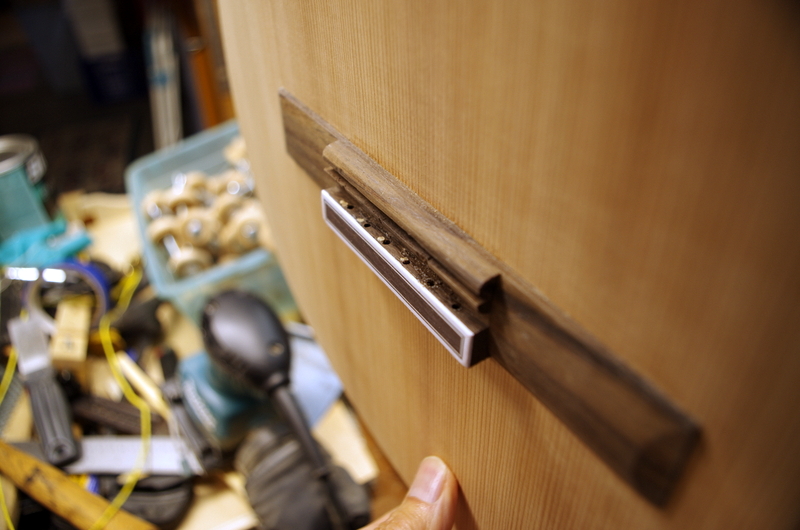
After getting the neck back on and the bridge installed, I found that the string spacing was just a bit too wide for the neck, so I filled the holes in the bridge and drilled new ones. This I should have done before installing the bridge, but I took a chance that it would be ok, and it wasn’t!
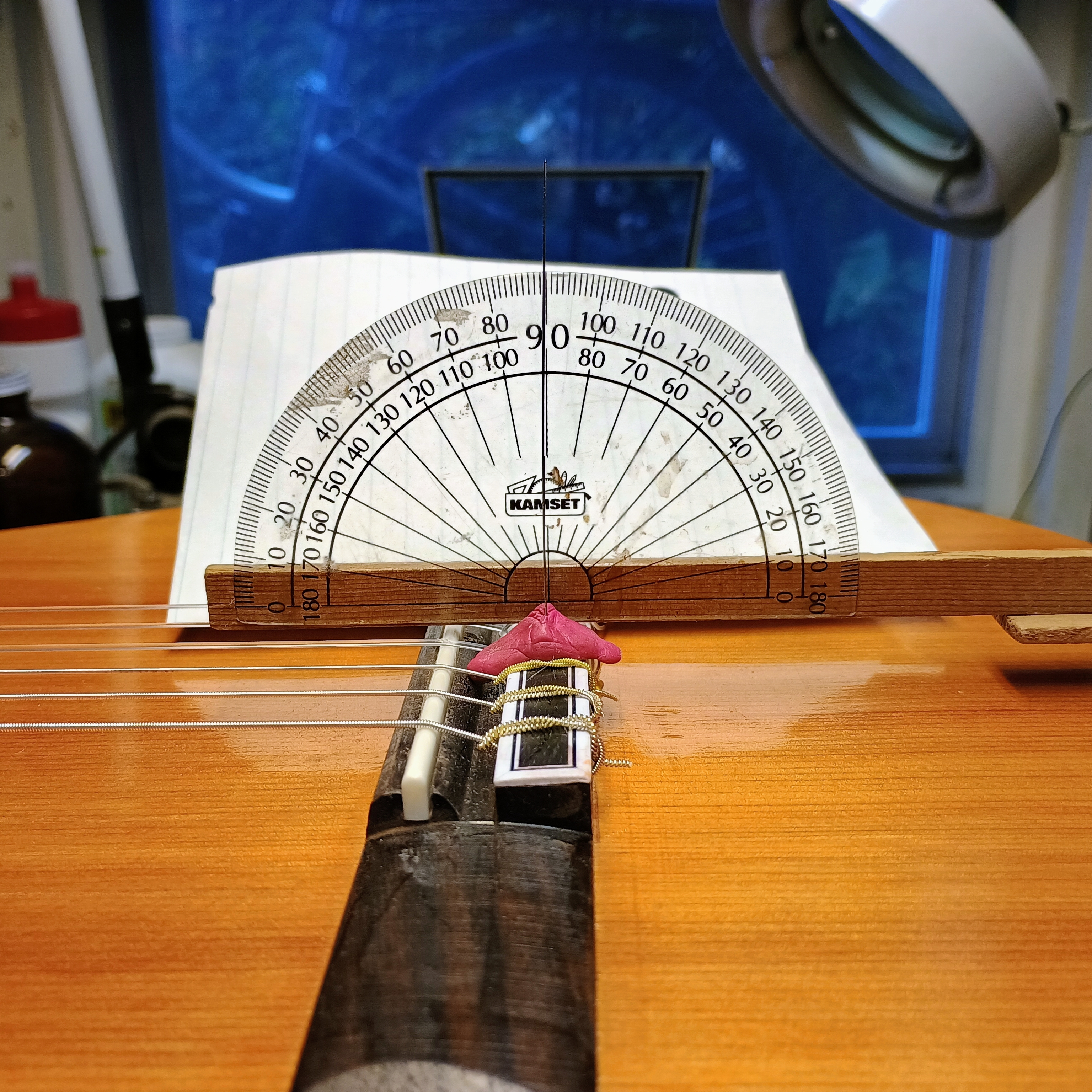
I strung it with Savarez high tension Yellow Card strings, and then measured the bridge rotation. It rotated 1 degree, which was less than desired, so I shaved the braces down several times and got the rotation to 2 degrees. That was the target, so no further shaving was done.
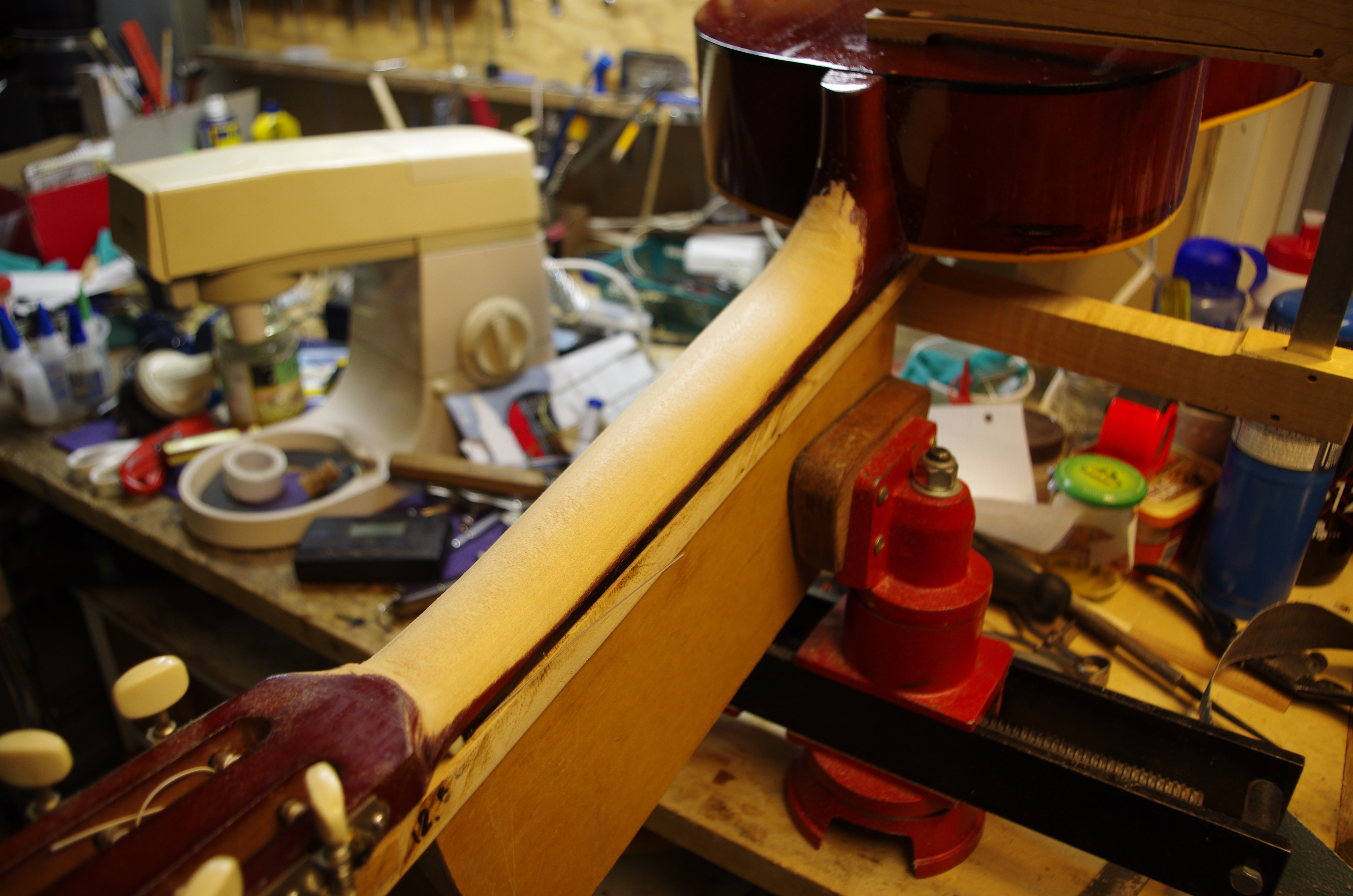
Once I had the bracing carved, I decided to reduce the depth of the neck, which was much too deep. How they came up with such a neck profile beats me, as almost no guitar player likes the depth of such a neck. I reduced it by about 3mm, which was not as much as I could do, but it was enough to make the neck feel much better. Then I gave it a light rub with a thin brown stain and finished it with a few rubbed on coats of shellac and oil.
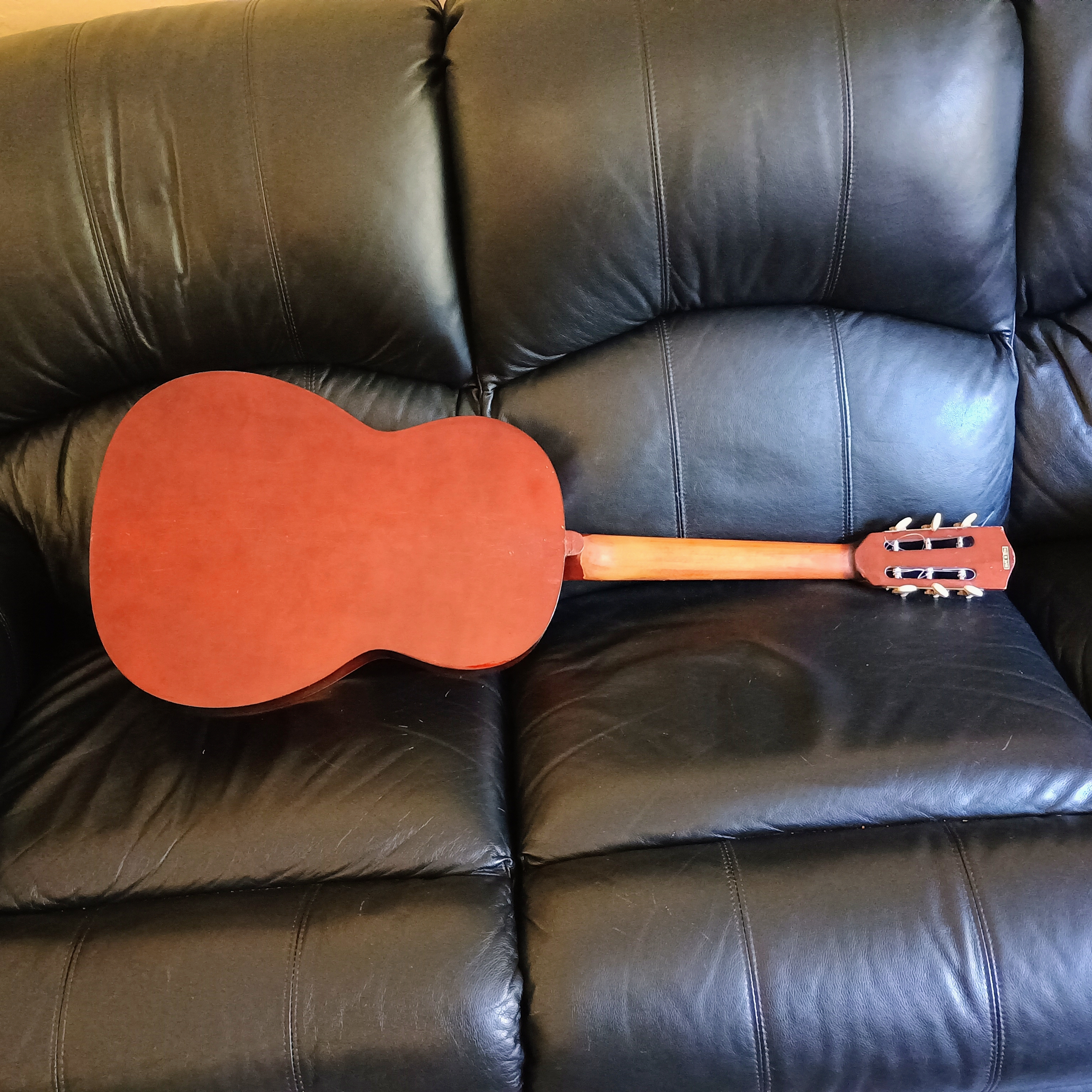
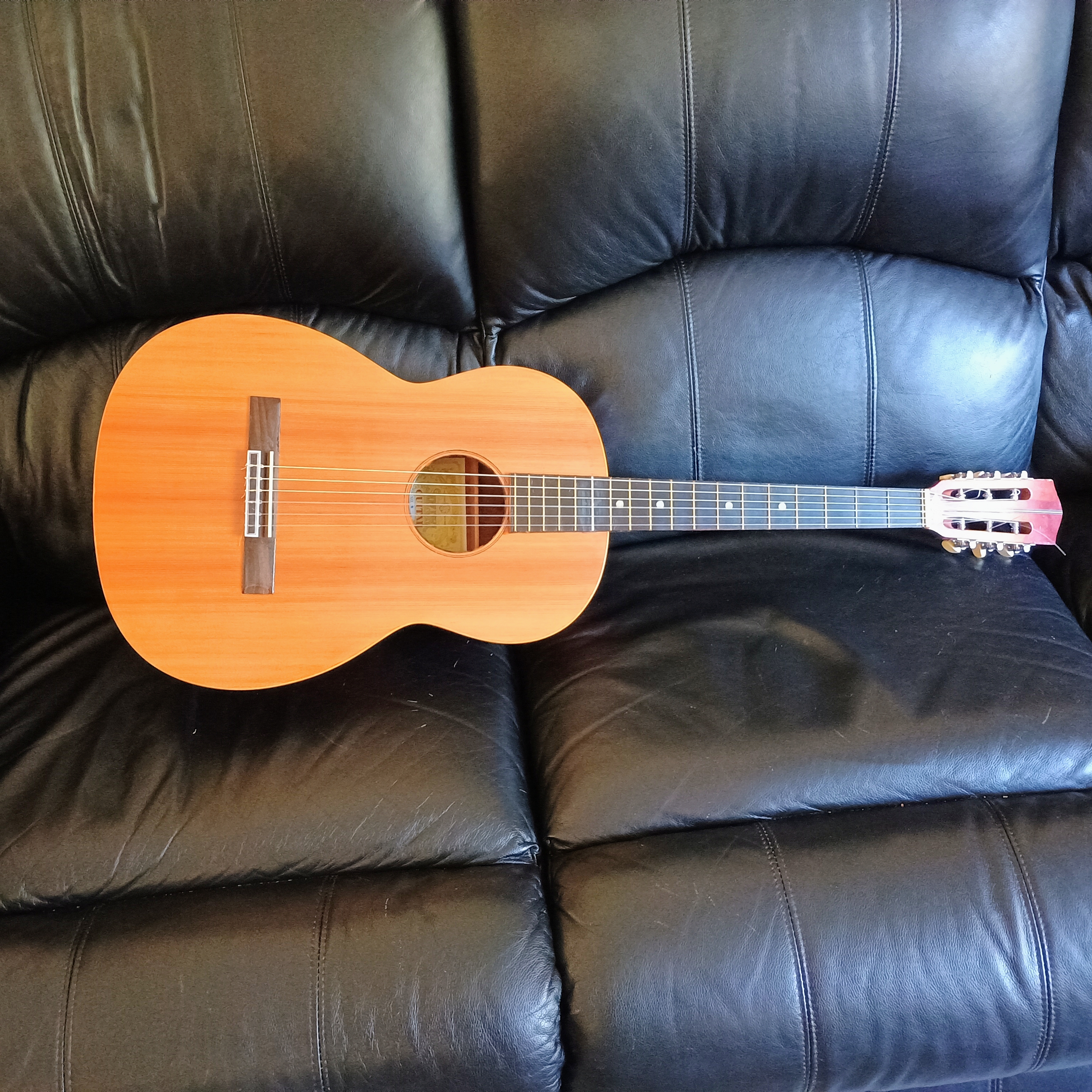
The result is a decent guitar, with a very narrow neck – for a classical. The neck is actually smaller than I would build from scratch, at 1-1/2″ wide at the nut, but it’s still better to be a bit narrow than too wide and uncomfortable. The bracing worked well enough, and the guitar has a lot of bass response for a small body size. The trebles are not great, but that seems to be the typical tone of nylon strings, so I didn’t expect great things there. The response when using a pick is very bright and loud across the spectrum. So for my purpose, it works well.
An oft-quoted statement from Torres (the greatest luthier of his day) on his deathbed was that the sonority of a guitar was entirely dependent on the top. The making of the top, a skill that took years of practice to master, was what created the superb tone of his guitars. Torres built a guitar body from papier-mâché to prove his point. This guitar had a laminated top, back and sides, which is the reason it ended up in a thrift shop on sale for $20. Laminated guitars vary from decent to the cheapest of cheap, and there are some that are among the best guitars, but it still depends on how well the soundboard is made. The latest thing in classical guitars is the “double top,” basically a laminated soundboard. I have a guitar that features the traditionally highly prized features that truly do matter – the right dimensions and a solid cedar top that resonates well. But the marketplace is another thing! I doubt that anyone would pay me enough for it to cover the cost of the strings and the materials used to reconstruct it. But so what? I made it for my own pleasure and use and with a nice narrow neck, so I think I will enjoy this one.
A last word on the varnish I used – an old tin of Brown-Omega from the defunct International Luthiers Supply of Tulsa Okalahoma. This is great stuff, oil varnish, which dries fast and has little odour. It was popular in its day, but alas is no more.



 nathanguitars
Beautiful work!