Sketches from Canadian History

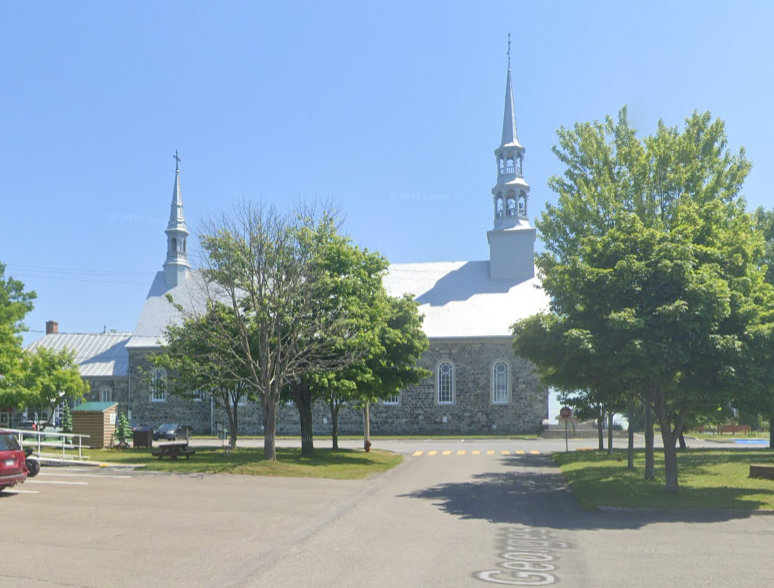
Eglise St George, Cacouna, Quebec (courtesy Google)

I picked up an interesting art book yesterday, called AY’S CANADA. Note the similarity between the photo above and the pencil sketched church on the left side of the book cover below?
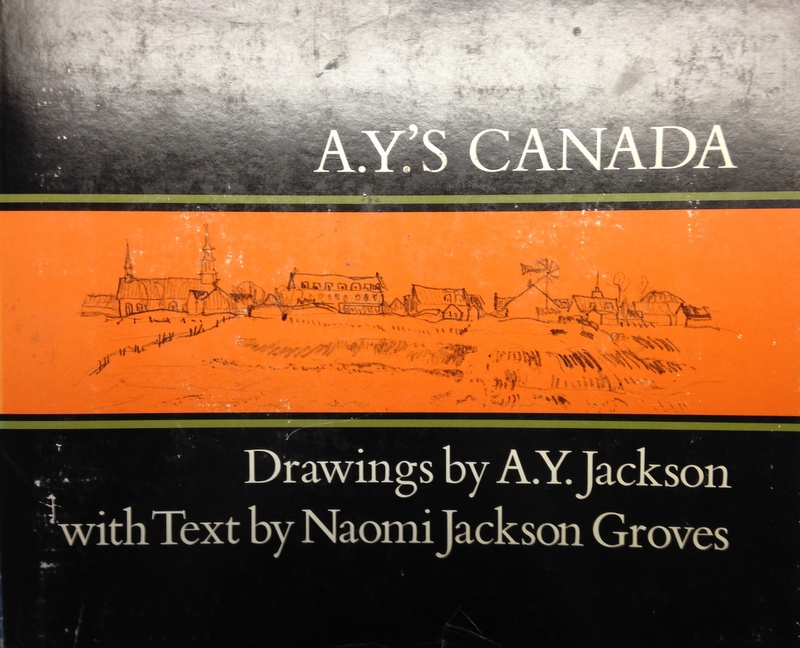
AY Jackson, one of the renowned Group of Seven artists who invented Canadian modern art about a century ago, liked to roam around rural Quebec with his paints and sketchbooks. In 1921 he drew a pencil sketch that included the same church shown above, in the village of Cacouna, Quebec – on the lower south shore of the St. Lawrence River. When I grabbed the book off the shelf at my local thrift shop I had no idea that AY had ever been to Cacouna. Nor did I have any clue as to where the cover illustration was sketched.

Not until I reached pages 42 and 43 did I discover the Cacouna sketch, and realized that it was the sketch on the book cover. The reason this is so fascinating to me is that my father’s father was born there, and his middle name was Cacouna! If my great grandfather and grandmother had some reason to name their son after the village where he was born, no one in the family knows. It certainly has lasted however, and gives him some distinction in the family history, even though he died around 1925, leaving his wife and six kids in poverty. Such was life a century ago.

Cacouna Village with melting snow (1921), A Y Jackson

I’ve never even been to Cacouna, but one of my boys went there once, just to check out where his great grandfather was born. I have been to Buttle Lake here on Vancouver Island however, numerous times in fact. Last week we were camping there again and I managed to do one measly watercolour despite having nothing else to do but eat, sleep, swim, and go for walks. I am not quite so dedicated to my art as AY was, but here is my sketch.

1 Comment

Filed under Books, History, Sketching, Thrift shop finds, Travel, Uncategorized

A Post Card, a Song & a Typewriter

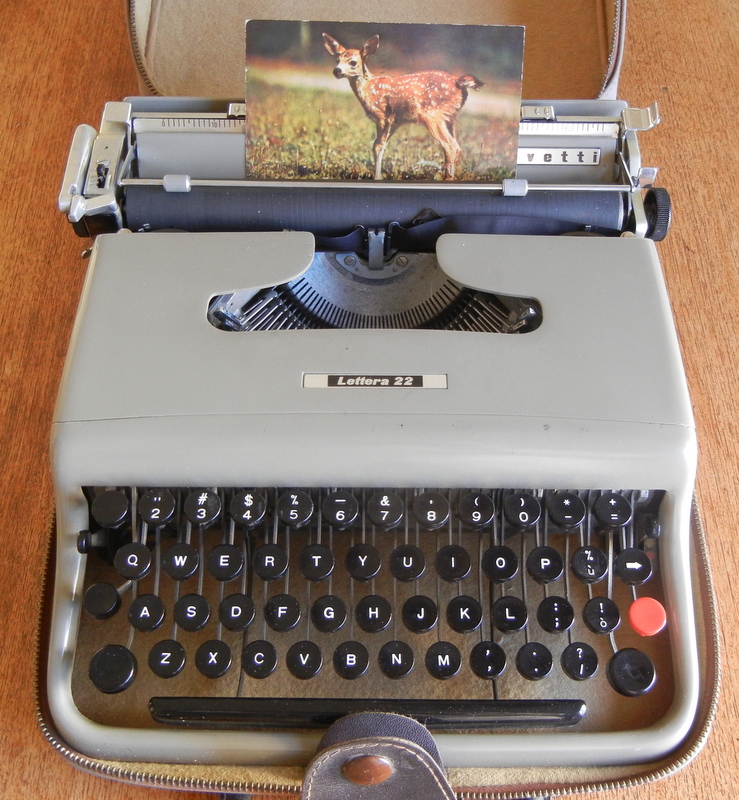
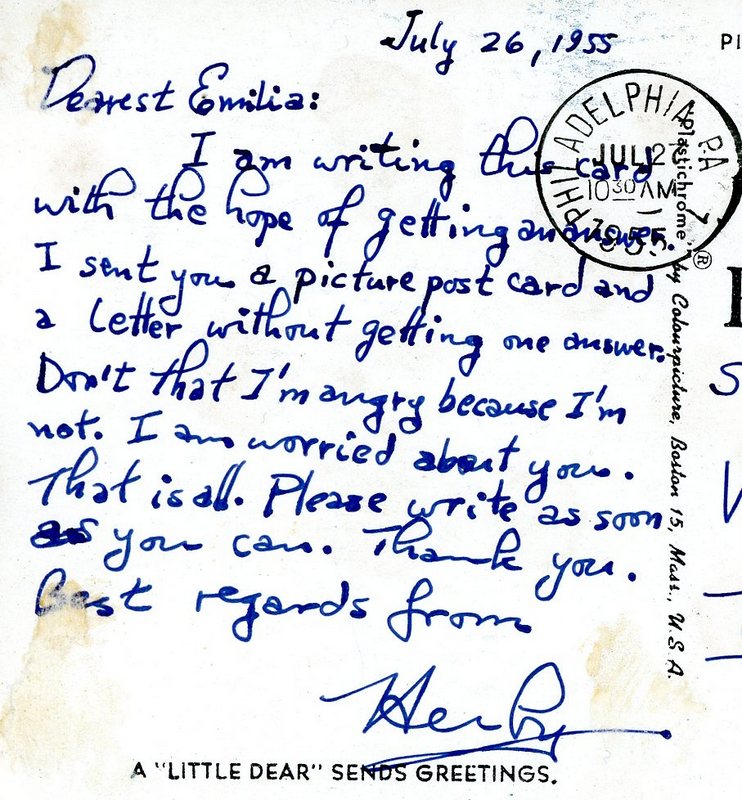
Several weeks ago I found this old postcard at a thrift store. The message was so fascinating that I wrote a song about it, called “Post Cards”, changing the name of Herby to Paul for the sake of the rhyme. A week or two later I returned to the store to find an Olivetti Lettera 22. Later when I got it home I noticed that on the outside of the case, written in faded ballpoint, was the name of the owner; Emilia of the post card! The typewriter is interesting, with Italian accented vowels that do not show on the key tops. Keys 2, 3 & 4 shifted are a, i & e with back-sloped accent marks. The other two vowels u & o are clearly marked on their respective keys.

Emilia’s typewriter, with the picture postcard from Herby

Last of all here is a clip of the song.

Leave a comment

Filed under songwriting, Thrift shop finds, Uncategorized

Typewriter Rock n Roll

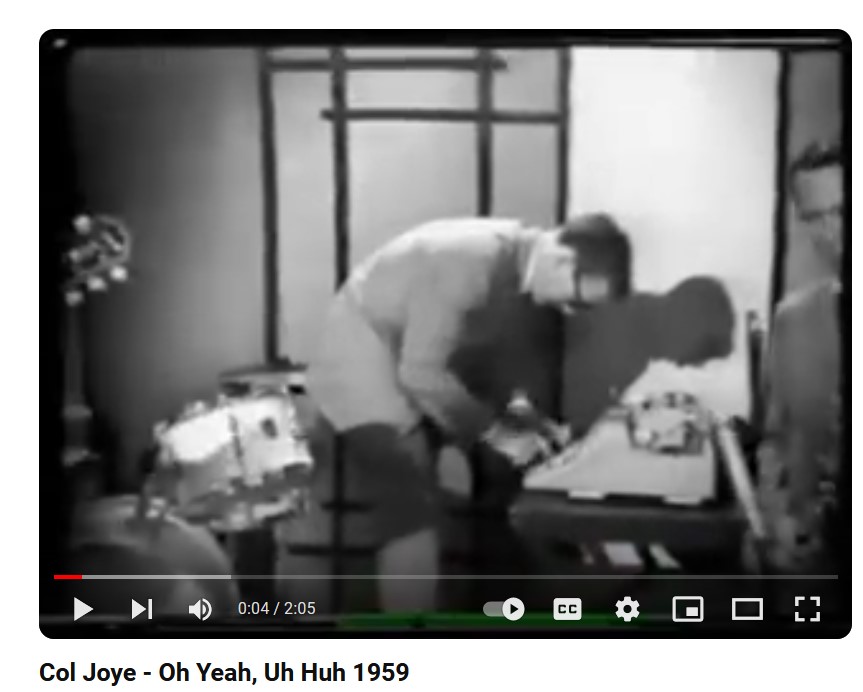
A recent thrift shop find was a very unusual 60 year old Japanese guitar. I bought it because I liked the funky look of it. A search by photo turned up some amazing facts that led me to this clip above of an Australian band from 1959 that featured rhythm by typewriter. That band was led by it’s star singer, Col Joye. He had a line of guitars made in Japan with his name on the label. This is one of them.

My Col Joye guitar after repairs.

It resembles a French gypsy style guitar in construction, having an arched top with ladder bracing as well as a fret marker at the 10th fret. It sounds like a gypsy jazz guitar, very bright and loud. The rosette is a work of art, with delicate inlaid mother of pearl, seriously fancy for a presumably low cost item. The neck has no truss rod, but it does have an inlaid wood bar that acts as reinforcing. The neck did not warp or bow, but slowly bent from the heel over 60 years, as even the best of guitars often do.

I removed and reset the neck, made a new bridge and did a lot of fret levelling to make it playable. One site stated that Tommy Emmanuel owned a Col Joye as his first guitar. How this came to Canada beats me, as they were not sold here.

Neck removal by steam injection. Lucky for me they used hide glue. I used hide glue to reassemble too!
Rosette and pick guard detail

I found numerous videos of Col Joye and his band, but the one that amazed me was the performance of Oh Yeah, Uh Huh, which had a guy typing rhythm. The song is forgettable, to be kind, but the video should be priceless to typewriter aficionados. As for the guitar, it is the rarest guitar I have ever owned, and likely one of the few left in the world (just guessing).

Page from an archived Australian website that once had the same guitar for sale.

Tommy Emmanuel, if you are out there, I will gladly trade you this guitar for one you own!

Leave a comment

Filed under Guitars, History, Thrift shop finds, Typewriters

The People’s Watch

A recent addition to my collection of assorted junk-store treasure was this old wristwatch, which I got for a few bucks in a big haul of stuff, including a nice Lettera 31 typewriter (more about that later). Thus I don’t know what the watch cost me, but the tag was $10, so it was considerably less than that. The tag was on the back, so I had no idea what it covered up until later when I got home and peeled it off. Suddenly I realized the significance of the label. WOLFSBURG. The place where Volkswagens were made. I have owned a few VW’s, starting with a 1970 type 2 that I bought in Amsterdam for $1000 and took a long trip around Europe in. I drove various Beetles from time to time, but never did own one of my own. Today they cost a ridiculous amount. My 1984 VW Westfalia camper is 40 years old and still going strong. We will be camping in it in a couple of weeks. Despite the dead simplicity of the VW van, the utter lack of luxury, the noise, the poor fuel economy and the low power, I enjoy travelling in this vehicle more than any other. Visibility is superb, and it does everything I need, without a fuss. I think it is possibly the greatest vehicle ever made. It is also the only car model I know of in which the owners always wave at each other.

My extensive research (you know what) revealed that Wolfsburg watches were presented to Canadian VW owners whose vehicles hit 100,000 kms. I’m sure my Westy qualifies for this watch, although the real mileage on the van is unknown. After 40 years however, I think it’s safe to assume it has travelled well beyond 100k, probably 2 or 3 times. Needless to say, no car companies give prizes to customers anymore. You’re lucky if they even know how to fix your car!

The movement is a Jeambrun 26D, made in France, from the 60’s, older than my Westy! I cleaned up the case and the crystal with some old Brasso, the kind they no longer sell, but which works like a hot damn on metal and plastic. So far the watch is keeping good time. I think I will wear it when we go for our camping trip. Of course I will! It’s the people’s watch. The Volkswatch!

Leave a comment

Filed under Thrift shop finds, Uncategorized, VW Vans, Watches

What Were You Thinkin?

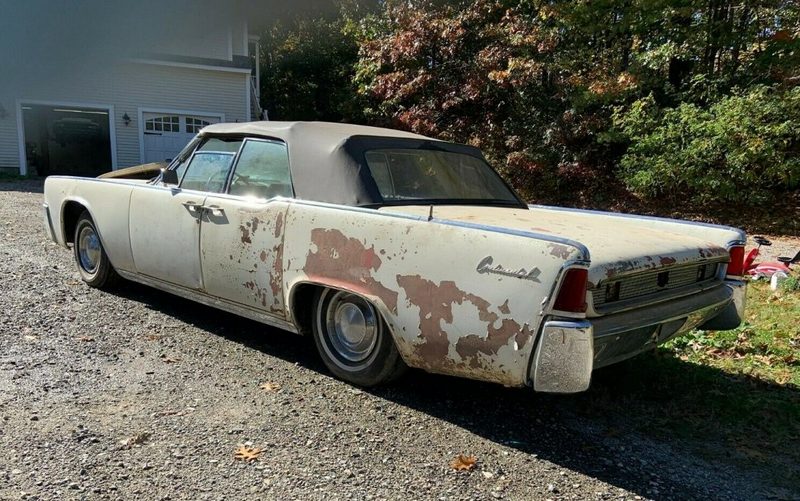
I recently wrote a song entitled “What Were You Thinkin?” about a stolen Lincoln. The best picture I could find on line was this:

Internet search result

I wanted something closer to what I imagined the stolen Lincoln would look like, so I consulted Microsoft Co-Pilot, and it generated this montage, complete with the lawn and a trailer home; much closer to what I was thinkin! So far I haven’t asked for Co-Pilot to put a baseball team inside the car, but that might be interesting…

Microsoft AI generated image

Here is a clip of the first verse and chorus from my demo, recorded on a cell phone. I was using the camera to record video when I did this one, but I have switched to using Dolby On, a free app that produces surprisingly good quality audio recordings.

(G) It gets 3 miles a (E7) gallon and the (A7) steering (D7) sucks
(G) But the trunk is as (E7) big as a (A7) pickup (D7) truck
It (C) corners worse than a (G) Greyhound (E7) bus
Takes (A7) premium gas and it’s (D7) riddled with rust
The (C) seats are torn and they’re (G) growing (E7) mould
It’s a (A7) colour combination of (D7) brown and gold
You can (C) fit a baseball (G) team (E7) inside
It’s the (Am) same old (D7) heap in which (G) Kennedy died

(G) What were you (C) thinkin’
(C) When you stole my (G) Lincoln
(G) Last night it was (A7) parked on the lawn
(A7) But this (D7) morning it was gone
(D7) What were you (C) thinkin’
(D7) When you stole my (G) Lincoln

3 Comments

Filed under Artificial Intelligence (sic), Classic cars, Music, songwriting, Uncategorized

Alternative Photography Class

When photography gets too easy it becomes boring. So here I present some recent photos I developed at home, taken with an ancient Speed Graphic with a 120 roll film back, through a Zeiss Tessar lens. Unfortunately, I left the film in the camera for 3 years before I shot the last 3 frames, so it didn’t survive the various light leaks. But a few shots were interesting enough to scan and crop and tidy up. The film is HP5+, and the developer is Caffenol delta standard, a simple mixture of washing soda, vitamin c tablets and cheapo instant coffee. One warning, always filter the solution after mixing it up, or else be prepared for white spots on the negatives due to the presence of tiny bits of vitamin c tablets!

Below are a two photos from a recent musical event, taken with a 1952 Leica iiif on 35mm HP5+ film, and developed in the same Caffenol. The lens is a Summar 50mm from 1935 or so, and it still kicks! When you hold an old Leica in your hands you understand why they were the gold standard for decades.

Last, some digital photos with a difference; shot with a pinhole “lens” on my defective Pentax K50 that still works in manual mode. I was able to shoot outdoors handheld at speeds around 1/20th and ISO of around 12500 to 25000.

Leave a comment

Filed under Cameras, Photography, Uncategorized

Restoring the Monarchy (Royal 1)

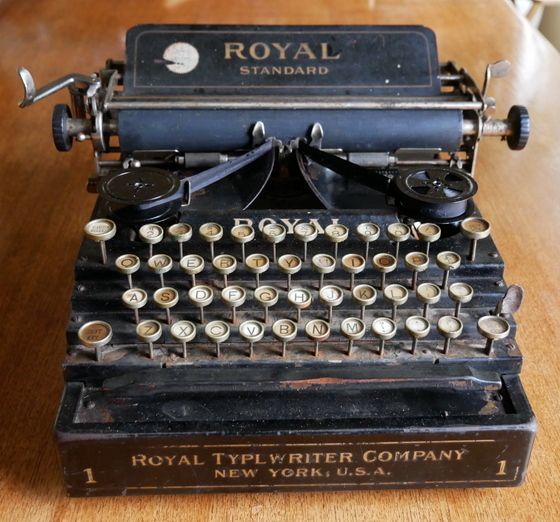
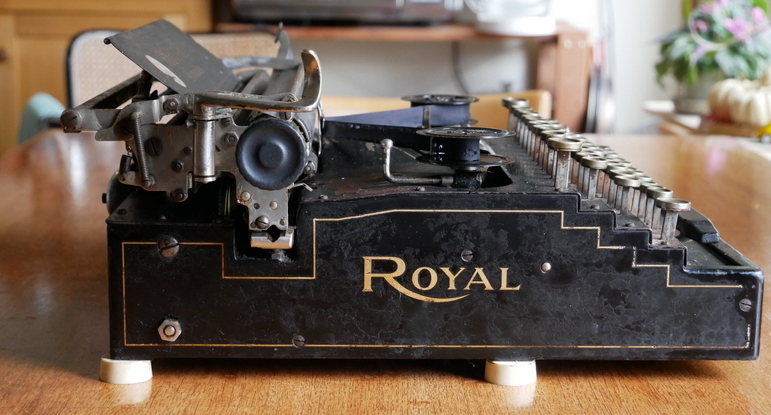
1912 Royal model 1

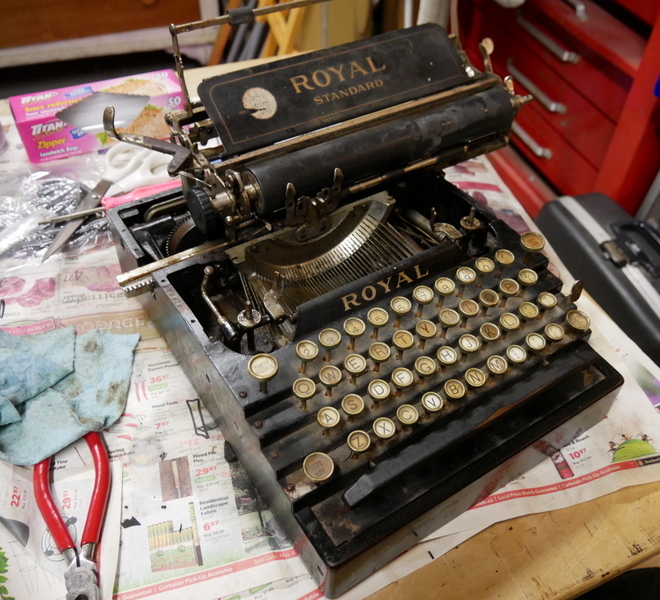
I found this ancient Royal 1 that was in terrible shape cosmetically, but upon inspection I wagered that it was fixable, so I bought it. Liberal applications of Deep Creep penetrating oil helped free up many sticking parts, along with some elbow grease and a wire wheel on my Dremel to remove the surface rust. There were two broken parts; the advance lever linkage and the “ear” of the yoke that limits the travel of same. I made a new link from a piece of aluminum, which fixed that issue. The ear proved to be unnecessary. I took off the platen and all the cover plates and did what I could to adjust the inner gears and so on. The spring motor needed a string and winding, which had to be done by winding the thing up and fastening the cord to it. The engineers designed a spring winding mechanism, but I was unable to free up the rusted set screw that locked the winding shaft. Other than that, the thing still works!

I glued the rubber sleeve back onto the wooden platen shaft, and saw that the shaft had been stamped with the date Aug 19, 2012. By the serial number this was the 77,879th of these made. They started production in 1906 and it increased yearly by large leaps. The machine weighs exactly 10kg, and the frame is made of heavy plate steel that is almost indestructible. I put a new spring on the bell, which rings brightly now. All in all this is a very impressive unit, and a testament to the skill of the designers and builders.

I kept notes about the process in a notebook I had, in which I had previously made notes about an interesting book called Fermat’s Enigma, about the history of mathematics. Hence some ruminations on that, typed on the “refurbished” typewriter.

side view
new feet made from wine bungs size 5.5
under renovation
ribbon reversing gearshift lever
the motor housing teeth drive the ribbon winding transmission – like a huge wristwatch mainspring

Leave a comment

Filed under History, Repairs, Technology, Thrift shop finds, Typewriters, Uncategorized

Italian Style

Olivetti mechanics in an Underwood body: Italian engineering, American design, made in Spain

Bought this Underwood 450 the other day. It was all stained and dirty but Brasso and Meguires plastic cleaner polished it up nicely. I naturally assumed that since it was an Olivetti inside, it had to be Italian design, but it was not. It is an American design! However, Underwood was owned by Olivetti and so the design had to be Olivetti approved, hence I call it Italian Style! Concurrently, I also found a Borsolino cap at last, as well as an Italian merino wool cardigan. I wanted a Borsolino hat for years but never found one until today. Perhaps if I sit down at the “Italian” typewriter in my Italian Borsolino and Italian Merino (sweater), I will write about how I once saw a dead dog in Venice, and how my life was forever changed.

Me and my Italian clothes
Borsalino- accept no substitute!

Leave a comment

Filed under Clothing, Hats, Thrift shop finds, Typewriters, Uncategorized

Christmas Greetings

Best Wishes for a Happy Christmas
& a Healthy Prosperous New Year in 2023

WAITING FOR WINTER

When I was a lad in deep dark November
Wishing and hoping and watching for snow
Desperately yearning for ice in December
When once again I’d have somewhere to go

Snowflakes were falling the ice rink was calling
Shovels came out of the shed
Clearing a path from the front to the back
As the snow piled up over my head

The milkman, the bread man, the mailman, the trucks
Ploughing along through the snow
Snowmen and snowballs and hockey pucks
Off to the rink we would go

Along comes Christmas at the end of December
Everyone’s come out to play
Meeting my pals at the rink I remember
Nothing felt better than skating all day

Shopping for presents for Mom and Dad
Wondering what to get them
Mom got some Yardleys and Dad got Old Spice
I never will forget them

March brought the spring and the ice soon melted
Skating was done for the year
But the eternal snow just kept falling and falling
Oh when will the summer be here

Leave a comment

Filed under Christmas, Poetry, Uncategorized, Winter

Thrift Store History Lesson

Grand Dixence Dam, Switzerland
Lancaster, England c. 1610

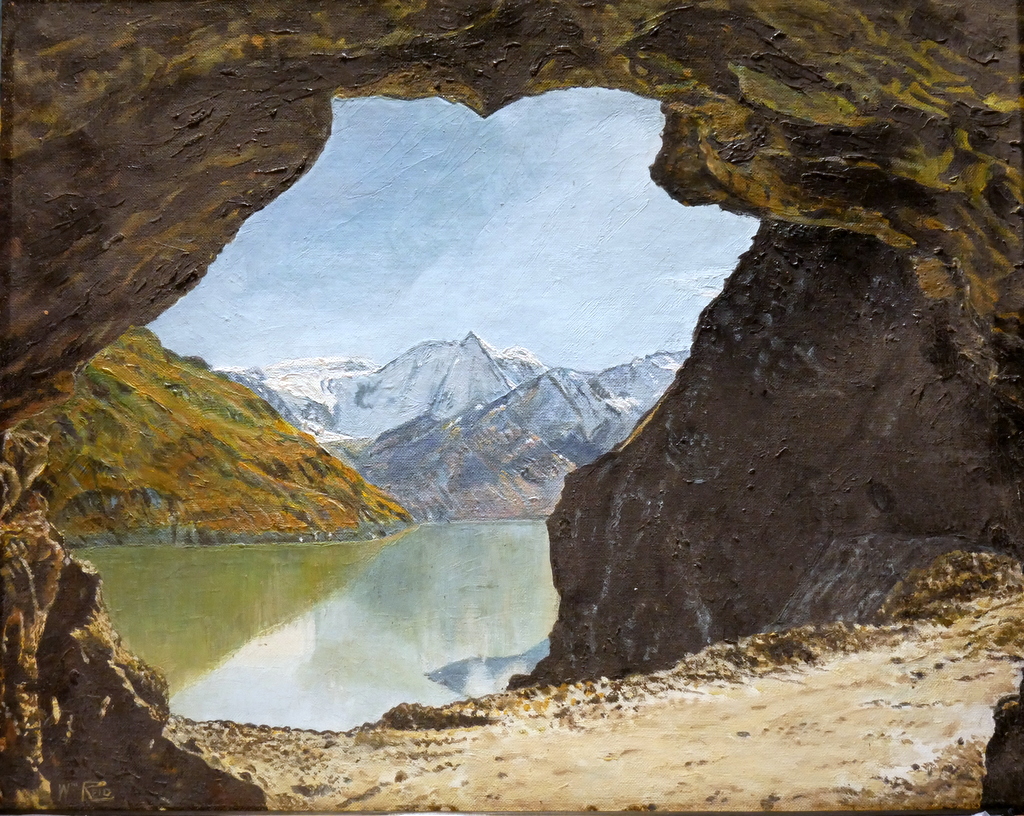
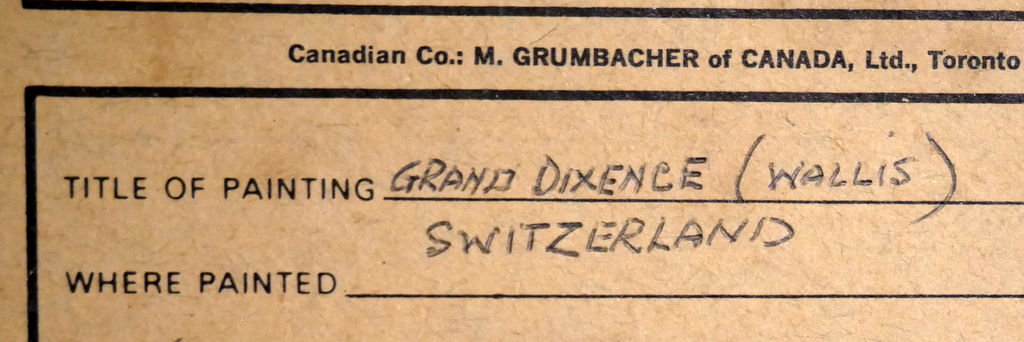
The local St Vincent de Paul thrift store recently moved to a new location closer to our home and so we have been going often in search of whatever may be found. Two interesting unrelated items I picked up for a couple of bucks were an old oil painting of an Alpine scene in a nice frame, along with an old Cadet Officer’s Commission from the County Palatine of Lancaster. Prior to that day I knew nothing whatsoever about County Palatines or the Alpine scene, which the painter identified in handwriting on the back of the painting as being “Grand Dixence”.

Further investigation followed, and I discovered the exact spot from whence the painting sprung, as well as the history of the Grand Dixence, a huge dam high in the Swiss Alps. Here is the painting and a photo I found on line, unquestionably from the same place.

Grand Dixence, the oil painting
Stock photo available on line! I took the free version..

The Grand Dixence dam was built in the 1950’s and is the largest gravity dam in the world. My guess from the top picture is that the painting and photo viewpoint is very likely to be somewhere along the shoreline to the left of the far end of the dam. Just a guess of course.

As for the County Palatine, the certificate I found was in antiquated language granting a commission in the Catholic Cadets to a young man, under the authority of the Lord Lieutenant and Custos Rotulorum of the County Palinate of Lancaster, the Honourable Ughtred James Baron Shuttleworth of Gawthorpe.

Custos Rotulorum means keeper of the rolls in latin, and is an ancient office, being the person who keeps the public records.

Officer’s Commission No 1 Cadet Battalion – Salford Diocesan Catholic Boys x?x
British Royal Coat of Arms

From Wikipedia: Palatinates emerged in England in the decades following the Norman conquest, as various earls or bishops were granted palatine (“from the palace”) powers, i.e. powers of a sort elsewhere exercised by the king. Palatine powers over Lancashire were conferred on the first duke of Lancaster in 1351, at the same time as his promotion from the status of earl. This was only the second dukedom created in England, following that of Cornwall in 1337, which also became associated with palatine powers. The dukedom was united with the Crown on the accession of Henry IV in 1399, but the vast estates of the Duchy of Lancaster were never assimilated into the Crown Estate, continuing even today to be separately administered for the monarch as Duke of Lancaster. The rights exercised through the Duchy, rather than the Crown, included its palatine powers over Lancashire, the last of which were revoked only in 1873. In the county palatine of Lancaster, the loyal toast is to “the King, Duke of Lancaster”

1 Comment

Filed under History, Thrift shop finds, Travel