Best Wishes for a Happy Christmas & a Healthy Prosperous New Year in 2023
WAITING FOR WINTER
When I was a lad in deep dark November Wishing and hoping and watching for snow Desperately yearning for ice in December When once again I’d have somewhere to go
Snowflakes were falling the ice rink was calling Shovels came out of the shed Clearing a path from the front to the back As the snow piled up over my head
The milkman, the bread man, the mailman, the trucks Ploughing along through the snow Snowmen and snowballs and hockey pucks Off to the rink we would go
Along comes Christmas at the end of December Everyone’s come out to play Meeting my pals at the rink I remember Nothing felt better than skating all day
Shopping for presents for Mom and Dad Wondering what to get them Mom got some Yardleys and Dad got Old Spice I never will forget them
March brought the spring and the ice soon melted Skating was done for the year But the eternal snow just kept falling and falling Oh when will the summer be here
Grand Dixence Dam, SwitzerlandLancaster, England c. 1610
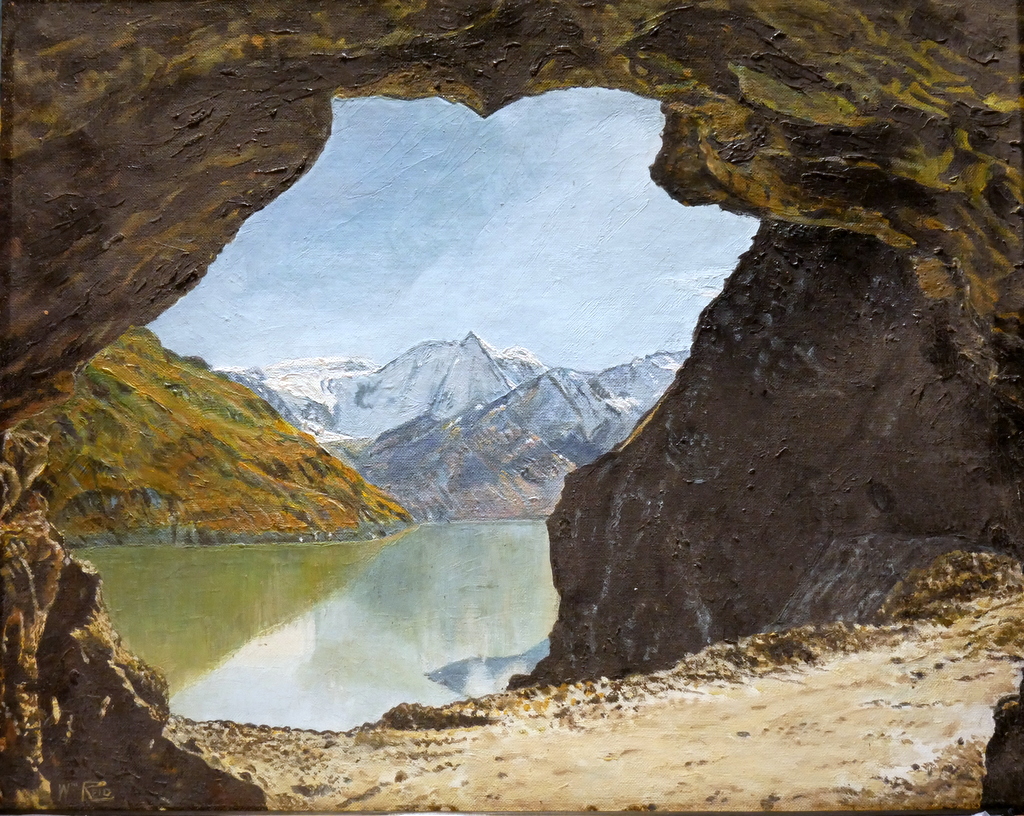
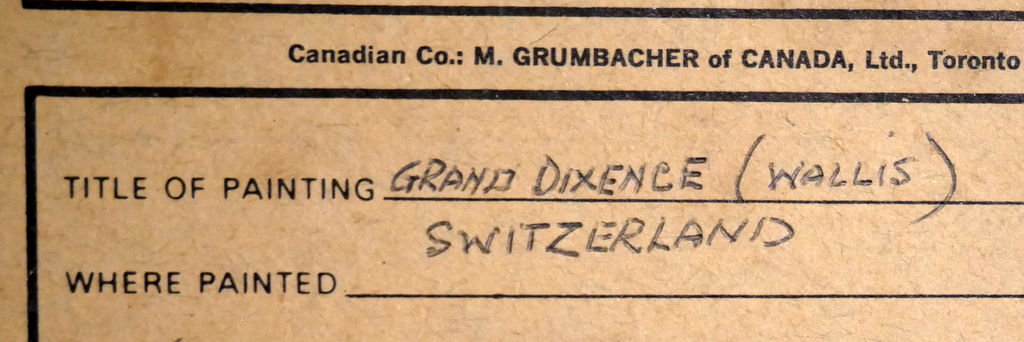
The local St Vincent de Paul thrift store recently moved to a new location closer to our home and so we have been going often in search of whatever may be found. Two interesting unrelated items I picked up for a couple of bucks were an old oil painting of an Alpine scene in a nice frame, along with an old Cadet Officer’s Commission from the County Palatine of Lancaster. Prior to that day I knew nothing whatsoever about County Palatines or the Alpine scene, which the painter identified in handwriting on the back of the painting as being “Grand Dixence”.
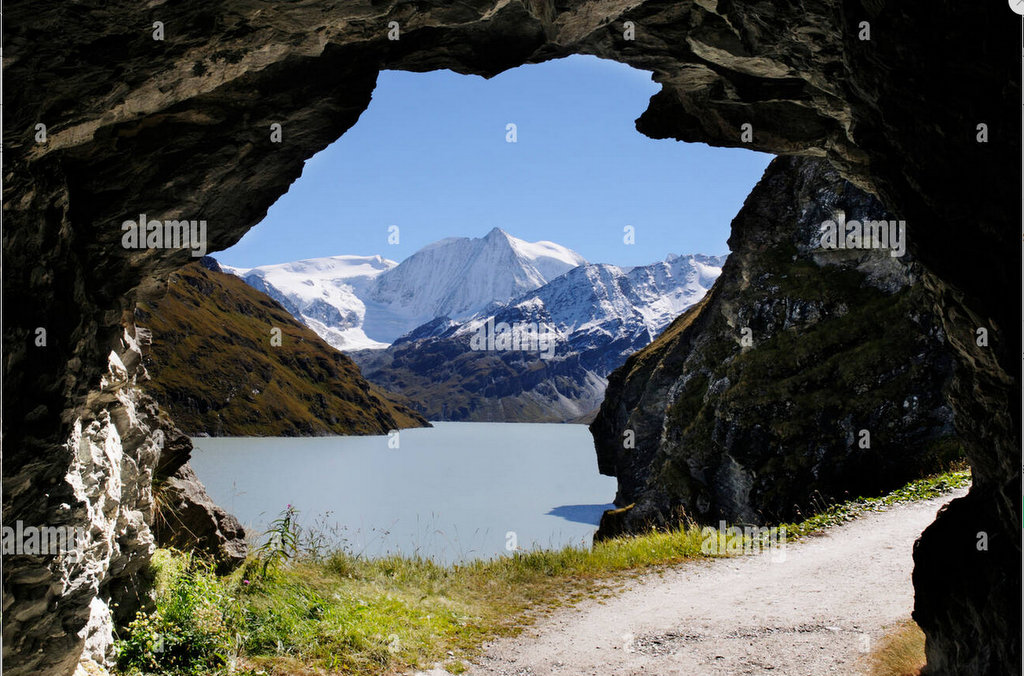
Further investigation followed, and I discovered the exact spot from whence the painting sprung, as well as the history of the Grand Dixence, a huge dam high in the Swiss Alps. Here is the painting and a photo I found on line, unquestionably from the same place.
Grand Dixence, the oil paintingStock photo available on line! I took the free version..
The Grand Dixence dam was built in the 1950’s and is the largest gravity dam in the world. My guess from the top picture is that the painting and photo viewpoint is very likely to be somewhere along the shoreline to the left of the far end of the dam. Just a guess of course.
As for the County Palatine, the certificate I found was in antiquated language granting a commission in the Catholic Cadets to a young man, under the authority of the Lord Lieutenant and Custos Rotulorum of the County Palinate of Lancaster, the Honourable Ughtred James Baron Shuttleworth of Gawthorpe.
Custos Rotulorum means keeper of the rolls in latin, and is an ancient office, being the person who keeps the public records.
Officer’s Commission No 1 Cadet Battalion – Salford Diocesan Catholic Boys x?xBritish Royal Coat of Arms
From Wikipedia: Palatinates emerged in England in the decades following the Norman conquest, as various earls or bishops were granted palatine (“from the palace”) powers, i.e. powers of a sort elsewhere exercised by the king. Palatine powers over Lancashire were conferred on the first duke of Lancaster in 1351, at the same time as his promotion from the status of earl. This was only the second dukedom created in England, following that of Cornwall in 1337, which also became associated with palatine powers. The dukedom was united with the Crown on the accession of Henry IV in 1399, but the vast estates of the Duchy of Lancaster were never assimilated into the Crown Estate, continuing even today to be separately administered for the monarch as Duke of Lancaster. The rights exercised through the Duchy, rather than the Crown, included its palatine powers over Lancashire, the last of which were revoked only in 1873. In the county palatine of Lancaster, the loyal toast is to “the King, Duke of Lancaster”
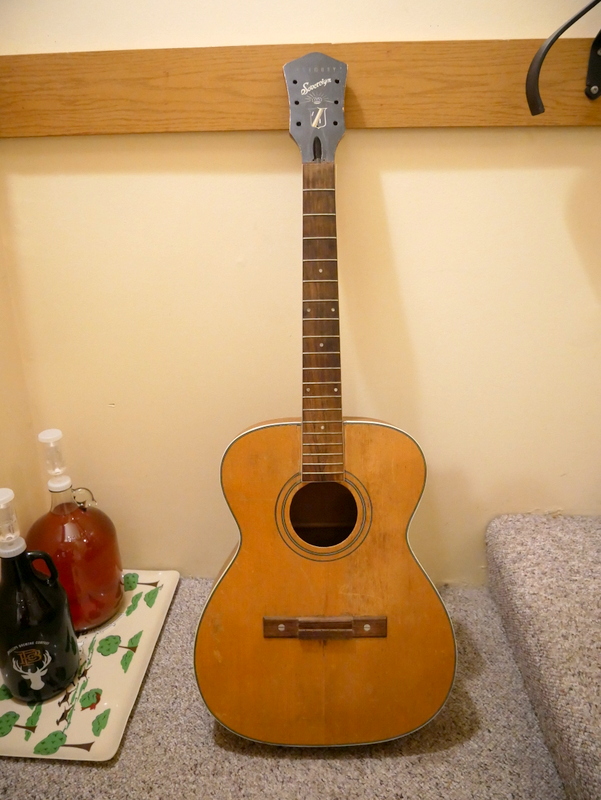
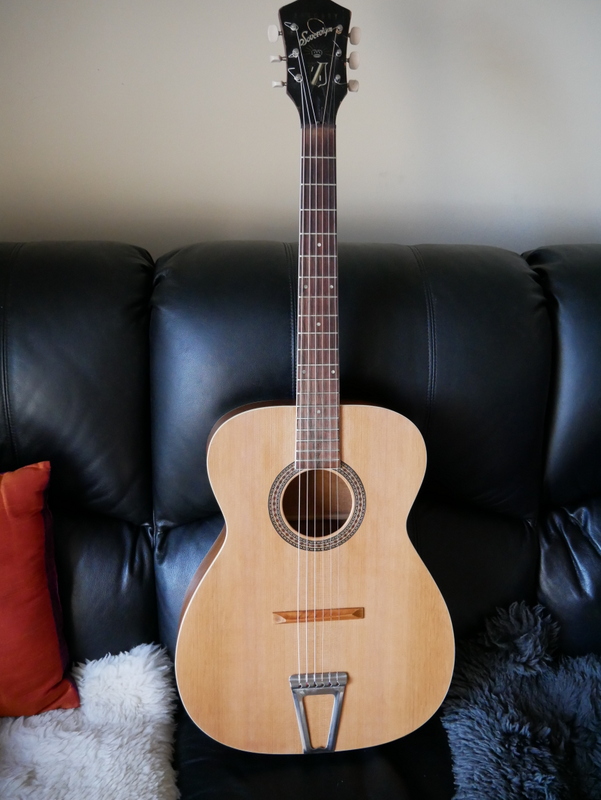
A couple of weeks ago I found this old 1960’s era Harmony Sovereign guitar for sale at the Sally Ann, cheap! The nut and tuners were gone and the top was damaged, cracked and warped. The bridge was loose and had been bolted into place. But otherwise the rest of it was in reasonable shape.
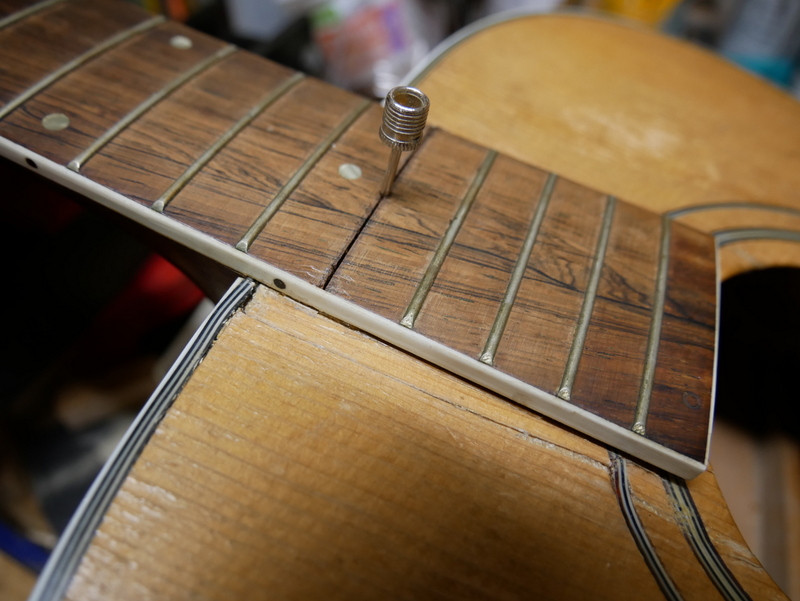
INJECTING STEAM INTO NECK JOINTSERIOUS DAMAGE AT THE NECK JOINTDOVETAIL NECK JOINT
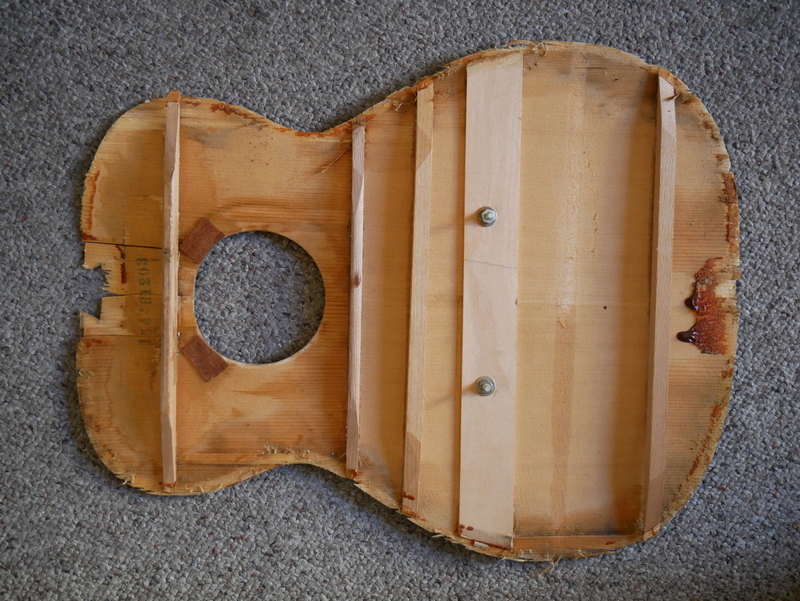
I removed the neck using steam and a special jig. These old Harmony guitars were glued with hide glue, a fortunate thing since that glue dissolves with heat and steam, enabling disassembly. The top was so damaged that I removed it, but upon inspection it was not worth repairing, so I made a new top. They built these tops with so called “ladder bracing”, no doubt to save cost, but they all fail in time because that is a bad design and cannot adequately resist the string tension over many years. To make things worse, ladder bracing may please some ears but it is almost never used anymore because it produces inferior tone in the main opinion. Some folks like it, but I am not a fan. No quality guitars are ever built with ladder bracing these days (that I know of).
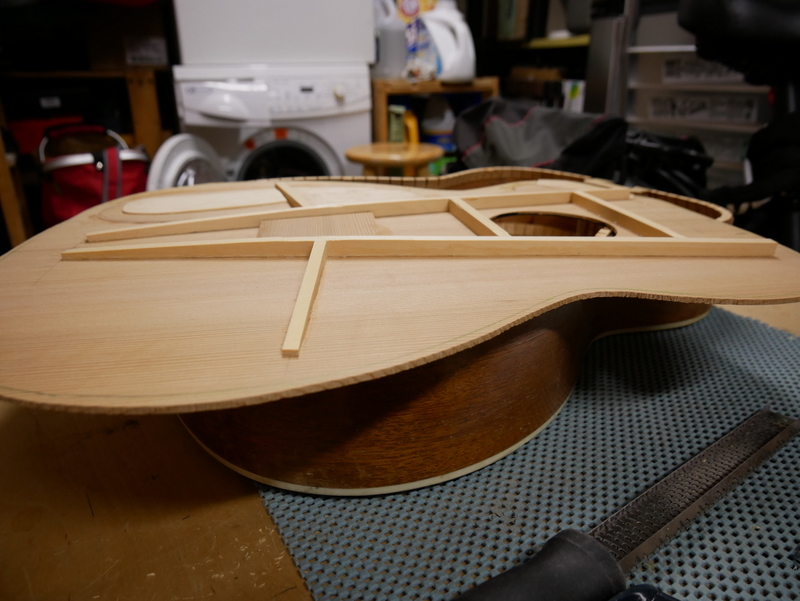
OLD TOP WITH MISSING BRACE, CRACKS, & BOLTS!NEW CEDAR TOPNEW TOP SHOWING THE BRACES
For the new bracing I went with the V brace design that I’ve used for the last 4 guitars I made. This is a proven design that has lots of advantages over ladder bracing and the common x bracing. For one thing it is extremely simple. It puts the main axis of strength in the same direction as the main deforming forces, which means it is more efficient regarding strength to mass, thus enabling less mass in the bracing. Less mass equals more efficient movement of the soundboard, and more sound, especially in the lower register. The low register is where steel string guitars tend to have problems, because many builders over brace them to ensure that the tops don’t warp under tension, which of course limits the low frequencies that are so desirable. It is not hard to get high frequencies out of a steel string guitar, but good bass is another thing. I like v braces for this reason. However, they are so darned effective that you can easily over design them. Therefore I took the two main braces down to a mere 10mm this time, because on previous guitars of similar size I had to go in after they were built and plane the braces down to around that height in order to loosen up the tops and get the bass going.
INSIDE THE OLD BOX AFTER A LOT OF CLEAN UPI CHAMFERED THE TAIL BLOCK TO REDUCE THE GLUED SURFACE
After a lot of testing of neck angle and what not I assembled the top, put on binding, and glued the neck back in place. Everything was perfect, but then I had second thoughts about the bridge. My design called for a typical glued on bridge with pins, which I was sure would work well enough. However, while waiting for the new bridge to arrive in the mail, I thought I would test the guitar with a floating bridge and a tailpiece. I had a suitable tailpiece that resembled those from some old Harmony and Stella guitars, and I made a bridge from a piece of maple. After I got it strung up I was pleasantly surprised to find that it sounded great, and very sweet toned with lots of bass. In short, perfectly acceptable for my purpose. So I left it that way. There is very little pressure on the bridge, and yet the guitar has plenty of volume and punch. So much for all those guitar experts who go on and on about break angles. There is no end of pseudo science among guitar nerds and luthiers; so beware of bullsh*t and trust your own ears!











 nathanguitars