Category Archives: Thrift shop finds

The People’s Watch

A recent addition to my collection of assorted junk-store treasure was this old wristwatch, which I got for a few bucks in a big haul of stuff, including a nice Lettera 31 typewriter (more about that later). Thus I don’t know what the watch cost me, but the tag was $10, so it was considerably less than that. The tag was on the back, so I had no idea what it covered up until later when I got home and peeled it off. Suddenly I realized the significance of the label. WOLFSBURG. The place where Volkswagens were made. I have owned a few VW’s, starting with a 1970 type 2 that I bought in Amsterdam for $1000 and took a long trip around Europe in. I drove various Beetles from time to time, but never did own one of my own. Today they cost a ridiculous amount. My 1984 VW Westfalia camper is 40 years old and still going strong. We will be camping in it in a couple of weeks. Despite the dead simplicity of the VW van, the utter lack of luxury, the noise, the poor fuel economy and the low power, I enjoy travelling in this vehicle more than any other. Visibility is superb, and it does everything I need, without a fuss. I think it is possibly the greatest vehicle ever made. It is also the only car model I know of in which the owners always wave at each other.

My extensive research (you know what) revealed that Wolfsburg watches were presented to Canadian VW owners whose vehicles hit 100,000 kms. I’m sure my Westy qualifies for this watch, although the real mileage on the van is unknown. After 40 years however, I think it’s safe to assume it has travelled well beyond 100k, probably 2 or 3 times. Needless to say, no car companies give prizes to customers anymore. You’re lucky if they even know how to fix your car!

The movement is a Jeambrun 26D, made in France, from the 60’s, older than my Westy! I cleaned up the case and the crystal with some old Brasso, the kind they no longer sell, but which works like a hot damn on metal and plastic. So far the watch is keeping good time. I think I will wear it when we go for our camping trip. Of course I will! It’s the people’s watch. The Volkswatch!

Leave a comment

Filed under Thrift shop finds, Uncategorized, VW Vans, Watches

Restoring the Monarchy (Royal 1)

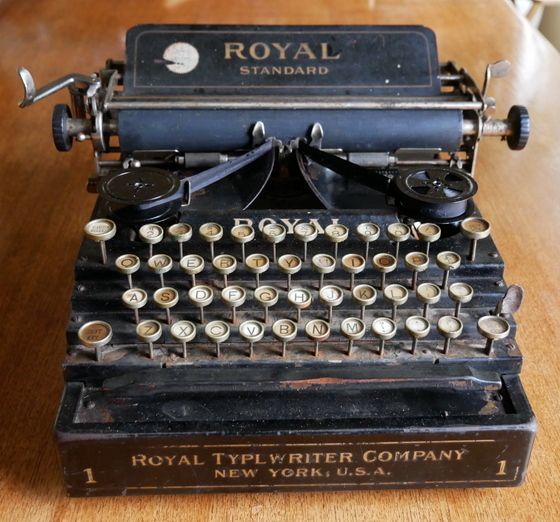
1912 Royal model 1

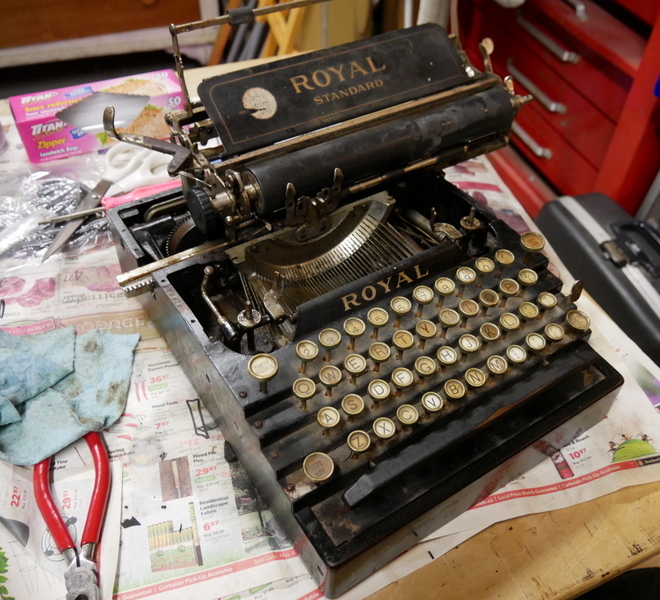
I found this ancient Royal 1 that was in terrible shape cosmetically, but upon inspection I wagered that it was fixable, so I bought it. Liberal applications of Deep Creep penetrating oil helped free up many sticking parts, along with some elbow grease and a wire wheel on my Dremel to remove the surface rust. There were two broken parts; the advance lever linkage and the “ear” of the yoke that limits the travel of same. I made a new link from a piece of aluminum, which fixed that issue. The ear proved to be unnecessary. I took off the platen and all the cover plates and did what I could to adjust the inner gears and so on. The spring motor needed a string and winding, which had to be done by winding the thing up and fastening the cord to it. The engineers designed a spring winding mechanism, but I was unable to free up the rusted set screw that locked the winding shaft. Other than that, the thing still works!

I glued the rubber sleeve back onto the wooden platen shaft, and saw that the shaft had been stamped with the date Aug 19, 2012. By the serial number this was the 77,879th of these made. They started production in 1906 and it increased yearly by large leaps. The machine weighs exactly 10kg, and the frame is made of heavy plate steel that is almost indestructible. I put a new spring on the bell, which rings brightly now. All in all this is a very impressive unit, and a testament to the skill of the designers and builders.

I kept notes about the process in a notebook I had, in which I had previously made notes about an interesting book called Fermat’s Enigma, about the history of mathematics. Hence some ruminations on that, typed on the “refurbished” typewriter.

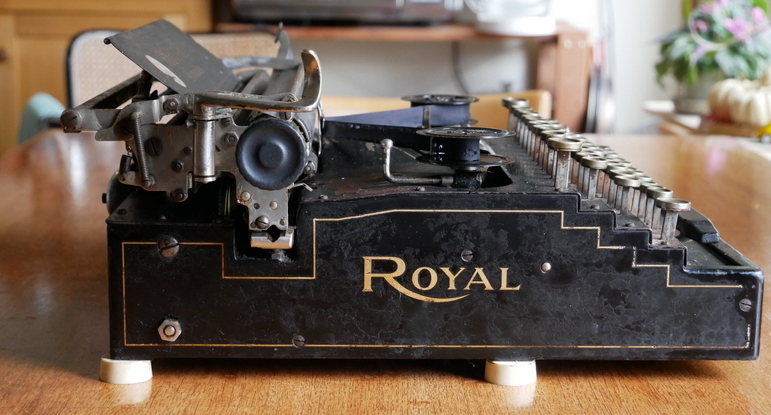
side view
new feet made from wine bungs size 5.5
under renovation
ribbon reversing gearshift lever
the motor housing teeth drive the ribbon winding transmission – like a huge wristwatch mainspring

Leave a comment

Filed under History, Repairs, Technology, Thrift shop finds, Typewriters, Uncategorized

Italian Style

Olivetti mechanics in an Underwood body: Italian engineering, American design, made in Spain

Bought this Underwood 450 the other day. It was all stained and dirty but Brasso and Meguires plastic cleaner polished it up nicely. I naturally assumed that since it was an Olivetti inside, it had to be Italian design, but it was not. It is an American design! However, Underwood was owned by Olivetti and so the design had to be Olivetti approved, hence I call it Italian Style! Concurrently, I also found a Borsolino cap at last, as well as an Italian merino wool cardigan. I wanted a Borsolino hat for years but never found one until today. Perhaps if I sit down at the “Italian” typewriter in my Italian Borsolino and Italian Merino (sweater), I will write about how I once saw a dead dog in Venice, and how my life was forever changed.
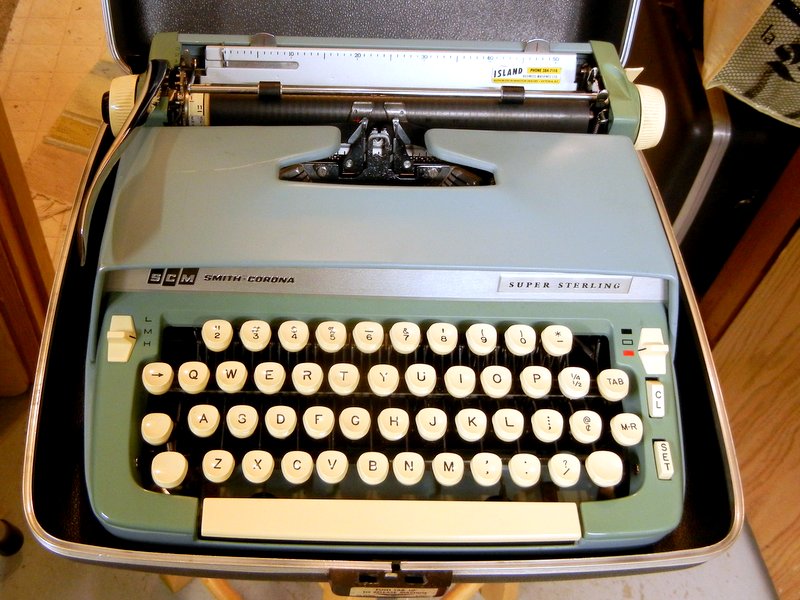
Me and my Italian clothes
Borsalino- accept no substitute!

Leave a comment

Filed under Clothing, Hats, Thrift shop finds, Typewriters, Uncategorized

Thrift Store History Lesson

Grand Dixence Dam, Switzerland
Lancaster, England c. 1610

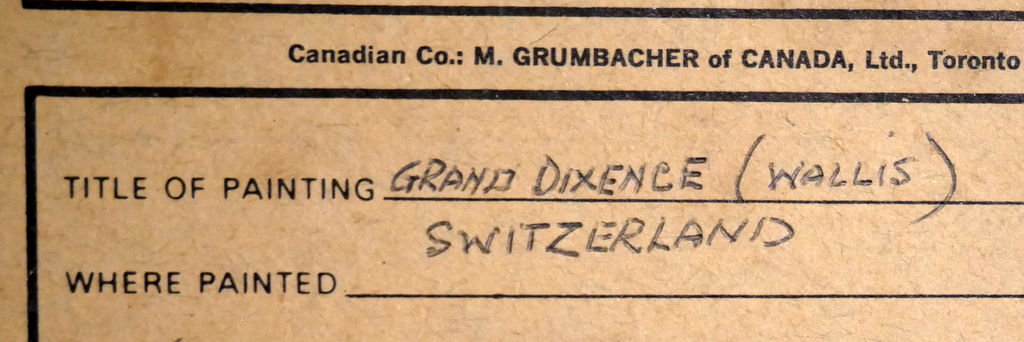
The local St Vincent de Paul thrift store recently moved to a new location closer to our home and so we have been going often in search of whatever may be found. Two interesting unrelated items I picked up for a couple of bucks were an old oil painting of an Alpine scene in a nice frame, along with an old Cadet Officer’s Commission from the County Palatine of Lancaster. Prior to that day I knew nothing whatsoever about County Palatines or the Alpine scene, which the painter identified in handwriting on the back of the painting as being “Grand Dixence”.

Further investigation followed, and I discovered the exact spot from whence the painting sprung, as well as the history of the Grand Dixence, a huge dam high in the Swiss Alps. Here is the painting and a photo I found on line, unquestionably from the same place.

Grand Dixence, the oil painting
Stock photo available on line! I took the free version..

The Grand Dixence dam was built in the 1950’s and is the largest gravity dam in the world. My guess from the top picture is that the painting and photo viewpoint is very likely to be somewhere along the shoreline to the left of the far end of the dam. Just a guess of course.

As for the County Palatine, the certificate I found was in antiquated language granting a commission in the Catholic Cadets to a young man, under the authority of the Lord Lieutenant and Custos Rotulorum of the County Palinate of Lancaster, the Honourable Ughtred James Baron Shuttleworth of Gawthorpe.

Custos Rotulorum means keeper of the rolls in latin, and is an ancient office, being the person who keeps the public records.

Officer’s Commission No 1 Cadet Battalion – Salford Diocesan Catholic Boys x?x
British Royal Coat of Arms

From Wikipedia: Palatinates emerged in England in the decades following the Norman conquest, as various earls or bishops were granted palatine (“from the palace”) powers, i.e. powers of a sort elsewhere exercised by the king. Palatine powers over Lancashire were conferred on the first duke of Lancaster in 1351, at the same time as his promotion from the status of earl. This was only the second dukedom created in England, following that of Cornwall in 1337, which also became associated with palatine powers. The dukedom was united with the Crown on the accession of Henry IV in 1399, but the vast estates of the Duchy of Lancaster were never assimilated into the Crown Estate, continuing even today to be separately administered for the monarch as Duke of Lancaster. The rights exercised through the Duchy, rather than the Crown, included its palatine powers over Lancashire, the last of which were revoked only in 1873. In the county palatine of Lancaster, the loyal toast is to “the King, Duke of Lancaster”

1 Comment

Filed under History, Thrift shop finds, Travel

Britannia & the Empress

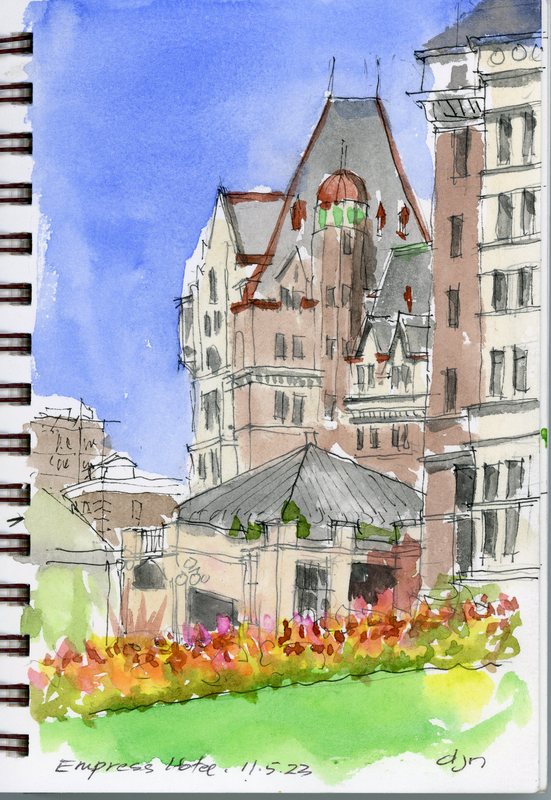
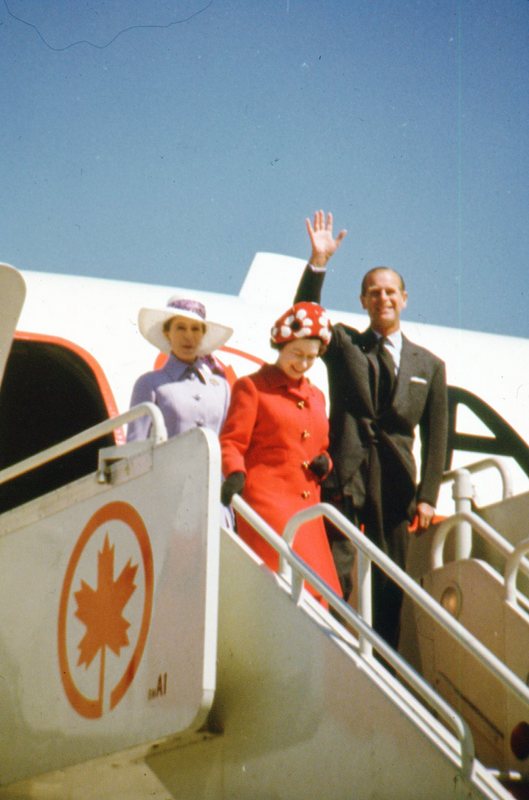
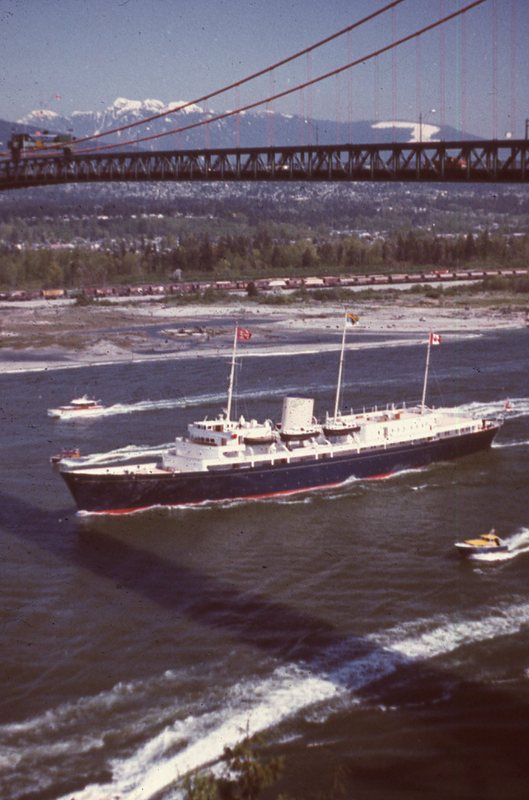
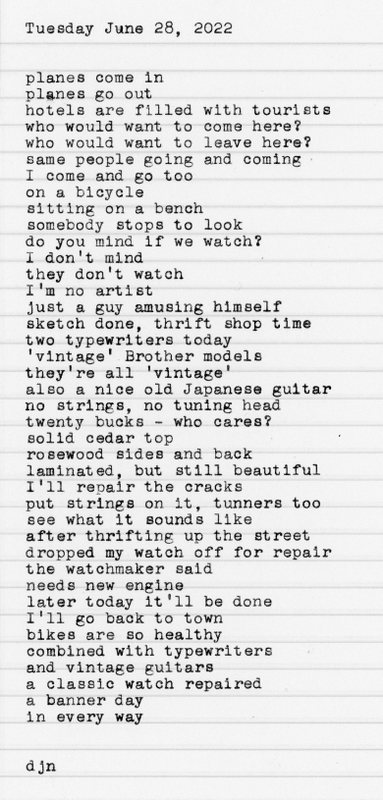
I set up my stool on the sidewalk and was sketching when I overheard a pedicab driver who had stopped on the street behind me. He was regaling his clients with stories about the Empress Hotel, and how Churchill once gave a speech there, and how they have a Royal Suite, etc. It sounded like baloney, but the tourists were eating up. Oddly, earlier on my ride into town I found a commemorative series of slides from the 1971 Royal Visit to BC. The original price was one dollar, and I got it for 90 cents, still wrapped in the original plastic!

1 Comment

Filed under History, Photography, Poetry, Sketching, Thrift shop finds, Typecasting, Uncategorized

A Banner Day

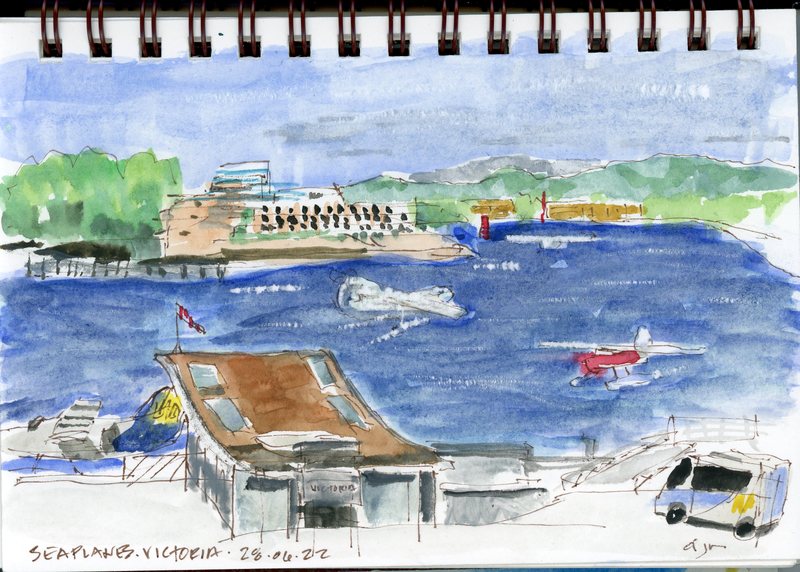
Inner harbour – Victoria BC – an actual international airport. Every plane is an Otter!
Braun watch – soon to have new innards! Thank goodness for interchangeable parts.
Yamaki dreadnought under repair. Betting this one is great! Solid cedar top, rosewood back and sides.

Yamaki guitars were well made, and many had solid tops. The bracing is a copy of a Martin D28, as is the body size. The scale is a bit shorter than Martin, 640mm vs 645mm. The interior bridge plate is rosewood, indicative of high quality. Cheap guitars have spruce. One thing I don’t like is the thick lacquer on the top. I might strip it off, which should improve the tone. A poor man’s D28 for about $50 after I buy tuners and strings.

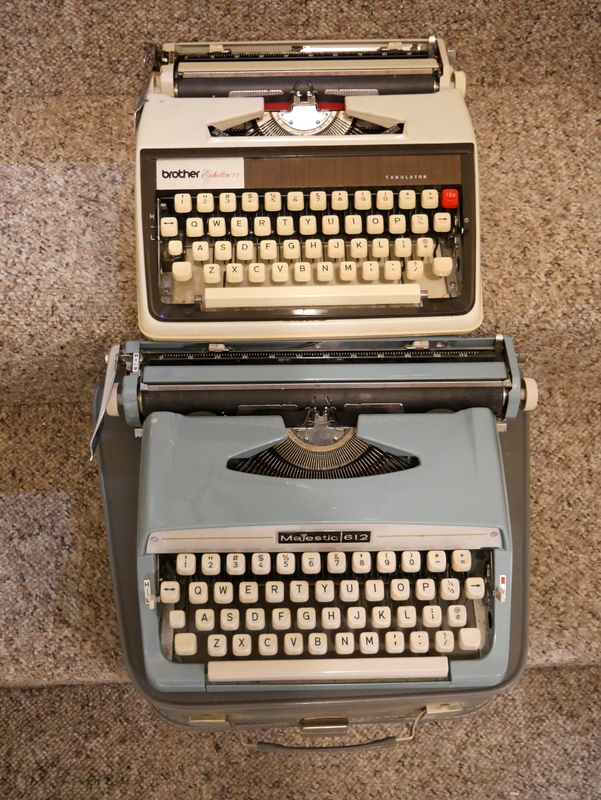
A pair of JP-1’s. Both work perfectly, after a bit of TLC.

Leave a comment

Filed under Guitars, Poetry, Sketching, Thrift shop finds, Typecasting, Typewriters, Watches

It is What it is

Braun watch model BN0021BKBKL

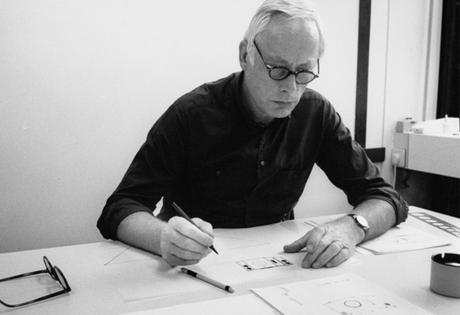
In 1976 I had the good fortune to have lunch with Deiter Rams at the Braun Headquarters in Kronberg, Germany.

aerial view of Braun factory, Kronberg

Rams gave me a tour of their design department where they were working on the latest Nizo Super 8 movie camera, among other things. I have owned lots of Braun products, like the coffee grinders, and the wall clock and alarm clock, as well as Braun electric shavers. I still own an old series 3000 shaver that continues to work well, but for the fact that I stopped shaving again and grew a beard. I was surprised however, when last week I spotted a Braun wristwatch in a consignment store for $18. I liked the look of it, and being an admirer of Braun products I decided to buy it. I pried the back off with some difficulty and replaced the battery (379) and it began to work. When I did some research I discovered that Rams didn’t design this watch, but it sure looks like something he would have designed.

Dieter Rams, possibly 1970’s

I asked Rams why all the Braun products came only in white, or black, and he just said that was how it was. In other words, “it is what it is”. I wasn’t sure if I got it back then, but I recently read an excellent explanation of “it is what it is” in “The Log of the Sea of Cortez” about John Steinbeck’s sea voyage to the Gulf of California in 1939 with his friend Ed Ricketts. I am told that Ricketts actually wrote much of that book, but that Steinbeck got all the credit. So I am not sure who wrote the part on “it is what it is”, but it was fascinating nevertheless.

from The Log of The Sea of Cortez, Ch.14, Steinbeck/Ricketts

Leave a comment

Filed under Philosophy, Technology, Thrift shop finds, Watches

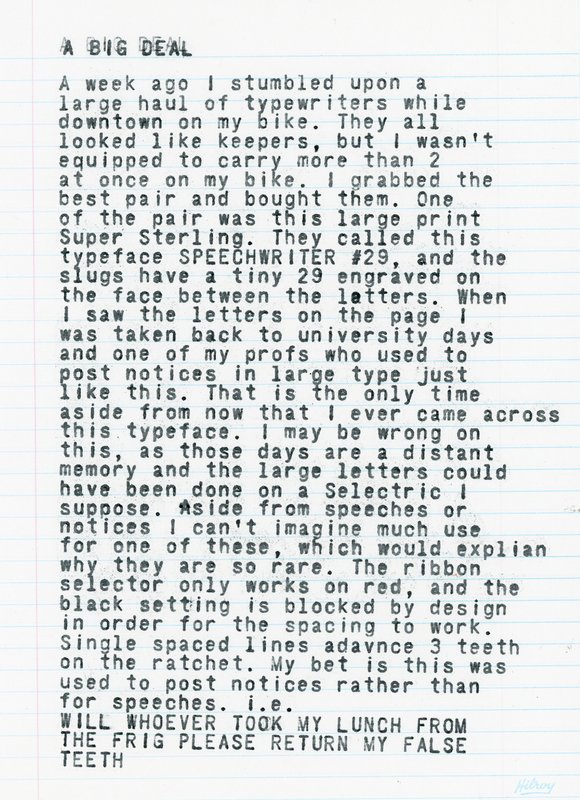
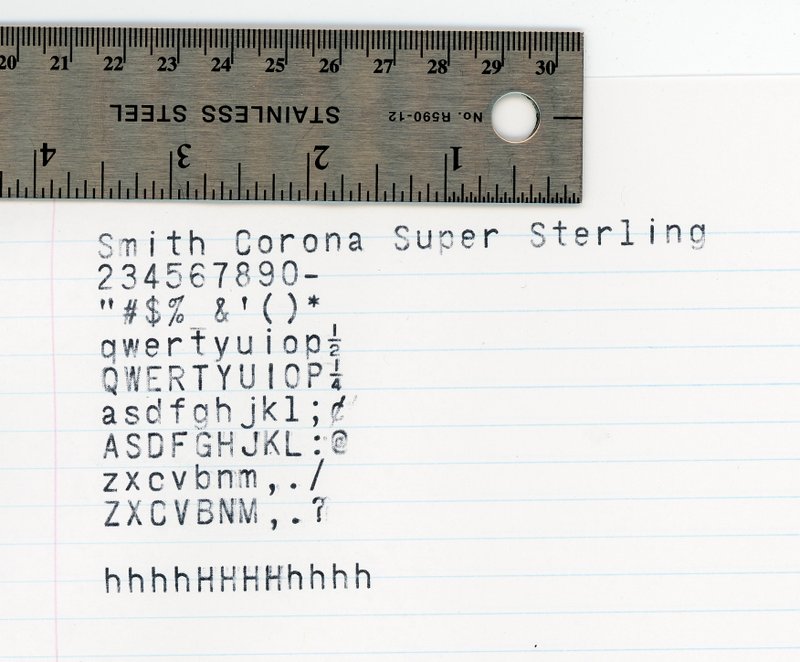
Super Size Typing

9 Comments

Filed under Thrift shop finds, Typefaces, Typewriters, Uncategorized

Facit-nation

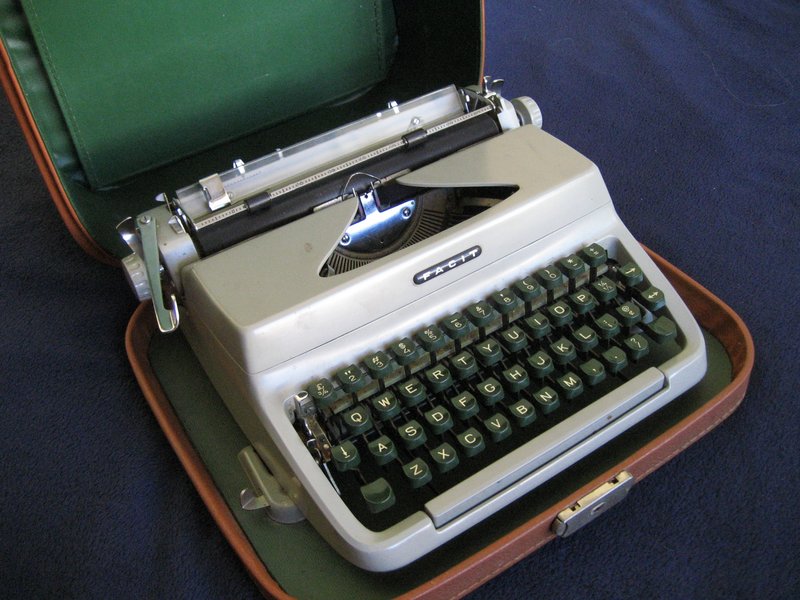
1961 Facit

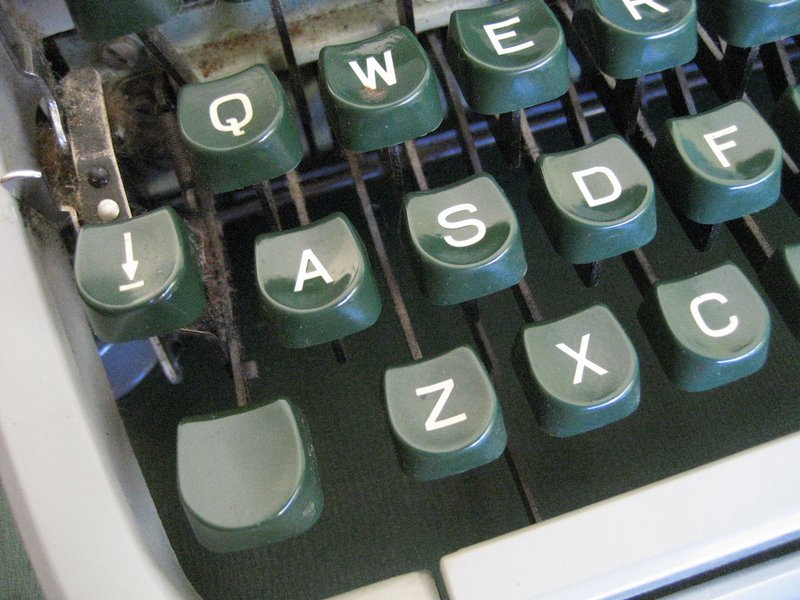
During my recent book writing I tested many typewriters here and came to the conclusion that the Facit and Halda typewriters were becoming my first choices. I was consequently thrilled last week when I unexpectedly came across another 1961 Facit, with larger type than the others. I found in the case a few typed sheets with several versions of a creation legend. Whoever owned this must have given up on writing, which is too bad, but good luck for me!

2 Comments

Filed under Books and Short Stories, Thrift shop finds, Typewriters, Uncategorized, Writing

Collecting Things

Adler J2 c. 1974
Adler J2 typeface sample

Wednesday Jan 27, 2021

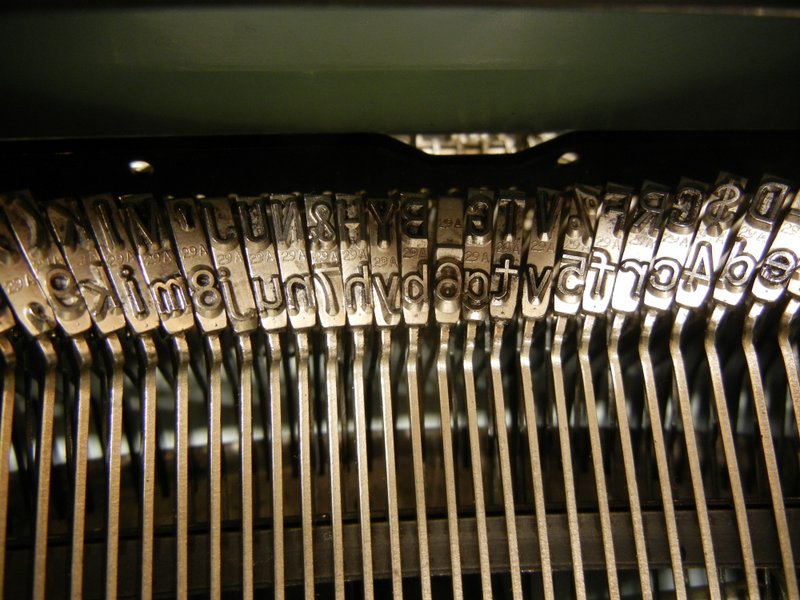
I’ve just collected my 199th typewriter yesterday – a 1974 Adler J2. I am typing on it here, to give it a test and see how I like it. Despite how good many of my typewriters are, I generally go back to the same old ones after a while, because they seem to suit me best. This has a delightful typeface however, which is a bonus. This machine has a plastic shroud, which makes it somewhat less desirable. Metal seems to be preferable for some reason, probably because I associate it with my childhood, an era for which nostalgia rules my heart. The idea of collecting typewriters is wrapped in nostalgia, because of the fact that they are now a thing of the past, and were mostly all made of metal. Only the later models had plastic shells, and though many of those are great, I and others, seem to have this preference for metal. It is illogical, but so is collecting things, unless done for profit, and even then there is not much profit in this when you consider all the time and effort spent to find a typewriter, clean it up, and fix whatever may be wrong with it. Often there are plenty of problems, and the hours spent do not pay well for the cost or price received when selling. But we persist, for the joy of finding typewriters, like birdwatchers scouring the bushes for rare birds, we scour the thrift shops in search of the new and unusual models, yet still glad to find some old favourite thing, even as we decline to buy it, unless it is such a bargain…

I wonder if typewriters were all $5 each, and there were half a dozen in every thrift shop, would anyone bother to collect them? I think not. We tend to value things that are rare and or expensive. If every typewriter was $5, which one would I buy to use? Not some rare old thing, unless it worked so well that I preferred using it over a better made model. When one removes price and rarity from the equation, then we find an entirely different set of values. I think of this as something like a blind test. I find this to be true for guitars, especially.

People will pay thousands of dollars for a guitar that has some label on it that they imagine confers a great value to it, even if in a blind test there is no difference between that and a similar guitar that is practically free by comparison. If I were to offer someone any typewriter in the world, and they had no idea what any of them were worth on the market, I bet they would chose simply by how the machine felt, how good the typed page looked, and last, what the machine looked like. But if I had informed them that the Hermes 3000 was worth ten times the cost of the one they selected, I also wager they might well change their mind fast! This happens to me, I should admit, despite my trying to judge things solely on logical grounds.

I think this is a factor of knowledge versus ignorance. When I was young I had less knowledge, and hence more ignorance. The things that I liked then were selected on my youthful judgment, unclouded by the opinions of others and or what the thing cost. I liked things for what I perceived them to be, not for what others perceived. When judging the worth or something now, I always try to keep that thought in mind, and think like a child, rather than as a fan of this or that because everyone else is.

3 Comments

Filed under Guitars, History, Philosophy, Thrift shop finds, Typewriters, Uncategorized